
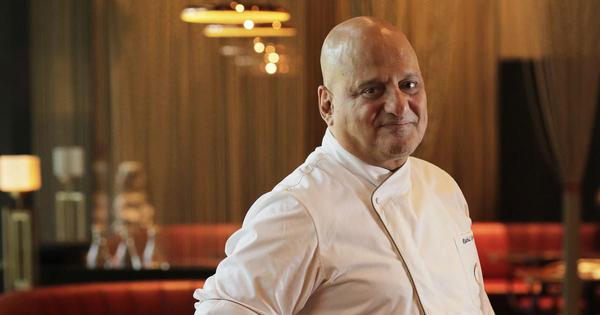
Running restaurants is not rocket science. But creating a vibe and getting it right depends on the ability to manage a few key factors that, when they come together, set the tone for any diner’s experience. You learn a lot about how to make a restaurant successful through your own experiences eating in them. Hopefully you’ve been fortunate enough to travel, and your experiences have been from across the globe and at all levels of dining, from simple cafés and bistros to Michelin-starred restaurants at the haute-cuisine end of the spectrum. But even if you haven’t, it just requires you to think about what makes you happy when you visit a restaurant and try and replicate or improve upon that experience.
Niccolo Lorimer, my freshman roommate at Franklin and Marshall College, came from the small village of Scandicci in the hills overlooking Florence, Italy. When we first met while moving into the dorms, we couldn’t have been more different. We were chalk and cheese, with me the stuttering, squash playing, pre-med science nerd to his free-spirited, incense-burning, psychedelic-clothed hippie persona, majoring in religious studies. Yet, we hit it off and bonded right away. Maybe it was because we were both so different from everyone else, the only two with an international upbringing and a world view that stretched further east than the Jersey shore, that we relied and depended on one another to help relate to the others. Whatever the reason, we became really fast friends and roomed together for three of our four years at F&M, on campus and off.
Niccolo opened my eyes to living life and doing so on my terms. I learned to laugh at the world with a sense of irreverence and not be so damn serious all the time. He taught me to embrace my individuality, that it was okay to not conform and to be, in the words of the Robert Fripp and David Byrne song “Under Heavy Manners”, “resplendent in divergence”. I really owe my present freewheeling, risk-taking nature to the time spent with him.
Niccolo’s always been a wheeler-dealer, trader, dealmaking kinda guy and not surprisingly, went on to a highly respectable entrepreneurial career in many fields, mostly relating to the import of food and wine from Italy to the US. Today, he’s the founder and CEO of Noble Harvest LLC in the US and of USA Export, SRL in Italy. With a rich background in real estate, art dealing and business, he developed a unique approach to the American market, honing his skills with a strong focus on marketing and sales. Noble Harvest is the reference point for many institutions (such as the Italian Trade Commission, Fancy Food Shows, Italian Consortiums, Chambers of Commerce and more) for logistics and compliance. Niccolo is on the board of the Italy–America Chamber of Commerce of Houston, Texas, and an advisor for the prestigious Wine Hunter, part of the Merano Wine Festival in Merano, Italy, where he got me to guest chef in November 2011.
But back in the winter of 1980, during our senior year at college, when I first visited his family, we spent two weeks over Christmas and New Year’s in Italy. Following that, he went with me to India for a month, travelling around the south. As a broke college student, I’d managed to save up about $700, which was the budget I set for the two weeks in Italy, but I still found myself flush with funds at the tail end of our sojourn.
“Niccolo,” I proposed, “I have close to $600 left over and I want to blow it all on a meal at the best restaurant in Florence before we leave for Bombay.”
“I know just the place,” he offered without hesitation. “It’s a fancy starred restaurant in an old villa called La Loggia in Villa San Michele, Fiesole, overlooking Florence. We’ll never get a table if I call, but if you call and speak in an American accent, we should be okay.”
I called the restaurant and, in my best Indian-Texan drawl, I managed to get a table for three the next night. Niccolo, his sister Francesca and I were going to dine in style. I couldn’t wait.
It rained that Saturday night as we drove from his home in Scandicci up to the villa’s front entrance in his brother’s beat-up, tiny, grey Fiat Cinquecento. The car, no bigger than an inverted bathtub, had a totally torn and open convertible roof which we covered with an old shower curtain we held tight to keep it from flying off. We got out of the car – dressed in jeans, muddy hiking boots and heavy Florentine sweaters – and with as much swag as we could muster, casually tossed the keys in the valet’s direction.
Everyone in the restaurant was dressed to the hilt in dark jackets and ties, the staff even more so in black tie with white waistcoats and jackets. Formal and stuffy were la moda. A piano player crooned old, clichéd Italian songs like “O Sole Mio,” in the centre of the dining room. Even dining couples had serious faces and spoke in whispers with each other. Everything felt strained and uncomfortable when it should have been joyous and celebratory. Taking one look at us post-bohemian hippies, the maître d’ quickly sat us at a cramped table near the kitchen entrance, as far away from the gaze of the dining room as he possibly could. The staff all but ignored us; service was terrible. That is until we ordered our first bottle of champagne … then everything changed.
First, I sent a glass of champagne to the piano player with a song request, after which we ordered our second bottle; then the third, fourth and fifth. With each bottle, we sent glasses of bubbly to almost everyone in the dining room and some for the staff too. Now the staff was fawning over us. Even the chef sent us several dishes on the house. By late in the evening, jackets and ties had come off, now draped casually over the backs of chairs.
The piano player was pounding out The Beatles’ “I Saw Her Standing There …”: “Well, she was just seventeen, You know what I mean, And the way she looked was way beyond compare …” Couples were actually dancing near the piano. Some had gotten up and were chatting with others at their tables. The whole vibe transformed in the restaurant that night. It suddenly became friendly, warm and convivial – casual even – without taking away from the seriousness of the dining experience. People let their guard down and were enjoying themselves. I blew my entire $600 wad and Niccolo must have easily dropped another $600 between the two of them. But man oh man, did we have fun that night! It was never about the money; it was all about the experience. And we’d engineered that.
This taught me never to be stuffy and formal, no matter how serious I want the overall experience to be for the diner. We may take our food seriously, we may take our service and hospitality seriously, but we never take ourselves too seriously. In other words, the takeaway for anyone is: take what you do seriously, but learn to have fun. Lose the formality, but not the attention to detail. It is possible to do both and it always creates a sexy, stylish vibe. I began to realise that at Just Desserts.
Almost from day one, we had people waiting to get in. Our word of mouth, through customers from my catering business and from AD’s extensive list of people who’d been to a Party Line event, worked wonders. Word of mouth was all we had; we could not afford advertising, and social media was light-years away. It’s amazing what you learn when you have limited resources.
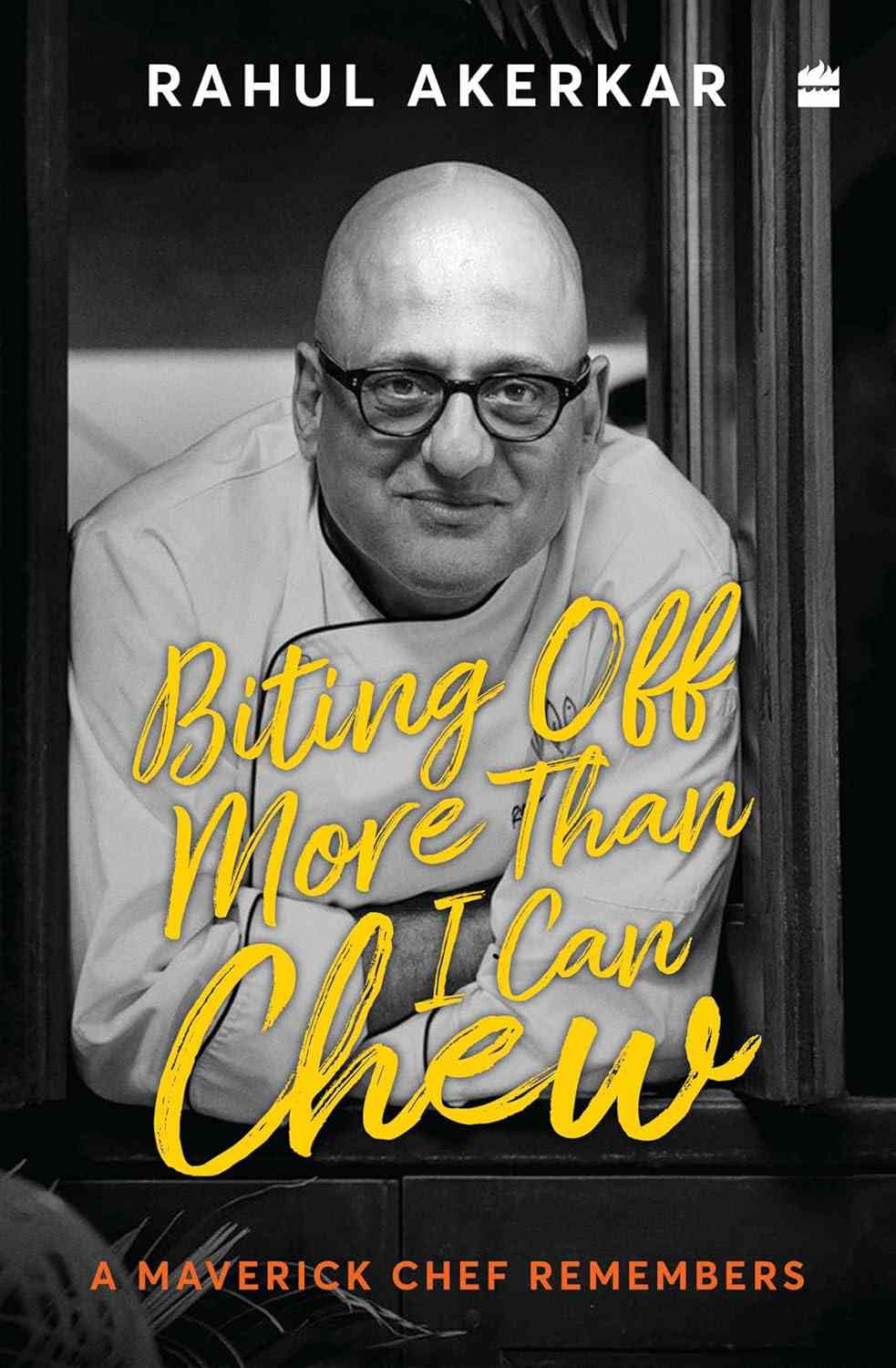
Excerpted with permission from Biting Off More Than I Can Chew: A Maverick Chef Remembers, Rahul Akerkar, HarperCollins India.
Dining and Cooking