
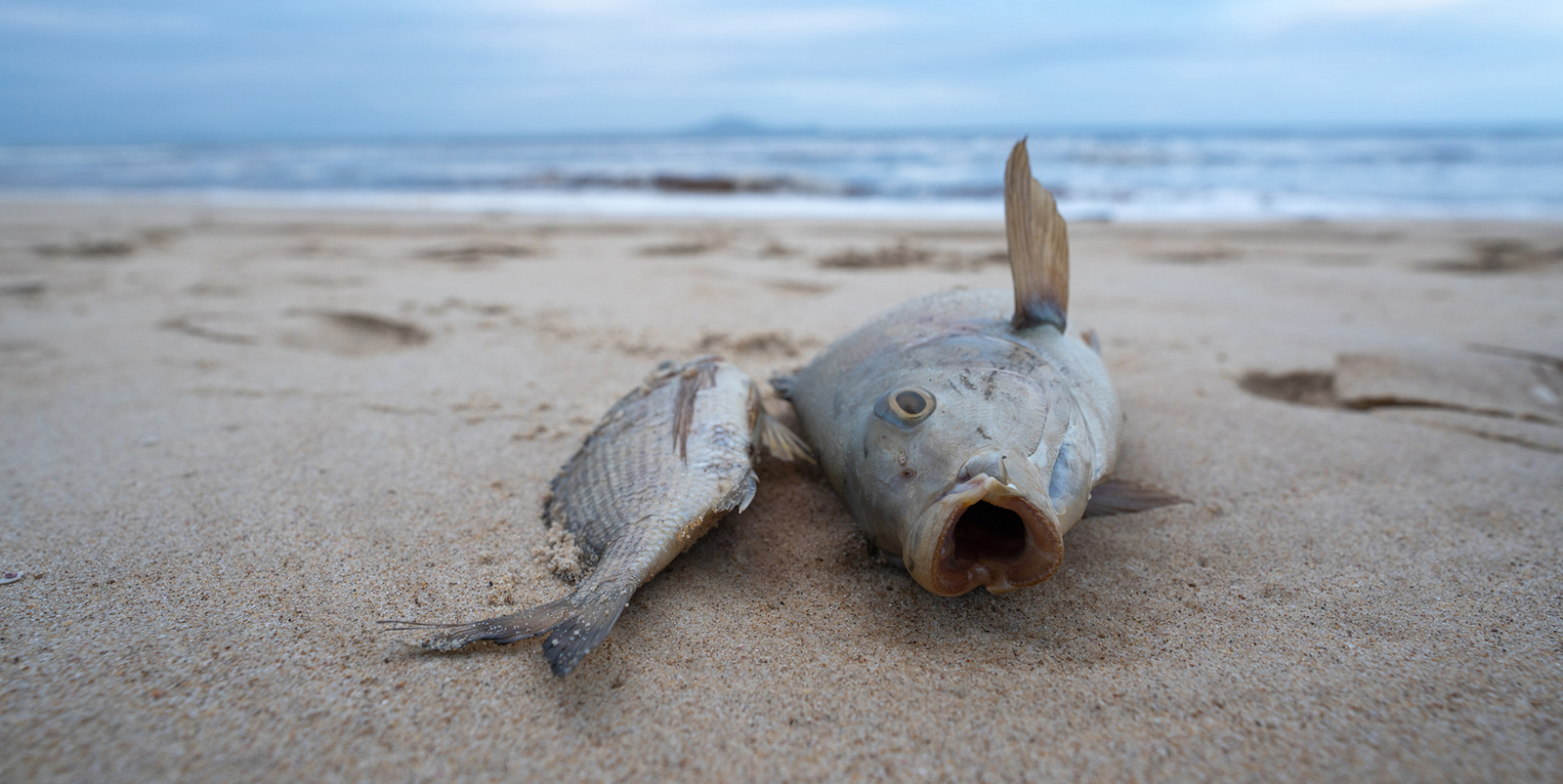
Since we are heating their world to unaccommodating temperatures, I guess it’s only fair we are also providing marine life with a cocktail of human vices to help them get through these stressful times.
A scientific collaboration recently conducted off a remote island in the Bahamas found caffeine, cocaine, and painkillers in Caribbean reef sharks, nurse sharks, and lemon sharks. Scientists identified blood contamination in about a third of the sharks tested.
The researchers collected blood samples from 85 sharks and then released them. They examined the specimens for about 20 different drugs, including antibiotics, antidepressants, and opioids. Analyses revealed that 28 sharks across the three species had detectable levels of at least one substance.
This wasn’t the first time this team of researchers found human drugs in ocean predators. In previous research, they identified cocaine in sharks off the coast of Rio de Janeiro.
When we’re not tripping sharks, chronic ocean heating, from our relentless burning of fossil fuels, is powering a staggering and concerning loss of marine life, according to a study published in late February. Its authors found the drop in biomass from persistent heating to be as high as 19.8% in a single year and fish levels falling by 7.2% from as little as 0.1 degrees Celsius of warming per decade.
The burning of natural gas (methane), oil, gasoline, diesel, and coal is also causing a rapid decrease in ocean pH caused by the absorption of carbon dioxide. Often referred to as “climate change’s evil twin,” ocean acidification reduces available carbonate ions, making it harder for marine organisms such as shellfish and corals to build shells and skeletons.
New England seafood staples such as quahogs, oysters, sea scallops, and lobsters will find it increasingly difficult to thrive and reproduce.
For its recently published study, the researchers examined the year-to-year change of 33,000 fish populations in the Northern Hemisphere between 1993 and 2021 and isolated the effect of the decadal rate of seabed warming.
Basically, the faster the seafloor warms, the faster fish disappear.
A 7.2% decline for every tenth of a degree of warming per decade may seem trivial, but compounded over time and across great swaths of ocean floor, the researchers noted it represents a “deeply significant” loss of marine life.
Scientists have noted ocean life is extremely vulnerable to the shifts in temperature triggered by fossil fuel pollution that is changing the climate and heating the planet.
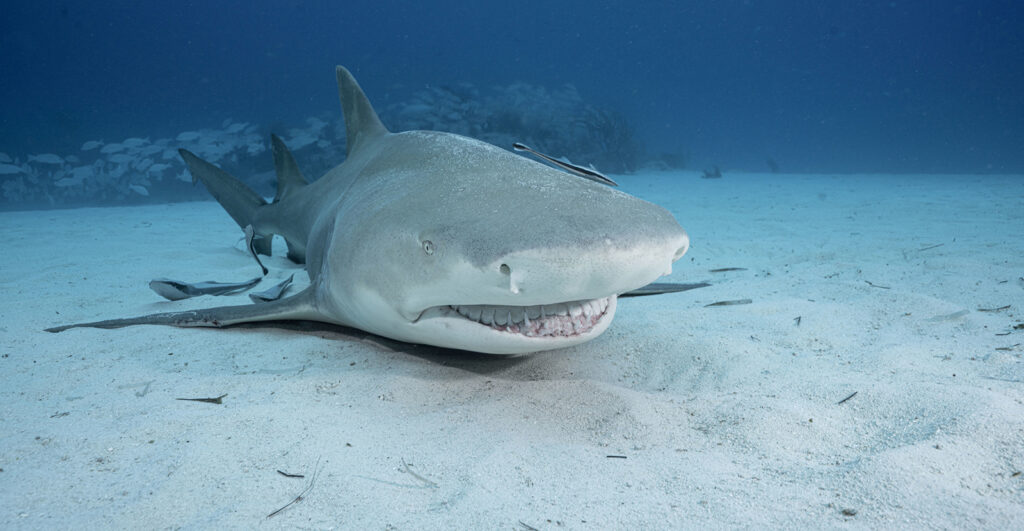 Lemon sharks are just one species of shark we’re dosing with caffeine, cocaine, and painkillers. (istock)
Warming and acidifying waters join overfishing, ghost gear, vessel traffic, energy exploration, underwater noise, and fossil fuel and mineral extraction as human-caused stress that is killing sea life and degrading marine ecosystems.
Four years ago researchers found that a single pass of a deep-sea mining collector physically removed more than a third of the species living directly in its path. The results showed that biological impacts can occur immediately, not only after years of full-scale extraction.
The damage was documented along fresh tracks carved into the seafloor during a 2022 trial that removed thousands of tons of mineral-rich nodules from deep Pacific Ocean sediments. Mining companies target these rock-like lumps on the ocean floor because they contain valuable metals such as cobalt, copper, and nickel.
These nodules sit scattered on soft mud and act as rare patches of hard surface. Many creatures attach to them or use them for breeding, feeding, and shelter. When mining machines collect these nodules, they remove living spaces and minerals.
Researchers reported a 32% drop in species diversity inside seafloor mining tracks.
The documented destruction caused by deep-sea mining, though, hasn’t slowed venture capitalism. Two deep-sea mining companies recently announced a merger that values their combined business at a billion dollars. More than $230 million in equity commitments have already been secured from investors, signaling growing corporate and investor confidence in the commercial extraction of minerals from the seafloor.
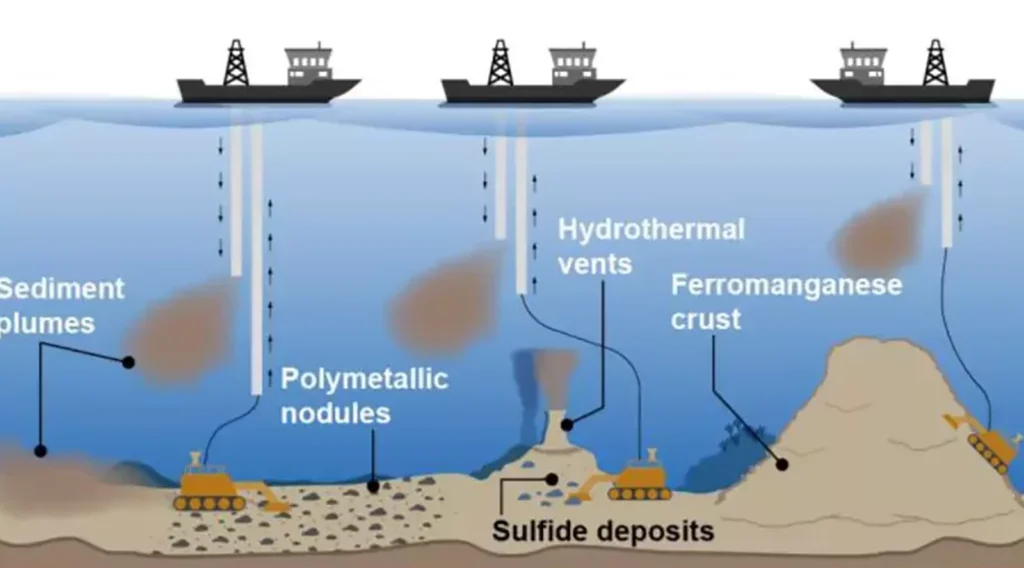 Deep-sea mining has environmental impacts, such as stirring up sediment clouds that could spread toxic heavy metals. (GAO)
Ocean mining isn’t much different than bottom trawling — a widespread industrial fishing practice that involves diesel-powered vessels dragging heavy nets, large metal doors, and chains across the seafloor. These massive nets annually capture millions of tons of fish worth billions of dollars. They also catch and kill sponges, starfish, worms, and other bottom-dwellers. This bycatch slaughter degrades an intricate ecosystem.
For more than a century, bottom trawls have scraped the seafloor for targeted species, with little thought given to the amount of death and destruction the practice causes. A recent global inventory of bottom-trawl catches exposed the staggering breadth of one of the ocean’s most destructive fishing practices, and researchers warned the true scale may be far worse than the data suggests.
A study recently published in Reviews in Fish Biology and Fisheries by researchers at the University of British Columbia identified more than 3,000 fish species caught in bottom trawls, with estimates suggesting the real figure could approach double that number.
Drawing on more than 9,000 catch records from 1895 to 2021, the study found that one in seven fish species recorded in bottom-trawl catches with assigned conservation status are threatened or near threatened with extinction. Among the species recorded were the endangered giant guitarfish, the endangered zebra shark, and at least three vulnerable seahorse species.
“When we remove thousands of species without understanding the impacts on their wild populations, we risk destabilizing the very systems that fisheries depend on,” co-author Sarah Foster said in the study’s press announcement.
The study also found that smaller fish species are often not recorded and are likely grouped under vague categories such as “trash fish” or “mixed fish,” hiding the true number of species being removed from an ecosystem.
“Trawling destroys the natural seafloor habitat by essentially rototilling the seabed. All of the bottom-dwelling plants and animals are affected, if not outright destroyed, by tearing up root systems or animal burrows,” according to the U.S. Geological Survey. “Resuspending bottom sediment changes the entire chemistry of the water, including nutrient levels.”
A 2016 study called bottom trawling “the most widespread anthropogenic activity that impacts the seabed on the continental shelf.” It noted estimates have suggested that an area half the size of the world’s continental shelf is trawled every year — some 8.6 million square miles.
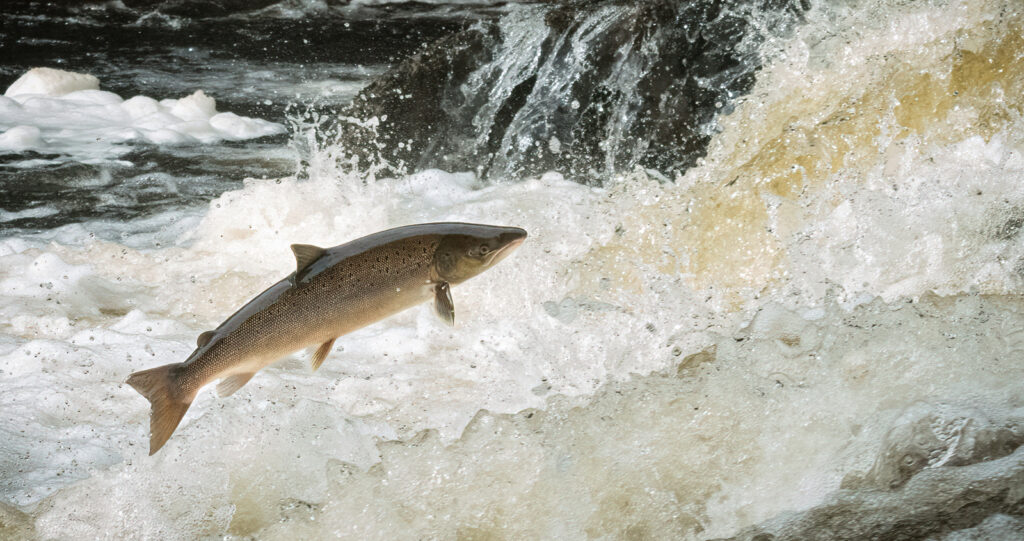 We’re also likely to be getting Atlantic salmon flying high. (istock)
The ocean was industrialized long ago — think whaling — and we continue to stress it out.
For instance, the climate crisis has been linked to a decline in southern right whale birth rates, as researchers have suggested breeding slowdown is linked to climate-driven changes in the species’ foraging grounds in the Antarctic and sub-Antarctic.
Long-term monitoring has revealed a slowdown in breeding rates since 2017, according to a study published earlier this year. Instead of giving birth to a calf every three years, southern right whales have shifted to four-year or five-year cycles.
Freshwater fish aren’t faring any better. Species that undertake mammoth migrations through rivers, lakes, and ponds are facing a combined threat from dams, pollution, and overfishing that is preventing them from reaching their breeding grounds.
A team of international scientists assessed more than 15,000 species of freshwater migratory fish, which make up half of all fish species, and found their numbers had dropped by an estimated 81% in the past half century.
We’re also getting freshwater fish high.
Traces of cocaine that pollute rivers and lakes may accumulate in the brains of Atlantic salmon and disrupt their behavior, according to a study published this week. In 2019, tests on freshwater shrimp found traces of dozens of different drugs, including blow, methamphetamine, and antidepressants.
Scientists have noted that pollution from common drugs poses a major and escalating risk to biodiversity, and have called on pharmaceutical companies to make greener medicines that break down in the environment. Researchers have also warned of unknown consequences from pharmaceuticals and illicit drugs on fish populations.
Our survival depends on the survival of countless other species, but all we do is greedily take and pollute without any thought. The planetary systems that allow us to thrive can’t handle massive withdrawals in perpetuity.
Frank Carini can be reached at [email protected]. His opinions don’t reflect those of ecoRI News.
Dining and Cooking