
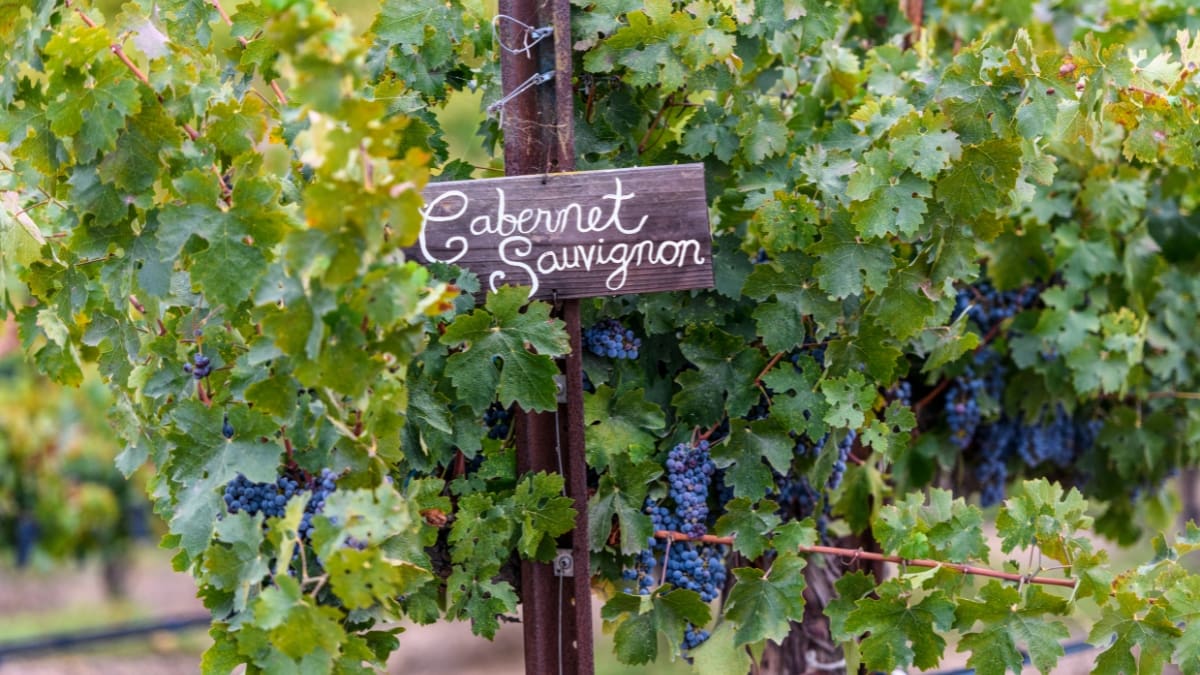
As the California wine industry currently faces a crisis due to oversupply, weak demand and changing consumer habits, a new report released the U.S. Department of Agriculture’s (USDA) National Agricultural Statistics Service and the California Department of Food and Agriculture (CDFA) shows that grape acreage in the state continued to shrink in 2025.
The report, which was published on April 22, 2026, estimated that California’s wine grape acreage was at 540,000 acres in 2025. This is a clear decline from 580,000 acres in 2024 and 610,000 acres in 2023.
Bearing wine grape acreage, which means vineyards that currently produce fruit, slipped to 510,000 acres, marking a 5.6% decline compared to the acreage in 2024. Non-bearing acreage dropped 25% to 30,000 acres.
The USDA report noted that table grape acreage also declined. In 2025, it totaled to 118,000 acres, down from 120,000 acres in 2024.
While bearing table grape acreage held steady at 115,000 acres, non-bearing acreage slipped from 5,000 acres to 3,000 acres.
The report noted that it did not include raisin grape acreage totals because the Raisin Administrative Committee no longer funds that portion of the survey.
The past 12 months saw more than 21,000 acres of vine removals, and some of those acres were harvested in 2025 before being removed, the report showed.
California’s leading wine grape varieties remained Cabernet Sauvignon and Chardonnay.
According to the USDA findings, Cabernet Sauvignon acreage was a total of 90,040 acres in 2025, down from 94,906 acres in 2024. Chardonnay acreage also fell from 85,840 acres to 83,262 acres. Pinot Noir acreage dropped from 46,899 acres to 44,936 acres, while Merlot declined from 31,924 acres to 30,628 acres.
However, among white wine grapes, Sauvignon Blanc saw a modest rise. It rose to 17,970 acres from 17,663 acres previous year. This was, the report noted, one of the few increases among major varieties.
Flame Seedless remained the leading variety for table grapes.
The report’s findings were based on responses from about 6,500 grape growers. It includes information received through mid-April. USDA, however, noted that the acreage estimates include an allowance for incomplete reporting.
California Wine Industry’s Troubles
Wine industry in California is currently facing pressure due to several factors including declining demand, oversupply and rising costs.
Consumers, particularly younger drinkers, are buying less wine, while other are moving to other beverages or drinking less alcohol overall.
Given the conditions, growers and wineries are dealing with too much supply, which has left some grapes to remain unsold and pushed prices lower. The industry has also been hit by softer tourism and export sales. Meanwhile, high labor and operating costs continue to affect wineries.
Santa Barbara Sees Wine-Related Closures
The findings of the report comes at a time when Santa Barbara recently witnessed wine-related closures.
In January, local favorite Municipal Winemakers said goodbye to its Santa Barbara Funk Zone tasting room after being in the business for 15 years.
Similarly, J. Wilkes Wines closed its Santa Barbara tasting room. Known for its traditional offerings and rare selections, the wine tasting room held a 4.4 rating based on 155 Yelp reviews.
Dining and Cooking