
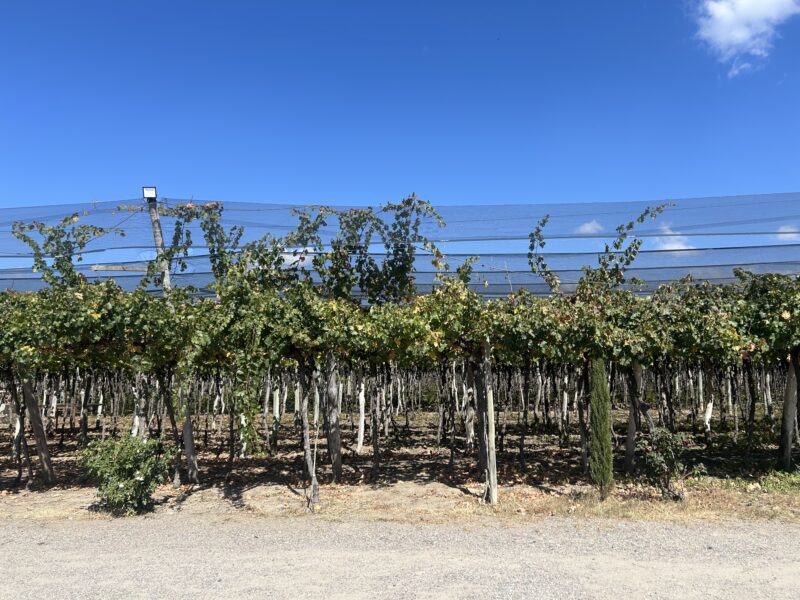
MENDOZA, Argentina (CN) — Only a few could tell what a sulfite was back in the 1990s when Jean Bousquet left France for Argentina in search of the perfect land to produce organic wine. Abysmally far from Carcassonne, where his family of winemakers originated, he scouted corners of South America only to land in the valleys near the city of Mendoza, one of the world’s biggest wine hubs.
“All I wanted to do was make organic wine,” he said, in Argentine Spanish tainted with a French pulse. “But where I come from, it rains 47 inches per year. The grapes went bad. I couldn’t do it back home.”
On a busy Saturday at his family’s estates, tourists flow among the desks, indulging in a $40 four-step menu with unlimited glasses of several varieties: grenache, cabernet franc, and even pinot grigio, all produced with water from their own well.
Mendoza, an oasis set next to the Andes and its desert surroundings, is a mostly arid area where it rarely rains. Water is irrigated down from the mountains through a sophisticated ancient ditch system known as acequias, coined by the Huarpes, the native community of the area.
There, the French winemaker founded Domaine Bousquet, one of the earliest large-scale organic-focused vineyards in the province.
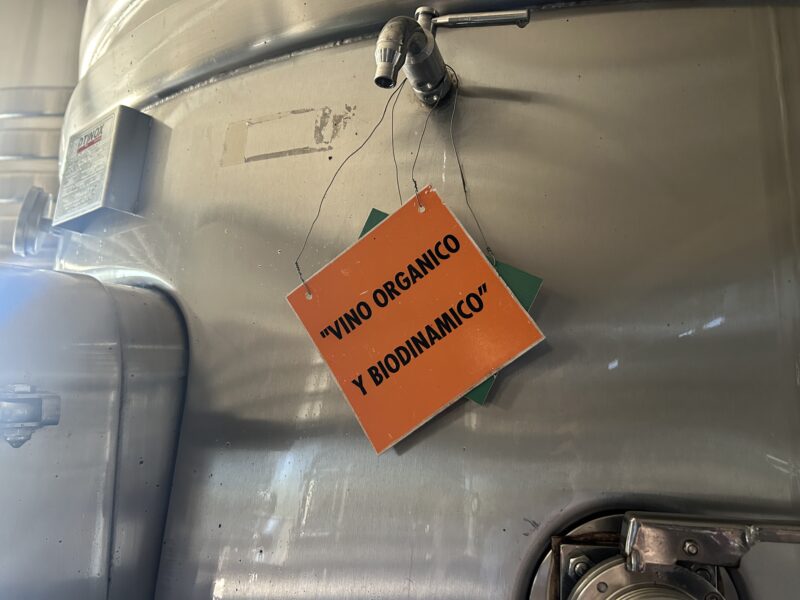 In Krontiras, a vineyard located half an hour away from the city of Mendoza, owned by a Greek businessman, grapes are part of an ecosystem that involves animals, bugs, and a dozen humans working together to create the wine, compost, and care for the land. March 10, 2026. (Lucía Cholakian Herrera/Courthouse News Service)
Low-intervention winemaking has, since then, grown across the country, with both niche and mainstream ventures adopting organic techniques. But recent deregulations and economic struggles in Argentina have kept its produce fundamentally aimed at markets that have already embraced the eco-friendly movement.
The United States now absorbs a significant share of Argentina’s organic wine exports, making the sector increasingly dependent on foreign buyers as local consumption hits historic lows.
Domaine Bousquet, now managed by the founder’s children, has grown into Argentina’s largest exporter of certified organic wines, shipping millions of liters annually to over 50 countries. Meanwhile, the elder Bousquet’s personal project, Santa Bax, continues to supply premium grapes to the family’s original vineyard while selling its own production of about 200,000 bottles a year in the local market at affordable costs. On average, a bottle from Santa Bax costs visitors about $5.
“Five years ago, no one asked for organic wine,” said Bousquet, who advertises his wares by priding himself on being able to drink a few bottles of his grenache rosé per day without a scratch the next morning.
Some producers have brought the organic ethics to the whole production chain. In Krontiras, a vineyard located 30 minutes from Mendoza that’s owned by a Greek businessman, grapes are part of an ecosystem that involves animals, bugs, and a dozen humans working together to create the wine, compost, and care for the land.
“Young people now want lighter wine,” said Angelo Gonzalez, a tourism coordinator at Krontiras. “Funkier stuff.”
When he’s not guiding tours across the vineyard and wine cellar, surgically designed without sharp angles and inspired by the shapes of nature, Gonzalez takes part in the many collective tasks the biodynamic vineyard requires. This ranges from harvesting and composting to guiding animals to specific sectors where the soil requires manure.
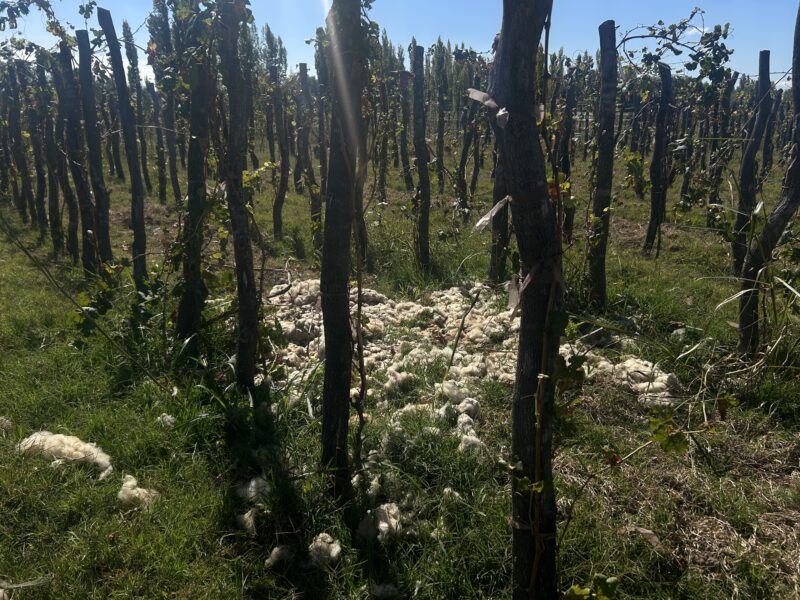 In Krontiras, a vineyard located half an hour away from the city of Mendoza, owned by a Greek businessman, grapes are part of an ecosystem that involves animals, bugs, and a dozen humans working together to create the wine, compost, and care for the land. March 10, 2026. (Lucía Cholakian Herrera/Courthouse News Service)
Not all organic wine producers have fully embraced the organic philosophy, however. Some have turned to organic production simply to meet fashion demands; the hype has led the largest producers in the country to sell organic-certified lines while still maintaining their traditional stock. Major Argentine wineries have pivoted toward organic production to capture a booming export market, with certified organic acreage growing by 185 percent over the last decade, spanning some 24,000 acres as of 2024.
Leading this shift is Bodega Argento, the country’s largest producer of organic wine, managing nearly 750 certified acres. Other giants like Trivento and Catena Zapata have integrated organic practices into their business models. Catena Zapata’s research institute focuses on soil microbiome and biodiversity to future-proof their high-altitude vineyards.
But the industry is currently navigating a radical shift in oversight. Under the libertarian administration of President Javier Milei, the government has implemented a “chainsaw” approach to bureaucracy, eliminating nearly 1,000 regulations affecting winemakers. While trading has become easier, it has also delegated pricing to market demands, instead of boosting smaller brands, which has made competing an uphill battle for smaller bodegas.
The deregulation also drastically reduced the role of the National Institute of Viticulture (INV), with streamlined inspections that focus solely on whether bottled wine is “fit for consumption” rather than overseeing the entire production process from vineyard to winery. While large-scale exporters may benefit from reduced overhead, smaller producers express concern.
“Deregulation in prices has spawned uncertainty,” said Matías Manzanares, from the Mendoza winegrowers’ association, claiming it benefits large producers but puts grape producers’ sustainability at stake, shortening profit margins and pushing smaller players away from the industry.
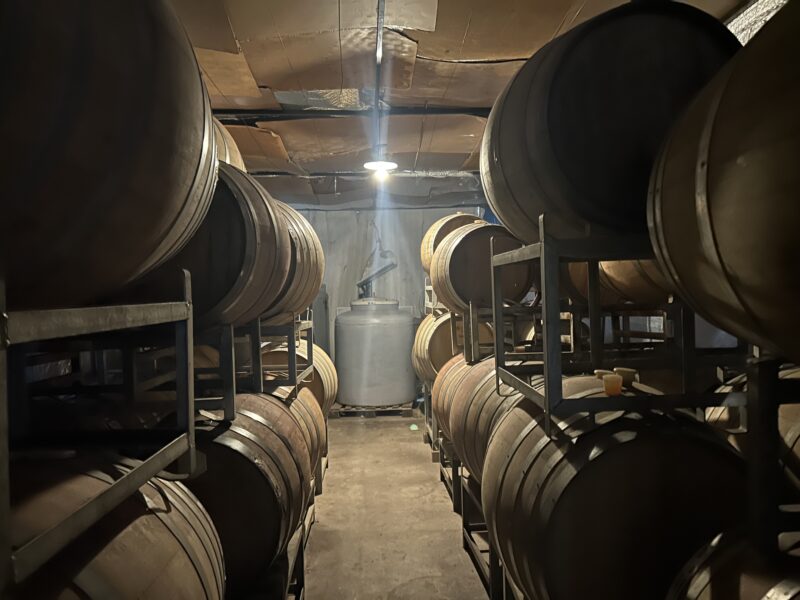 La imaginación al poder (Power to the imagination, in Spanish), a small, DIY finca that sits outside of the city of Mendoza, has been brewing wine since 2020 using organic techniques. March 12, 2026. (Lucía Cholakian Herrera/Courthouse News Service)
La imaginación al poder (Power to the imagination), a small, DIY finca that sits outside of the city of Mendoza, has been brewing wine since 2020 using organic techniques. Sergio Gemigniani, the enologist, works around the clock guarding the buckets and barrels where they make their unfiltered merlot, malbec and sauvignon blanc.
Out of their 20,000 yearly production, nearly half is exported. “We’re on this organic, natural niche, that’s growing,” said Mauro Villarejo, the founder and winemaker, a politologist who inspired his brand on the May 1986 uprising in France.
Local producers in this scenario struggle to build a market for organic products within their own borders. Overall domestic wine consumption in Argentina fell to a record low of just over 4 gallons per person in 2025, a sharp decline from the 24 gallons per person recorded in 1970.
The U.S. is the second-largest destination for Argentine shipments, increasingly favoring high-end Malbecs over the generic blends consumed at home. The global organic wine market reached $13.4 billion in 2025 and is projected to continue its upward trajectory through 2026. Europe drives this growth, holding more than two-thirds of the market, led by Spain and France.
While the country remains a premier global producer, local consumers have largely resisted organic wine as a mainstream trend. High inflation and a sharp decline in purchasing power drive shoppers toward traditional, lower-cost table wines or away from the category entirely. Since he arrived in office, Milei’s government has erased regulations surrounding the sector, but sales have not increased locally.
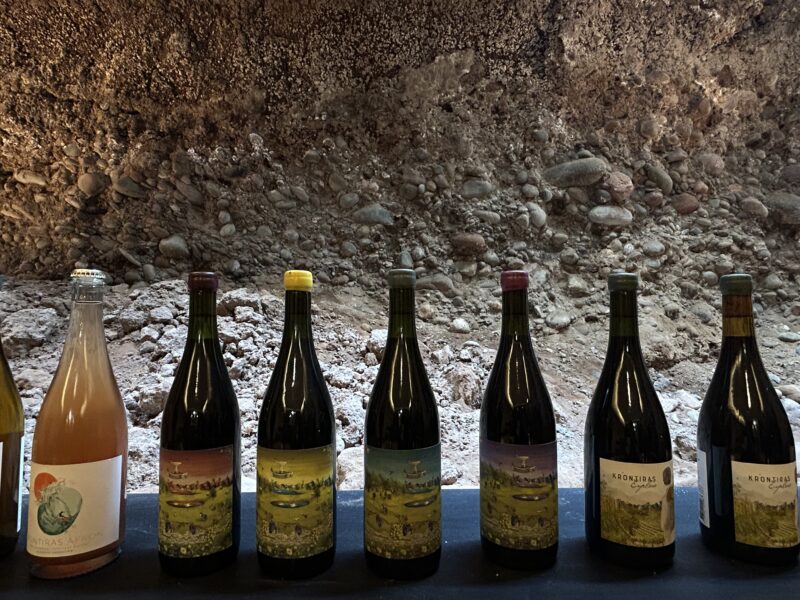 In Krontiras, a vineyard located half an hour away from the city of Mendoza, owned by a Greek businessman, grapes are part of an ecosystem that involves animals, bugs, and a dozen humans working together to create the wine, compost, and care for the land. March 10, 2026. (Lucía Cholakian Herrera/Courthouse News Service)
Cultural shifts, skepticism, and a tumultuous market have made it hard for Argentines to fully embrace the novelties in one of their most traditional drinks. This renders the organic produce more prone to exports, which have increased.
Today, the success of a Mendoza organic vineyard is measured not by the bottles on a local table, but by those on the shelves of a U.S. Whole Foods, where an organic malbec by Santa Julia, one of the country’s largest producers, can be found for less than $10.
But the financial situation, said Villarejo, from La imaginación al poder, is still not ideal, with big brands being hard to compete against. “But everything will come together at some point,” he said. “And all of these markets will open for us.”
Lucía Cholakian Herrera is a Courthouse News correspondent based in Buenos Aires, Argentina.

Follow @luciacholakianSubscribe to our free newsletters
Our weekly newsletter Closing Arguments offers the latest about ongoing
trials, major litigation and rulings in courthouses around the U.S. and the world,
while the monthly Under the Lights dishes the legal dirt from Hollywood,
sports, Big Tech and the arts.
Dining and Cooking