
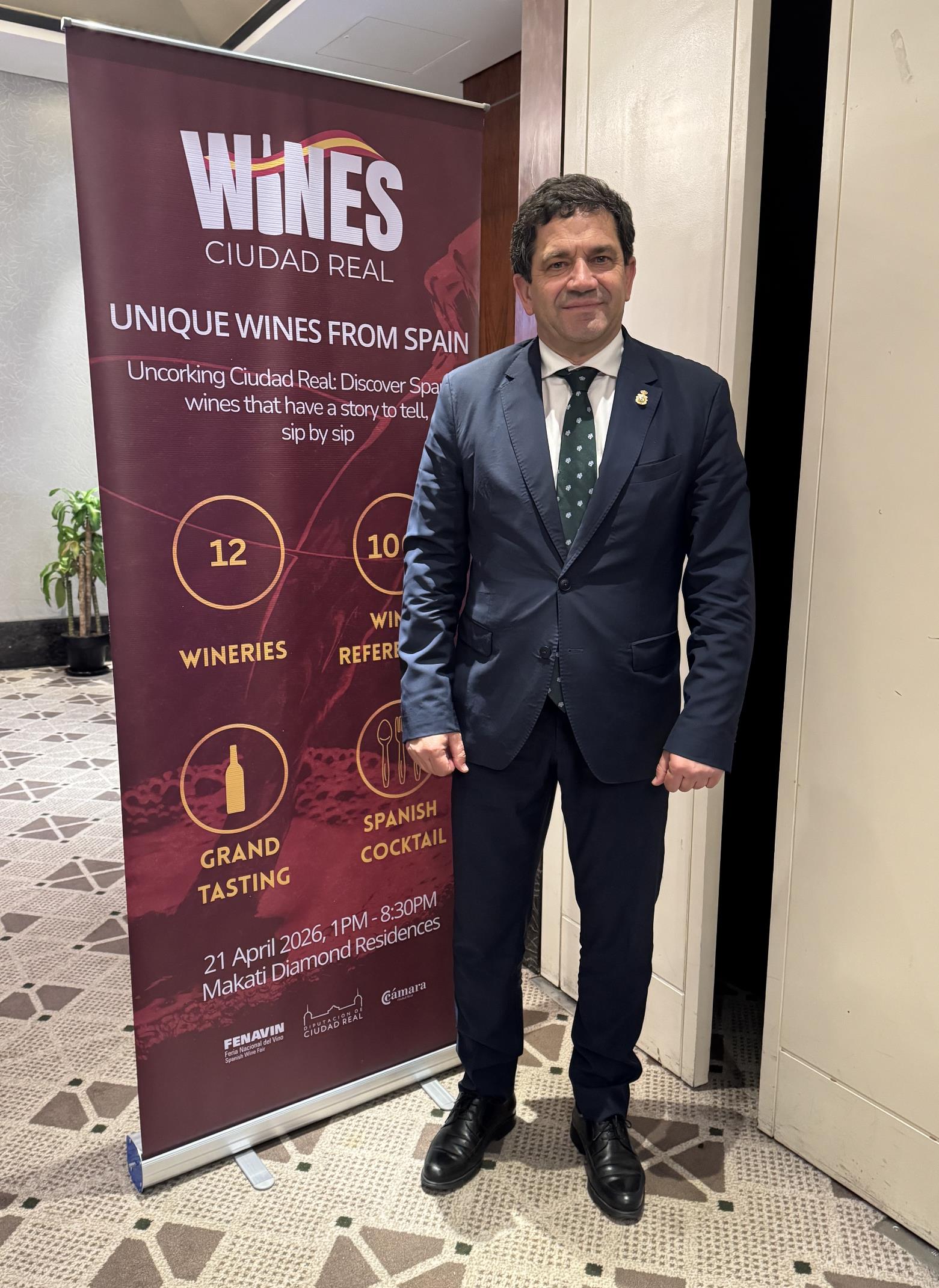
SPANISH wine producers are making a more deliberate push into the Philippines, betting that a young, evolving consumer base and growing interest in wine can open a new front for exports long entrenched in Europe and the United States.
Leading the delegation in Manila is Miguel Ángel Valverde, provincial president of Ciudad Real and head of FENAVIN, the Feria Nacional del Vino or Spanish Wine Fair. With him are 12 wineries from his home province, part of a broader effort to connect with Philippine importers and position Spanish wines more firmly in Southeast Asia.
– Advertisement –
“We have come to show what FENAVIN is and the possibilities it offers for Spanish wine,” Valverde said.
Held every two years in Ciudad Real, FENAVIN has become the main commercial platform for Spanish wine. It brings together nearly 1,000 wineries and close to 1,900 labels, drawing buyers from around 100 countries.
“For us, it is important that FENAVIN is known in all corners of the world. We want buyers and distributors from every country to come,” he said, as the Spanish wine sector gears up for the next edition of the fair in May 2027 in Ciudad Real.
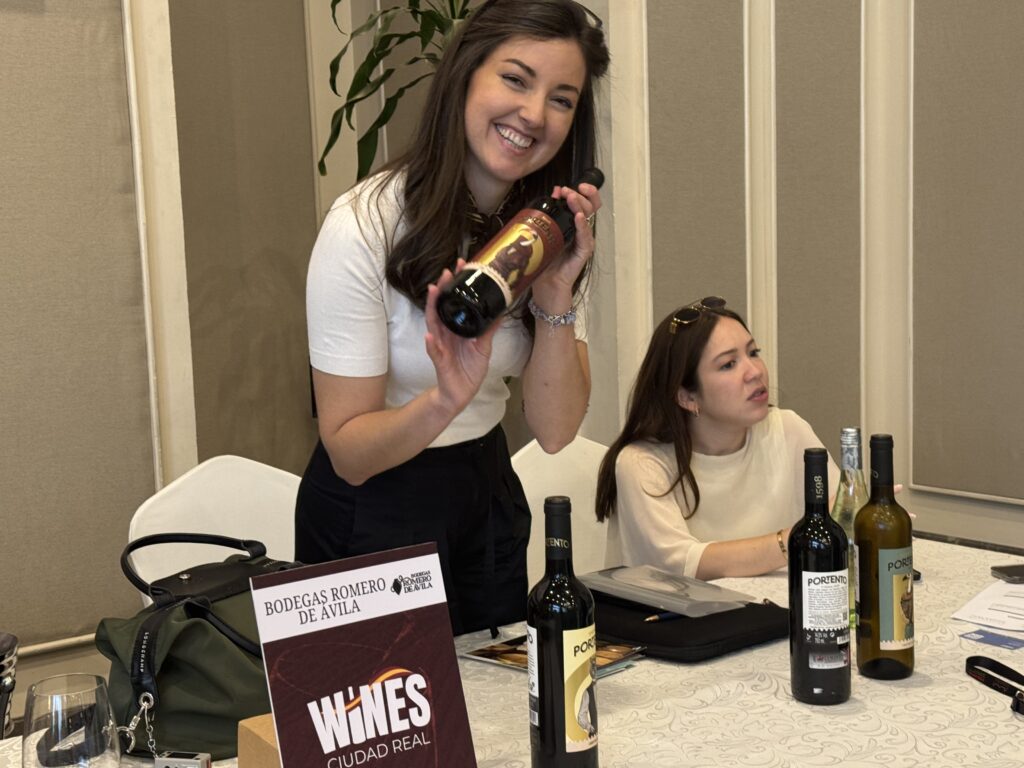
 Representative from Spanish vineyard Bodegas Romero De Avila.
The Manila visit, he said, is about laying the groundwork early. The goal, he added, is “to meet Filipino importers, invite them to experience the fair, and hopefully build business together.”
Question of value
Spain’s pitch rests on a familiar trio – quality, price and variety – but each is backed by scale and depth. Producers argue their wines match the standards of traditional European rivals such as France and Italy, while remaining priced competitively alongside Chilean and Australian labels.
That positioning is supported by a broad portfolio that spans multiple grape varieties, styles and appellations, allowing buyers to source across different price points and taste profiles.
“We have nothing to envy from other producers,” Valverde said, referring to European peers such as France and Italy. “Our quality is the same, sometimes even superior.”
He explained how Ciudad Real’s geographical location delivers an expansive line of wines, from still wines, sparkling, specialty wines, and special categories like organic, biodynamic, natural or low alcohol, Pago, Kosher, D.O., and Vino La Tierra.
Ciudad Real sits at the center of Castilla-La Mancha, widely regarded as one of the world’s largest wine-producing regions and home to the biggest concentration of vineyards anywhere. From family-run estates to large cooperatives, the province offers a broad mix of producers, grape varieties, and winemaking processes.
Spain produces roughly 40 million hectoliters of wine each year. About half comes from Castilla-La Mancha, and Ciudad Real alone contributes a significant share.
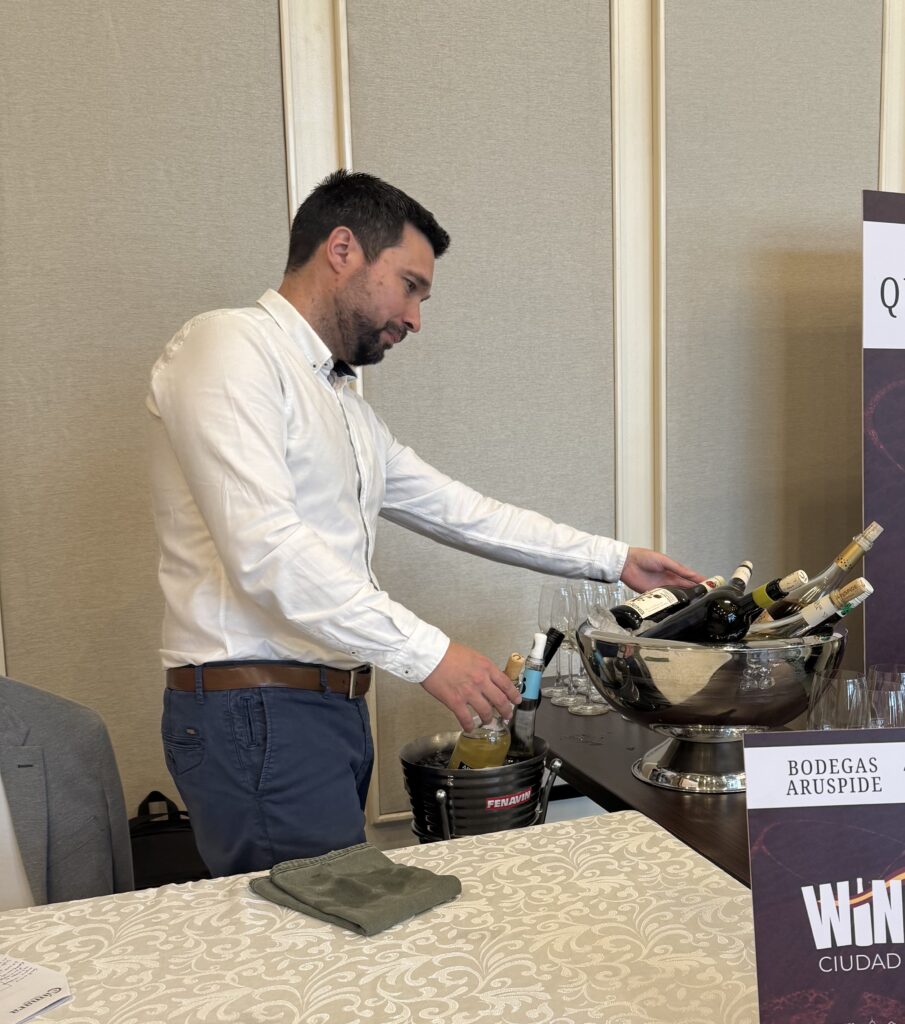
 A relatively new wine producer, Bodegas Aruspide, joins the Manila promotion and networking event.
“We could say that around 25 percent of Spanish wine comes from our province,” he said, adding that exports are a significant part of the business, with Ciudad Real generating about €600 million in overseas sales.
Younger markets
Even with global reach, producers are adjusting their strategy as export conditions become more uncertain.
Valverde cited tariffs and trade tensions, especially in the United States, as among the pressing concerns. He said this is pushing the sector to diversify its markets, noting that “the current global situation makes exports more difficult” and that producers are now “looking for new markets that can compensate.”
Southeast Asia is part of that strategy. Countries such as Vietnam, Thailand and South Korea are seeing rising interest in wine, particularly among younger consumers. The Philippines, while still an early-stage market, stands out for its long-term potential.
Wine consumption remains relatively low, but the category is gaining visibility in restaurants and specialty stores. For Valverde, that is an opportunity rather than a limitation.
“It is still a juvenile market, but that means there is more room to grow. And we want to be part of that growth,” he said, citing cultural familiarity as a subtle advantage given the historical ties between Spain and the Philippines.
The longer-term outlook depends in part on trade policy, with Spain’s wine sector watching developments in Latin America and Asia. For now, the work is more immediate, meeting buyers, pouring samples, and building relationships.
For Spanish producers, the Philippines represents a market still being shaped, where habits are changing, and preferences are forming.
“We are very happy to be here, not only to talk about our wines, but also about our culture and our identity. When you open a bottle of wine, it brings people together. We believe that can also help build new relationships in markets like this,” Valverde said.
– Advertisement –
Dining and Cooking