
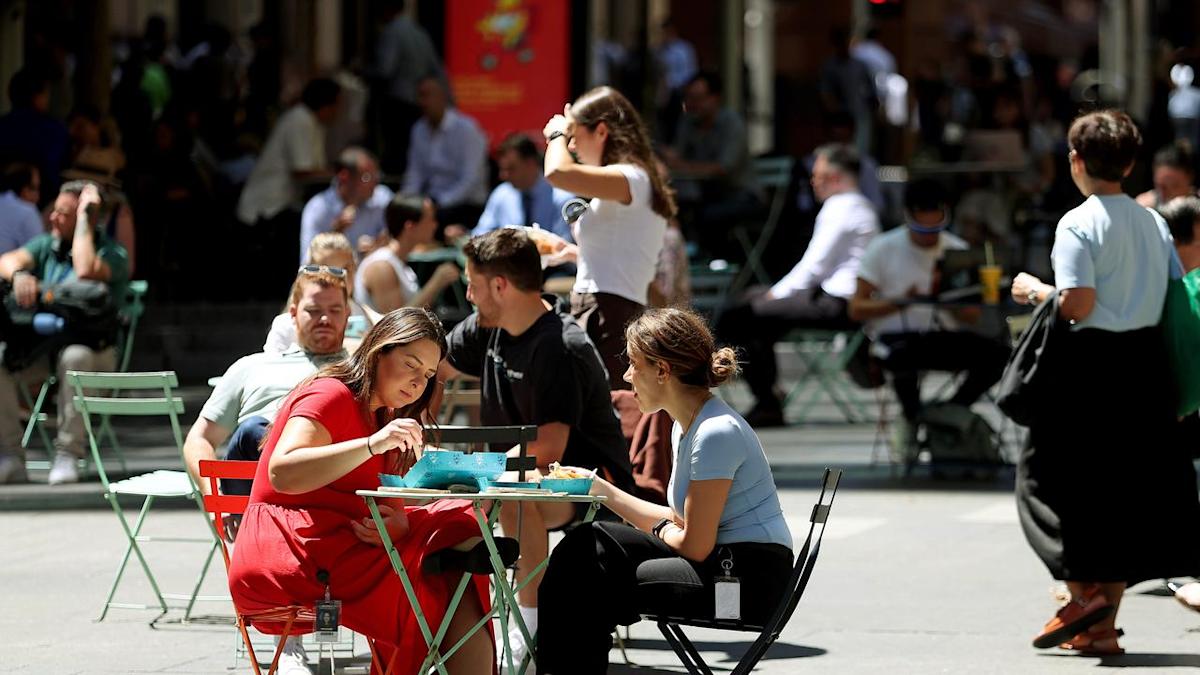
 Australians will spend millions more this weekend due to holiday surcharges. Picture: NewsWire / John Appleyard
Australians will fork out another record amount this weekend, as one of the most hated bills returns for those dining out.
Money.com.au research for NewsWire shows households are tipped to spend an additional $49.2m over the long weekend due to surcharges.
It’s a double whammy for diners following the Easter long weekend where estimates suggest Australians spent an extra $129.7m from Good Friday through to Easter Monday.
When added together, Australians are tipped to spend a record $178.9m in holiday surcharge costs.
 Australians will spend millions more due to holiday surcharges. Picture: NewsWire / John Appleyard
Money.com.au finance expert Sean Callery says public holidays this April are stinging more than usual.
“Aussies are set to pay record public holiday surcharges this month, and that’s on top of higher prices many venues have already introduced due to rising costs like fuel and wages,” he said.
“It’s another cost burden at a time when households are already dealing with rising living expenses.”
A public holiday surcharge usually ranges between 10 to 20 per cent on a bill, although there is no law against what a business charges for opening over the long weekend, but they must display the surcharge ahead of ordering.
“That $100 bill at the pub could end up costing you an extra $10 to $20, depending on where you go,” Mr Callery said.
“If the ‘dining tax’ seems too steep, it’s OK to walk away and go elsewhere. Some Aussies will choose not to eat out altogether.”
Mr Callery said more Australians would opt to avoid going out over the long weekend due to the rising costs.
Businesses say they have no choice but to lift prices due to rising wages. Picture: NewsWire / John Appleyard
Can’t squeeze blood out of a rock
Despite Australians hating surcharges paying surcharges, business groups say they simply can’t afford to absorb the costs.
Penalty rates will lead to hospitality workers’ salaries jumping by as much as 250 per cent over the long weekend as compensation for working the public holiday.
Australians living in NSW, Western Australia and the ACT will get a public holiday on Monday as a substitute for Anzac Day falling on a Saturday.
The other states and territories will miss out on the public holiday.
Australian Restaurant Cafe Association chief executive Wes Lambert previously told NewsWire that even the best-run cafes and restaurants were still spending between 30 to 40 per cent of costs on staff on a typical trading day, with holidays leading to skyrocketing bills for businesses.
Without a surcharge businesses will lose money. Picture: NewsWire / Nicholas Eagar
“Now if you are paying up to 250 per cent of that number, 2.5 times 40 is 100. That means the moment a cafe or restaurant opens its doors on a weekend or public holiday they could be losing money,” he said.
Mr Lambert says the high hospitality wage costs are similar to those in the car and recycling industries that eventually caused them to close.
“You cannot squeeze blood out of a rock. Ultimately, if consumers and politicians want to dine and drink on the weekend or public holiday it is going to cost them more,” Mr Lambert said.
“There are no other solutions, the only feasible way is for hospitality to close on the weekend and public holidays.”
Mr Lambert said more Australian businesses were simply closing during the holiday period because prices were too high.
“If wages continue to increase at the rate they have been increasing at the past few years, then we will likely be paying a barista $100 per hour on a public holiday by the time the Olympics arrives,” he said
“We are already paying them nearly $70 an hour. It is unsustainable and nobody seems to see this brick wall we are racing towards.”
Citing CreditorWatch figures, Mr Lambert said hospitality businesses were closing at double the rate of any other sector in the economy.
“The average consumer does not want to pay more for coffee, pints, steaks or schnitties, and we are woefully underpriced for government-controlled parts of our businesses including wages and superannuation,” he said.
Mr Callery points out the hospitality industry is also feeling the cost-of-living pressures.
“At the same time, it’s important to recognise that cafes and restaurants are also under pressure, and that public holiday surcharges are often the only way many venues can afford to trade on long weekends,” he said.
Dining and Cooking