
Is there an era in Roman history that particularly captures your imagination? I love that Rome is such an ancient city and that some people believe the emperors’ food still makes its way to the table today. However, I think the more modern history of Rome is much more fascinating because what we eat here is shaped by migration and lots of other factors.
More specifically, I find the Ghetto period of the Roman Jewish traditions super fascinating. A few thousand people’s food had a huge impact on the larger city’s cuisine. So, the things we think are iconically Roman, like artichokes, were brought by Sephardic Jews from Spain and Sicily during the Inquisition. Ricotta and sour cherry jam cake is one of the most classic Roman desserts and has roots in Roman Jewish tradition.
Although this community was forced into a small slum by the Pope, their traditions nevertheless transcend this period of segregation and squalor to really inform what we eat today, whether it’s cod fillets or all these ricotta-laced desserts.
Any further clichés about Roman cuisine you wanted to debunk with your book?
There are many romantic stereotypes about how we eat in Rome. The cliché of the nonna (grandmother) in the kitchen, cooking all day, every day, really needs to die. Listen, Rome is an expensive city, nonna might be cooking a couple of days a week, but in reality, a lot of women, after education reforms, got jobs they might not have had before.
Although some women may enjoy cooking for their families, I believe that Romans, regardless of gender or class, are pretty pragmatic. It’s a city where we don’t always eat structured, multi-course meals, and things aren’t necessarily made from scratch. Therefore, there are a lot of ways to bring Roman food to the table that don’t necessarily follow that nonna fetish that’s so marketable.
What’s the standout recipe in your book that you can never get enough of? Veal Samtilbocca. I know that veal can be a sensitive subject for some people, but veal Samtilbocca has to be one of the most satisfying things in the world, with all that pan sauce. So you’ve got the veal, which is rosy and on the sweet side, you’ve got the savory prosciutto, and you’ve got the herbaceous sage.
Everything is flaked with white wine. It’s impossible to eat oxtail every day — you’ve got to lie down and take a nap. So veal Samtilbocca, which is a super trattoria and at-home dish, hits the spot, but you can still go back to the office afterwards. Armando Al Pantheon’s version of veal Samtilbocca has got to be one of the best things on the planet. I love having it after starting the meal with the pasta.
What’s for dessert? It has to be the ricotta and sour cherry jam cake I mentioned earlier, also known as a ricotta torta. There’s this place in the Jewish quarter called Boccione, with no signage. It’s just number 1 on Via Portico Octavia. You can smell it from down the block, all these warm spice aromas wafting from the bakery. They sell their ricotta cake with sour cherry jam by the slice, with no plates or real napkins. You just want to gobble it up on the cobblestones immediately, even though it’s very messy. It’s truly one of those really satisfying things because of the sweet lacquered roundness of the ricotta, the crunchy pastry crust, and the tangy yet sweet cherry jam. It’s like the apothesis of Roman desserts.Where do you take overseas visitors to show them a different side of Rome? That’s easy: Da Cesare al Casaletto, my platonic ideal of a trattoria. The trattoria — being your everyday workhorse of an eating establishment — is not as formal as a restaurant and serves comfort food. Da Cesare does all the Roman classics: braised oxtails, braised meatrolls, tripe, fried or braised lamb (we do love our lamb here), but they also have a pizza oven and will do the super-thin red tomato pizza that’s ethereal, perfect, and delicious as a starter.
Then there are slightly creative things on the menu, like fried potato gnocchi in a pool of cacio e pepe sauce, which is so good… It’s a dish that no one else makes; they just invented it by throwing together two traditional pasta recipes. Cesare’s wine list also ranks among the best in the city. Most guests don’t realize that; they go there because it’s close to their house. I love that it’s unassuming yet special.
The best spot in town for a cocktail? There’s a place in Trastevere — which is basically Rome’s nightlife nation — called The Jerry Thomas. Randomly, it’s a speakeasy bar even though Jerry Thomas was dead long before Prohibition. But we’ll suspend our disbelief because the drinks are that good. This place serves super delicious, classic cocktails in a space that feels like a romantically lit sleeper car on a fancy train.What unbeatable foodie souvenir should visitors bring back from Rome? I would go to one of the extremely awesome cheese delis and get pecorino Romano from Rome, which is rare, as most are Sardinian. Ask for it to be cut into 250-gram pieces and vacuum-sealed. I’d get one for every friend. Pecorino Romano (as the name implies) has origins in Rome, but due to demand, marketing — and, well, capitalism — only between 2% and 3% is actually made in this region; the rest is made in Sardinia. The Roman palette is a bit more salt-driven. Not that pecorino from other places is super bland, but it’s much more savory when made by local producers. There is a creamier, piquant flavor to authentic Roman Pecorino.Speaking of flavors, what does Rome taste like? It tastes like a sharp sheep’s milk cheese — savory, salty, as if it comes from a farm. A reminder that Rome might be a European capital today, but shepherds in the Iron Age founded it.
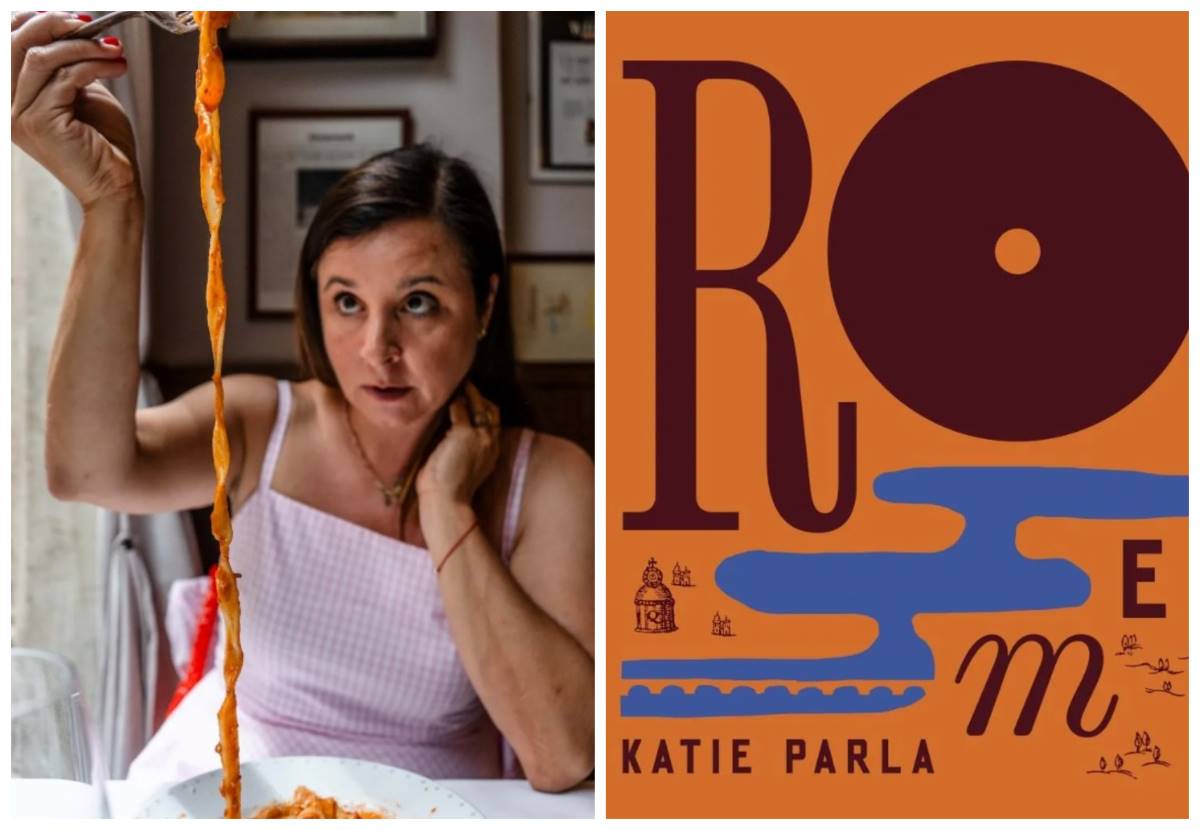
Main image: Pasta book author and Rome local of 25 years, Katie Parla savors a plate of pasta in the Italian capital. © Ed Anderson

Written by
Marie-Noëlle Bauer
Marie-Noëlle is a contributor to The MICHELIN Guide. Despite having a huge kitchen by Paris standards, this Franco-American-Haitian writer prefers the rough-and-tumble vibe of her local izakaya — where the lights often go out mid-meal — over trying to find her own culinary groove at home. As a former magazine editor for Eurostar, The Ritz Paris, and The Dorchester Collection, she enjoys chatting with chefs and other food and wine experts, whose passion she finds truly infectious — although, admittedly, it’s not enough to tempt her to use that big, intimidating kitchen.
Dining and Cooking