

How many eggs have you eaten this week? An omelet in the morning, a hard-boiled egg at lunch, maybe shakshuka for dinner. Eggs are one of the most basic foods in the Israeli kitchen. But precisely because they are such a routine part of our diet, we tend to think we already know everything about them.
In practice, many of the most common beliefs about eggs are simply inaccurate. First came the warnings about cholesterol, then praise for their protein, followed by trends promising that you can eat as many as you want. So how many eggs are really allowed? What is true, and what is just a myth?
6 View gallery

So how many eggs are really allowed?
(Photo: Shutterstock)
To clear up the confusion, we went back to the basics: what is actually in an egg, and why is it considered such a central food in our diet?
“In general, eggs are a healthy food,” says Dr. Sigal Frishman, director of the Nutrition Department at Beilinson Hospital and chief dietitian for Clalit hospitals. “We encourage people to eat food that is not ultra-processed. An egg is considered such a food. It contains all the amino acids, the components of protein, and beyond that it contains other healthy components such as a substance called choline, which is necessary for proper nervous system function, as well as B vitamins.”
Let’s start with the eternal question, one that has been debated for at least several decades: How many eggs are too many?
For years, the perception of “up to two eggs a day” became fixed, mainly because of concern over the cholesterol content in the yolk. Today, however, the picture is known to be more complex, with the focus shifting from the exact number to the broader nutritional context.
“First of all, in the yellow part of the egg, the yolk, there is also fat. It contains all the fat found in the egg, and in that fat there is cholesterol,” Frishman says. “In the past, the message really was to eat fewer eggs because of the high cholesterol levels in eggs, but today they have moved away from that.”
6 View gallery

Dr. Sigal Frishman
(Photo: Rami Zarnegar)
According to Frishman, it is now understood that most of the cholesterol in our blood is produced by the body in the liver, not from food.
“Nutrition in general affects at most 30% of the amount of cholesterol in our blood. Seventy percent is self-production. When do we produce more cholesterol? When this ‘machine’ breaks down, mainly when we are overweight and eat unhealthily. The egg is not to blame for rising cholesterol.”
Still, that does not mean excessive egg consumption is healthy.
“Today, the strong approach is to eat more plant-based foods, including plant-based proteins. The Mediterranean diet encourages this, as does the Health Ministry’s food rainbow,” Frishman adds.
Within that framework, eggs have a clear place, but not a central one.
6 View gallery
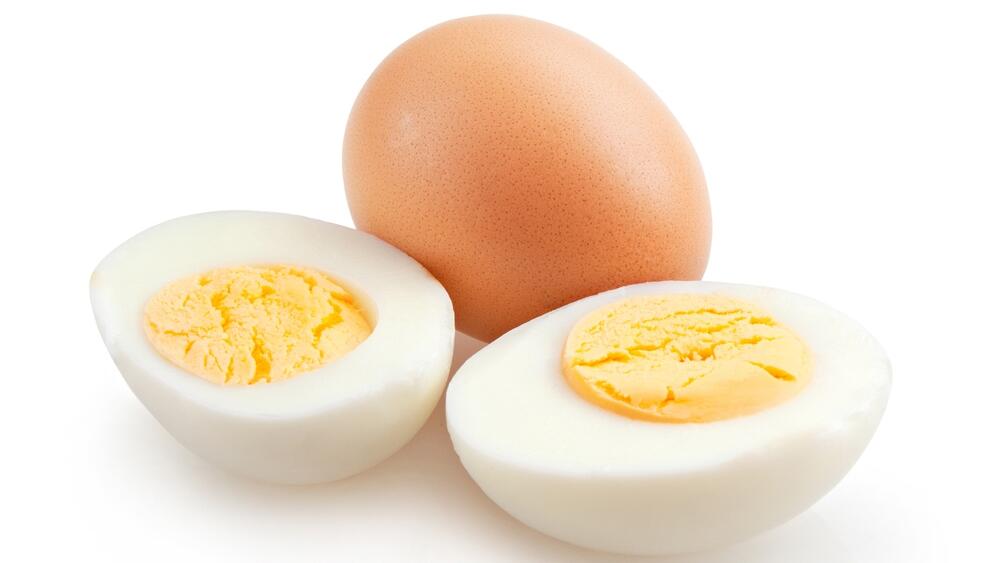
No more than two a day. Hard-boiled eggs
(Photo: Shutterstock)
“You find poultry and dairy products in the Health Ministry’s food rainbow in the orange category, which is one level below red. In the Mediterranean diet, you first have plant-based products, then fish, and only above that eggs, yogurt and poultry. There is no recommendation to eat eggs more than several times a week. It is important to vary protein sources, including plant-based protein and fish.”
So how many eggs a day? Here too, there is no single clear answer.
“I cannot say there is a recommendation by the established organizations for more than one egg a day. I can say there are dietitians who really lead people toward eating far fewer carbohydrates, more vegetables and proteins, and then there is no fear even of eating two eggs a day. More than that? I am not familiar with such a recommendation.”
Bottom line, she makes clear, eggs are not a food that should be consumed without limit.
“Is it OK to eat eggs freely? No, absolutely not. I won’t say it is dangerous, but I will say that we recommend eating according to the Mediterranean diet: much more from plants and less from animals. It is important to limit the amount from animal sources to fewer portions.”
Limor Tal-Poni, chief dietitian at Maccabi Health Services, describes a similar change in approach, but emphasizes another point that has become central in recent years: No single recommendation fits everyone.
6 View gallery

Limor Tal-Poni, chief dietitian at Maccabi Health Services
(Photo: Maccabi Health Services)
“It is true that in the past, recommendations really did severely limit egg consumption. Today we are moving more toward personalization, and the recommendations relate to the population,” she says. “What suits someone else does not necessarily suit you.”
According to Tal-Poni, recommendations change according to a person’s health condition.
“If we are talking about a healthy population, consumption of up to one egg a day is considered safe and does not increase the risk of cardiovascular disease.”
But for risk groups, there are reservations.
“When it comes to people with type 2 diabetes, there we do limit the number of eggs to three or four eggs a week, because it can also be linked to a higher risk of disease in that group.”
And what about people with high cholesterol? Here, she says, the picture is more complex.
“There is no unequivocal recommendation, but the discussion is about moderate consumption. What mainly raises bad cholesterol is saturated fat, and therefore the greater importance is limiting its consumption. From there, the recommendation is moderate consumption of up to one egg a day, but it is worth preferring proteins from other sources such as legumes, nuts and whole grains.”
In the bottom line, she returns to the point that sums up the entire discussion.
“We rely on recommendations from the American Heart Association and on studies. And I always recommend consulting a dietitian who will look at your blood tests, family history, medical diagnoses and daily diet, and based on that give precise recommendations.”
Once we understand that the cholesterol in eggs is not necessarily the enemy it was once thought to be, and that the body has more complex mechanisms that determine blood cholesterol levels, another question naturally arises: What about the yolk itself?
Is the yellow part, which contains most of the fat, still something best avoided? For years, the recommendation was clear: separate. Eat the white, give up the yolk. But today, as with cholesterol, the picture has changed.
6 View gallery
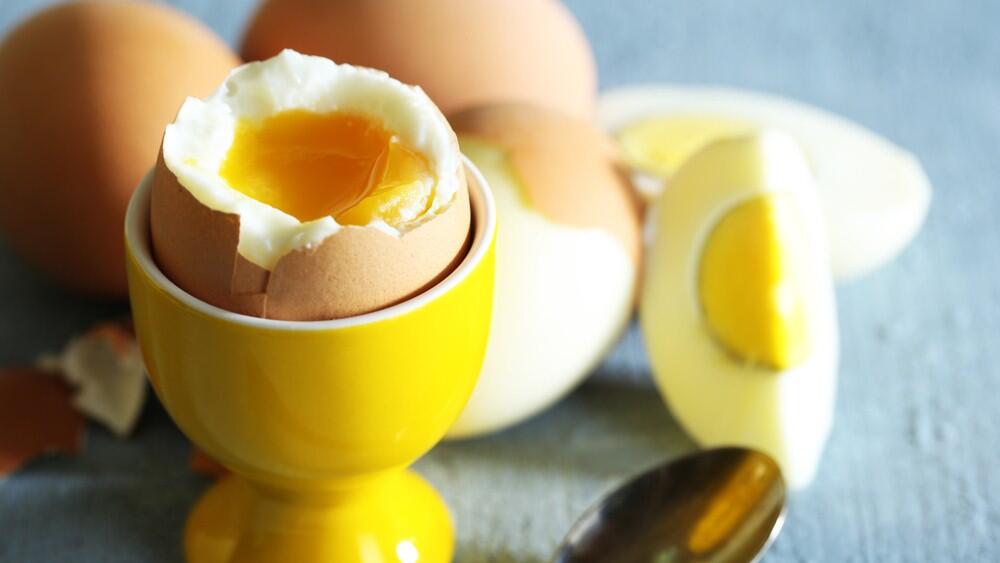
“The fat is in the yolk, but that does not mean it is less healthy,” Frishman stresses. “We recommend eating the whole egg. It is true that the egg yolk does contain fat, but it also contains lecithin and choline, which are very healthy substances. Those substances are very important for the nervous system, and therefore we recommend eating the yolk together with the white.”
Alongside debates over cholesterol and protein, there is a much simpler daily question: How should eggs be prepared?
“Well, it is obvious that I will say that a hard-boiled egg that is not fried will always be better than an omelet or a fried egg,” Frishman says.
Still, she notes an important point to consider when it comes to fried eggs.
“It is important to note that if the yolk is left raw, pregnant women are prohibited from eating it because of concern over salmonella. For other people with strong immune systems, it will not do anything terrible.”
If you do choose to make an omelet or fried egg, the way it is fried matters too. If there is another debate that follows almost every pan in the kitchen, it is not about the egg itself, but about what is placed around it: butter, olive oil or perhaps something else.
Here too, as with the myths about cholesterol, the answer is less obvious than many assume, but the general direction is quite clear.
“We will always recommend olive oil. Both because olive oil is the healthiest oil in the world and because, as noted, we recommend more plant-based sources,” Frishman says. “Butter contains a lot of cholesterol and saturated fat, and animal fat is less recommended. Tasty, but not recommended. By contrast, olive oil contains monounsaturated fatty acids, which many studies show contribute greatly to heart and vascular health. It is one of the healthiest oils.”
And what about the common claim that olive oil is not suitable for frying? According to Frishman, that too is a myth.
“There is a myth that olive oil is not good for frying. That is not true. It has a very high smoke point, which means frying with it is actually good because it does not smoke, and therefore it is recommended both for frying and baking.”
6 View gallery

One of the strongest myths surrounding eggs is linked to protein. For years, they were considered almost a must-have food for anyone trying to “get stronger,” build muscle mass or improve physical performance. Images of trainees drinking raw egg whites or eating giant omelets became an inseparable part of fitness culture. But how much of this is actually based in fact?
In practice, although an egg is considered a high-quality source of protein, the amount it contains is not necessarily as high as many people tend to think. When the body’s daily needs are examined, the picture changes.
“One egg contains between 6 and 7 grams, depending on the size of the egg, and it is clear that this is not enough, because the recommendation for people who really want to eat a protein-rich diet is something like 1.5 grams per kilogram of body weight,” Frishman says.
“For example, take an average man who weighs 80 kilograms. That is about 120 grams of protein a day. Six grams is a drop in the ocean. Among bodybuilders, the recommendation is even to eat up to 2 grams of protein per kilogram, and for that you need eggs, poultry, fish, dairy products and legumes, but in very high quantities.”
Dining and Cooking