
 4 min read
The cottage cheese craze has been going strong for a while, and the praise is well-deserved. It’s packed with protein and is a great source of calcium and other key nutrients. Plus, it’s endlessly versatile, popping up in recipes for eggs, pasta, and overnight oats—even high-protein desserts.
But there’s a new cheese on the block that’s gaining popularity for all of those reasons and a few more: farmer’s cheese.
“It’s being called ‘the next cottage cheese’ mostly because people are looking for simple, satisfying protein foods that feel familiar, but are flexible in the kitchen,” explains Jaclyn London, MS, RD, LDN, registered dietitian and author. “Farmer’s cheese fits right into the same space: approachable, nutrient-dense, and easy to use across meals, not just as a standalone snack.”
If cottage cheese is starting to feel a little ho-hum and overdone, you might want to give this new dairy darling a try.
What is farmer’s cheese?
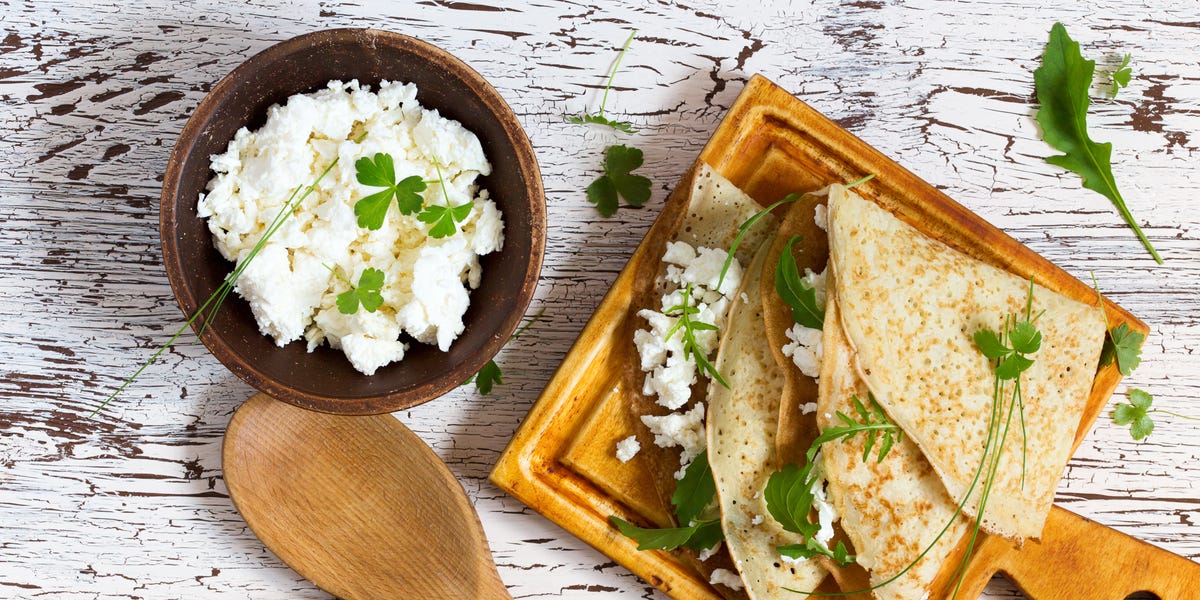
Farmer’s cheese is a soft, fresh, lightly pressed cheese that’s made from cultured milk. Like cottage cheese, it’s high in protein, clocking in at about 15 grams per serving, and contains live active probiotic cultures.
The texture of farmer’s cheese is firmer than cottage cheese, which makes it easier to cook with, London says. More of the watery whey is drained during production, which creates a drier curd and a more spreadable texture, says Caroline Margolis, RDN, a registered dietitian nutritionist and in-house dietitian for Lifeway Foods.
Farmer’s cheese also contains less lactose than most other cheeses, with about 0.1 grams of lactose per serving. “The fermentation process reduces lactose content, making it a lactose-intolerant-friendly product,” Margolis says.
Farmer’s cheese vs. cottage cheese: Which is healthier?
How does farmer’s cheese stack up nutritionally against cottage cheese? Both are excellent sources of protein, probiotics, calcium, and potassium. But each has its strengths.
Although nutritional components can vary from brand to brand, farmer’s cheese has a leg up when it comes to protein, calcium, and potassium. Still, the biggest advantage is the reduced sodium, as farmer’s cheese has roughly 40 grams per 1/2 cup (4 oz.) compared to more than 400 grams in the same amount of cottage cheese.
“It has about 85 to 90 percent less sodium per serving than most brands of cottage cheese, making it a low-sodium and heart-healthy alternative,” Margolis says.
Cottage cheese, though, has fewer calories and carbs than farmer’s cheese. Reduced-fat varieties also have a lot less fat.
Here’s a closer look at the nutrition of farmer’s cheese and cottage cheese.
Farmer’s cheese (reduced fat)
Serving size: ½ cup (4 oz.)
Calories: 160Protein: 15 gCarbs: 4 gFat: 10 gSodium: 40 mgPotassium: 180 mgCalcium: 120 mgCottage cheese (1% lowfat)
Serving size: ½ cup (4 oz.)
Calories: 81Protein: 14 gCarbs: 3 gFat: 1 gSodium: 459 mgPotassium: 97 mgCalcium: 69 mg
You certainly don’t need to completely swap cottage cheese for farmer’s cheese, but if you’re mindful of your sodium intake or just looking for a new cheese to add to your grocery haul, farmer’s cheese could be just the thing.
What to look for when buying farmer’s cheese
Farmer’s cheese isn’t as ubiquitous as cottage cheese (yet), so it might require a bit more searching in the supermarket.
“It’s becoming easier to find nationwide as interest in high-protein dairy foods continues to grow,” London says. “Many supermarkets now carry it near cottage cheese, ricotta, or other fresh cheeses.”
But, she adds, if you can’t find farmer’s cheese in the dairy case, check the specialty-cheese section.
Here are some other recommendations when shopping for farmer’s cheese:
Look for a short ingredient list: just milk, cultures, salt, and enzymes. (Some varieties don’t have added salt at all.)Try different brands or varieties to find a texture you prefer. “Some are more crumbly, while others are more spreadable,” London says. Pressed farmer’s cheese tends to be softer.Pick types that contain live active cultures so you get those probiotic gut-health benefits.Tips for using or cooking with farmer’s cheese
Like cottage cheese, farmer’s cheese can be incorporated in a ton of different recipes, both savory and sweet. It’s a simple swap for cream cheese, sour cream, yogurt, and—of course—cottage cheese.
“Because it’s mild and slightly tangy, it pairs especially well with fruit, roasted vegetables, whole-grain breads, and fresh herbs, making it an easy addition to seasonal spring meals and everyday snacks,” London says. “It’s also an easy way to add extra protein to meals without changing [the] flavor very much.”
Here are some of the experts’ favorite ways to cook with farmer’s cheese:
Used as a base for smoothies, sauces, puddings, overnight oats, or dipsSmeared on a bagel or toast as a cream-cheese replacement. You can also top it with lox, capers, cucumbers, tomatoes, or even fruit.Folded into scrambled eggs or omeletsMixed into batter for pancakes, waffles, or crepesTopped with nuts, seeds, whole-grain cereal or granola, and a drizzle of honey or maple syrupScooped on top of potatoes instead of sour cream or as an accompaniment for roasted vegetables
Stefani (she/her) is a registered dietitian, a NASM-certified personal trainer and the director of the Good Housekeeping Institute Nutrition and Fitness Lab, where she oversees all nutrition and fitness-related content, testing and evaluation. She holds a master’s degree in clinical nutrition from New York University, as well as advanced certifications as a Women’s Fitness Specialist and a Behavior Change Specialist. Stefani is dedicated to providing readers with evidence-based content to encourage informed food choices and healthy living. She is an avid CrossFitter and a passionate home cook who loves spending time with her big fit Greek family.
Dining and Cooking