
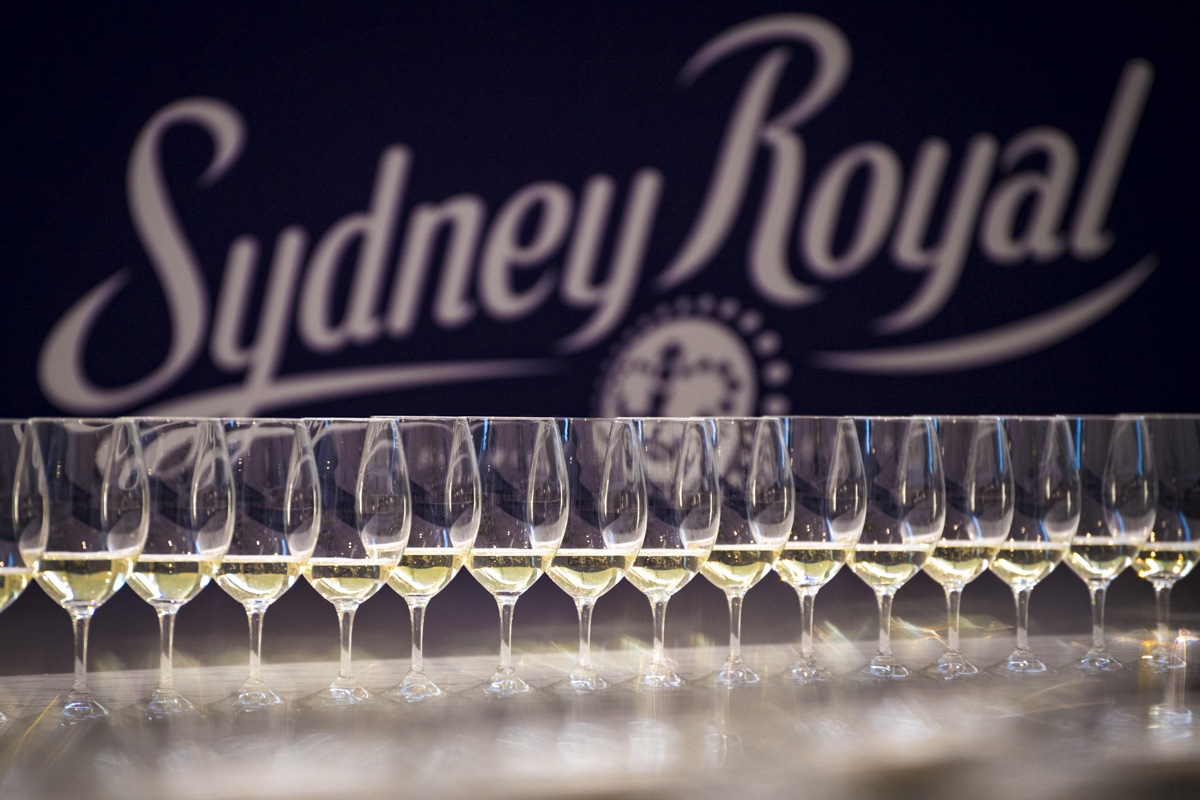
In 2026, the Sydney Royal Wine Show marks a 200-year milestone since wine was first entered as a class in the Agricultural Society of NSW Show.
What began as a competition dominated by fortified wines has moved with the industry at every step, through Hocks, Clarets and Burgundy classes, through the table wine revolution of the 1960s and 70s, to moments where Australian wines firmly found their place on the international stage, recognised for our exceptional varietal wines. The evolution continues today, keeping up with stylistic changes in how consumers are drinking.
As the Sydney Royal calls for entries for this historic 2026 Show, it’s worth reflecting on how much the show has contributed to the advancement of Australian wine, with some notable characters at the helm, firmly committed to agricultural excellence.
2025 Wines being judged
Humble beginnings, starting in 1826
In 1826, during the fourth annual agricultural show, the Agricultural Society of NSW offered a small gold medal for the best sample of Colonial wine, not less than 10 gallons, certified on oath to be from the vintage of that year. By 1828, there were only four classes for wine, despite the colony only having a handful of serious growers. By 1902, a purpose-built exhibition space called ‘the wine kiosk’ had opened at the Agricultural Society of NSW’s home at Moore Park, fittingly between Burgundy Street and Claret Street, giving exhibitors the chance to showcase their wines. For a wine industry still establishing itself, having a dedicated permanent building at Australia’s most significant agricultural gathering was no small thing.
A full timeline of the Show’s history is available on the RAS website.
There is a myriad of fascinating stories woven throughout the rich tapestry of the show, often tracking the changes that were happening as the Australian wine industry found its own rhythm. From names such as Lindemans and Penfolds, who dominated the early years, to quiet achievers like Eliza Cox, the first recorded female exhibitor in the wine section in 1870. Cox entered three classes under the Winbourne name from her Mulgoa property: her White Frontignac took first prize in Class 241, her White Burgundy earned second prize in Class 235, and her Verdelho received an Honourable Mention in Class 234.
In 1891, the Society received the Royal prefix, becoming the Royal Agricultural Society of NSW. Its wine competition had by then been a fixture of the Royal Easter Show for decades, exhibited in the annexe to the Main Pavilion before eventually outgrowing it entirely.
The mission of the Royal Agricultural Society of improving agricultural excellence has always been at the heart of the show, and the society played a vital role in spreading viticultural knowledge. The Royal Agricultural Society’s annual publications served a serious practical purpose: advancing the knowledge and skill of Australia’s grape growers. The 1925 RAS Annual offers a vivid illustration of this mission in action, recording a lecture delivered during the Show by Mr H.L. Manuel, NSW Government Viticulturist, on the diseases of the vine.
In 1924, the committee noted the difficulty of securing judges during the February harvest period. By 1939, the show had shifted to October. Eventually, it found its permanent home in July, a time when the previous vintage is in the bottle and there is still time to act on what the judging reveals.
Continued evolution to keep pace with stylistic changes
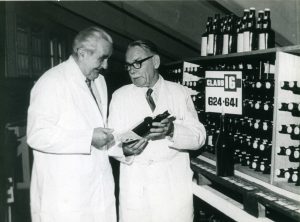
1985-1995 Wine judging
The introduction of the medal system in 1961 was the most significant structural change in the show’s history, but refinement continued. The Wine Committee and the people who have chaired it have kept the show honest, evolving with stylistic changes in wine and shifting drinking trends.
The show has also shaped how Australian wine is assessed more broadly. The move to a 100-point judging system, digital tablet-based scoring for greater consistency, the establishment of the Capital City Wine Shows Committee, and regular meetings with NSW regional shows have all strengthened the national network. Each change has been made with the same purpose: to make the assessment more rigorous, the feedback more useful, and the results more meaningful for the producers who enter.
The passionate individuals driving the show forward
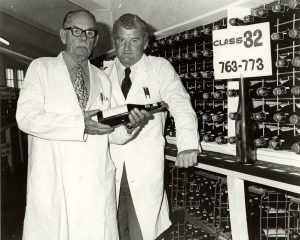
1977 Royal Easter Show – George Fairbrother and Len Evans
Few industries have produced figures who shaped it as decisively as those who led the Sydney Royal. Len Evans AO, James Halliday AM, Brian Croser AO and Iain Riggs AM all made their mark on wine assessment and quality during their tenure as Chair of Judges. Len was appointed in 1978 and held the role for more than two decades. He brought more than expertise to the judging panel: deep knowledge, rigorous standards and an infectious passion for the craft that continues to shape the show today.

2017 – Chair of Judges Sam Connew with future chair of judges Sarah Crowe, Mike De Iullis
There have been moments of evolution, such as in 1985 when a young Pam Dunsford started as an Associate Judge alongside Miss Jane MacQuitty, Wine Correspondent for The Times of London, the first woman from overseas ever nominated to the RAS judging panel. That two women of such distinction appeared on the same RAS judging panel in 1985 marked a quiet but significant turning point in the show’s history. International judges have played a role in getting our Australian wine stories out to the world since the early days. In 2016, the ladies proudly took charge: Samantha Connew became the first female Chair of Judges, Ms Michelle Bouffard was the International Judge, Lyndey Milan served as Chair of the Wine Committee, and Sally Evans was Chief Steward.
Many of today’s most respected wine judges began their judging careers as young Associate Judges, progressing over years to Panel Chairs and, in the case of a distinguished group of alumni, to chairing the show itself. The discipline of assessment shapes careers, and what judges take back to their own companies and vineyards ripples far beyond judging week. The Alumni of Judges over the last 25 years tells its own story about the leading wine professionals and the breadth of experience involved in assessing a wine as part of the Sydney Royal.
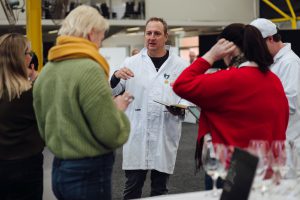
2025 Chair of Judges Mike De Iuliis discussing with panel
Current Chair of Judges, Mike De Iuliis, notes: “200 years, 31 judges from around Australia and all parts of the industry. The way that agricultural shows have helped Australian wine evolve has significantly benefited many, improving products by comparing them against the best in the business. There is a sense of pride and prestige associated with Sydney Royal. The panels of judges truly are the best in the business and the integrity throughout the judging process is of paramount importance. I’ve seen the benefits first-hand, introducing my wines to a much broader audience, having won accolades at this prestigious show.”
But it’s not all about the medals, with the show system generously giving back to the industry. Since 2013, over $275,000 has been invested to support 63 scholars, advancing the next generation’s understanding of viticulture, winemaking and wine assessment. Many of these scholars are now judges, alongside winemakers, journalists, sommeliers and retailers who gather to assess wines blindly, providing every entrant with critical, objective insights from accomplished palates they would not otherwise encounter. For smaller wineries without access to formal technical consultation, this rigorous assessment can be genuinely transformative.
Getting Medal-Winning Wines in Front of Consumers
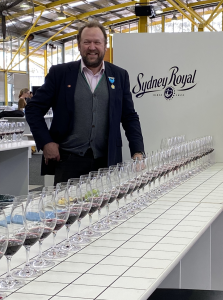
2025 Chair of Wine Committee Angus Barnes at judging station
Medal-winning wines from the Sydney Royal are showcased at the Grape, Grain and Graze Festival each September, where over 1,000 producers, industry professionals and consumers gather at Sydney Showground to sample award-winning wines. Trophy winners are further celebrated at the Wine Communicators of Australia Trophy Luncheon, attended by over 300 industry professionals each year, and medal-winning wines are invited to participate in the medal showcase at the Royal Easter Show, the largest ticketed event in the Southern Hemisphere.
Enter the 2026 Sydney Royal Wine Show
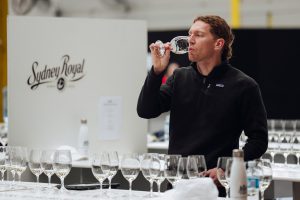
2025 Hugh Spinaze – Associate Judge and Scholarship Recipient
A Sydney Royal medal is one of the most recognised and trusted marks in Australian wine: on shelf, on a wine list, and in the hands of a consumer making a decision. In a milestone year like this, that recognition carries more weight than ever.
The Royal Agricultural Society of NSW invites Australian wine producers to be part of history. For two centuries, the Sydney Royal Wine Show has continued to elevate the quality of Australian wine, evolving with the times, shining a light on established and emerging producers alike, and championing excellence across every vintage.
Entries open 22 April and close 20 May 2026. Enter at https://www.rasnsw.com.au/competitions/Food-Beverage-and-Produce/wine
Dining and Cooking