

FARGO — Put yourself in the shoes of people who lived here that winter day 104 years ago.
You’ve worked all week. The wind hasn’t let up. It’s bitterly cold as you shovel snow, carry coal to the furnace and crank the engine of the car to life.
You crave an escape — anywhere warm.
Then you see it: Rudolph Valentino’s latest picture is playing. The actor known by many as “The Great Lover” stars as a handsome sheikh romancing a beautiful English woman on the golden sands of the Sahara — a world far removed from your own.
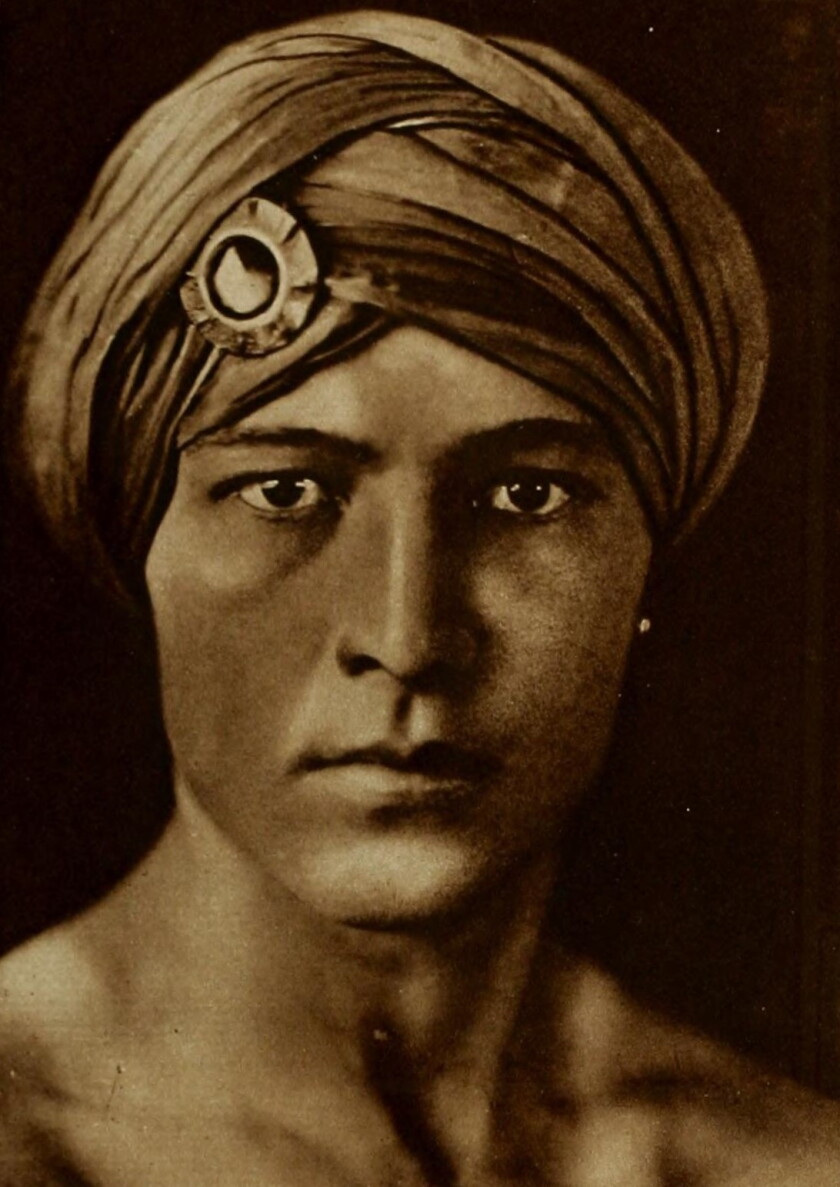
Rudolph Valentino’s breakout role was in 1921’s “The Four Horsemen of the Apocalypse,” but his image and legacy was secured as a Latin lover with the release of “The Sheik” later that year.
Contributed / Public Domain
It’s worth the 25-cent ticket to be whisked away even for an hour.
And then — just as you’re ready to go — the storm hits.
In 1922, one of the worst blizzards in years shut down railroads, piled up mammoth snowdrifts and kept moviegoers home across North Dakota. Theaters sat quiet, waiting it out.
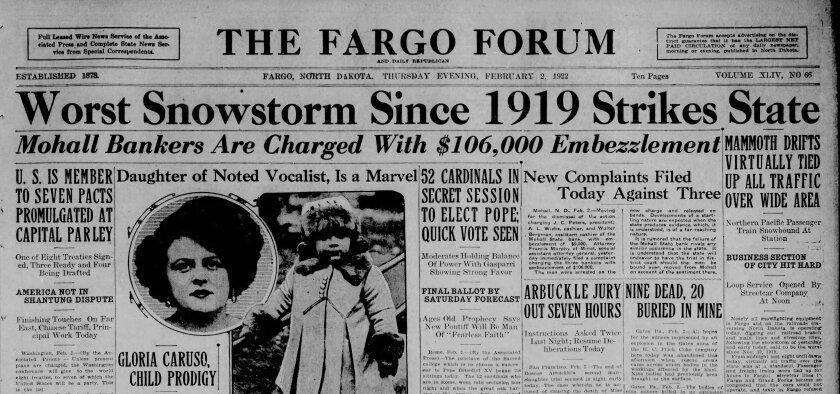
Trains and cars ground to a halt during a severe winter story the first week in February 1922.
Contributed / Feb. 1, 1922, Fargo Forum via Newspapers.com
But not for long.
When the doors reopened, audiences came back for that escape — “The Sheik,” a film so popular it was held over after the storm, drawing people once again into a world far removed from wind and snow.
For North Dakotans, that kind of escape meant something.
It wasn’t just entertainment. It was warmth and glamour.
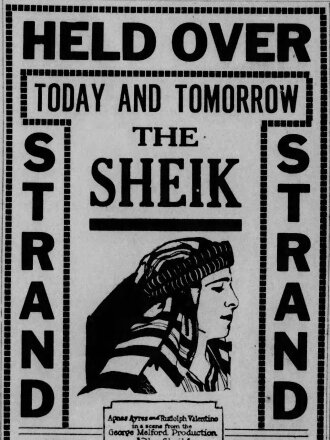
Rudolph Valentino’s “The Sheik,” was shown to sold-out audience at a Fargo theater and when a blizzard prevented moviegoers from attending, the theater held the film over for a few more days.
Contributed / Feb. 6, 1922, Fargo Forum
Movie stars like Valentino didn’t just fill theaters, they lifted spirits.
As we mark the anniversary of his birth on May 6 and approach the 100th anniversary of his death this summer, it’s worth remembering how his legend endured, not just on the screen, but in everyday life.
Even here.
Even at the dinner table.
And with a recipe that reads more Midwestern hotdish than exotic Italian cuisine.
Before he became Valentino, he was Rodolfo Pietro Filiberto Raffaello Guglielmi di Valentina d’Antonguolla — a young man from southern Italy who arrived in the United States in 1913 with little more than ambition.
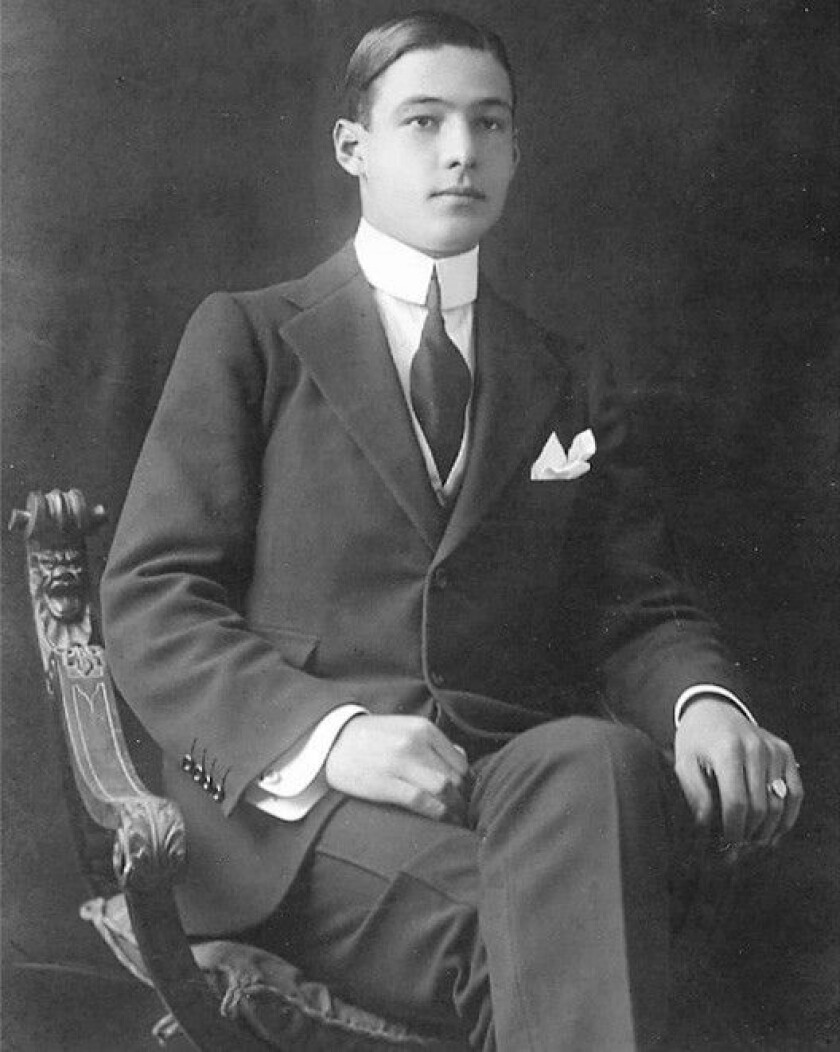
Rudolph Valentino is pictured in Italy just before his departure for the United States.
Contributed / Public Domain
He worked odd jobs. He danced for hire. He reinvented himself.
By 1921, everything had changed. A tango scene in “The Four Horsemen of the Apocalypse” caught audiences’ attention. Later that year, “The Sheik” made him a sensation.
He wasn’t like other leading men.
He was expressive. Attentive. Foreign. Romantic in a way that felt new. He didn’t just act — he looked at women, and audiences noticed.
For many, especially women far from Hollywood, he stirred something that everyday life did not.
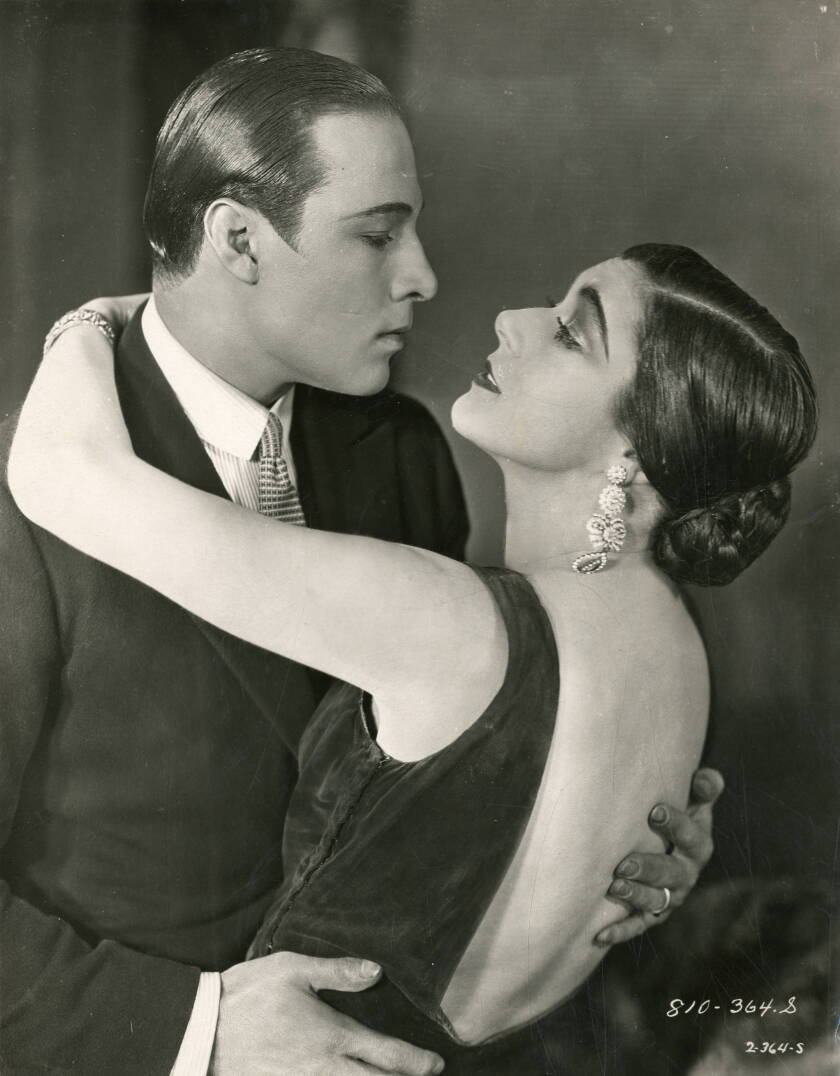
American women swooned as Valentino romanced Nita Naldi in Cobra in 1925.
Contributed / Public Domain
So imagine how it felt when he died just a few years later.
In August 1926, at just 31, Valentino’s sudden death from an infection following surgery for a perforated ulcer triggered mass mourning. Crowds gathered. Women fainted. Newspapers struggled to capture its scale.
For his fans in the Upper Midwest, who had once escaped blizzards through his films, the loss hit hard.
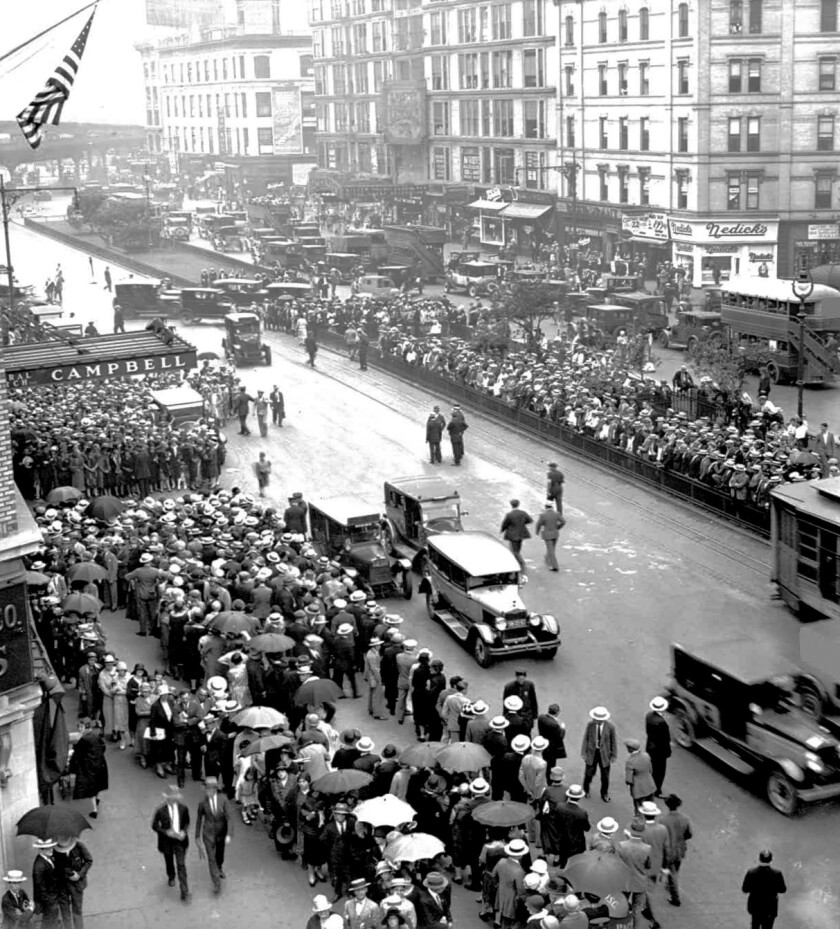
Crowds gathered at the Frank E. Campbell Funeral Chapel in New York City for Valentino’s funeral in 1926.
Contributed / Public Domain
A dozen years later, that feeling hadn’t entirely disappeared.
In 1938, The Forum noted that Valentino’s films were still drawing audiences — in some cases, outpacing newer releases. His name appeared again in headlines, helped along by renewed publicity from his one-time girlfriend, Pola Negri, who revisited their romance in interviews.
Each August, crowds gathered at his grave. Some came to pay respects. Others watched for the mysterious “woman in black,” said to appear each year — a ritual that only deepened the mystique.
One headline declared: “The greatest of all movie lovers has his day again.”
Apparently, that day included spaghetti.
A syndicated 1938 column, written by Mrs. Gaynor Maddox, offered readers something unexpected: recipes tied to Valentino himself.
One was for “Valentino Spaghetti,” linked to the lavish spaghetti parties he hosted during his rise in the Roaring ’20s.
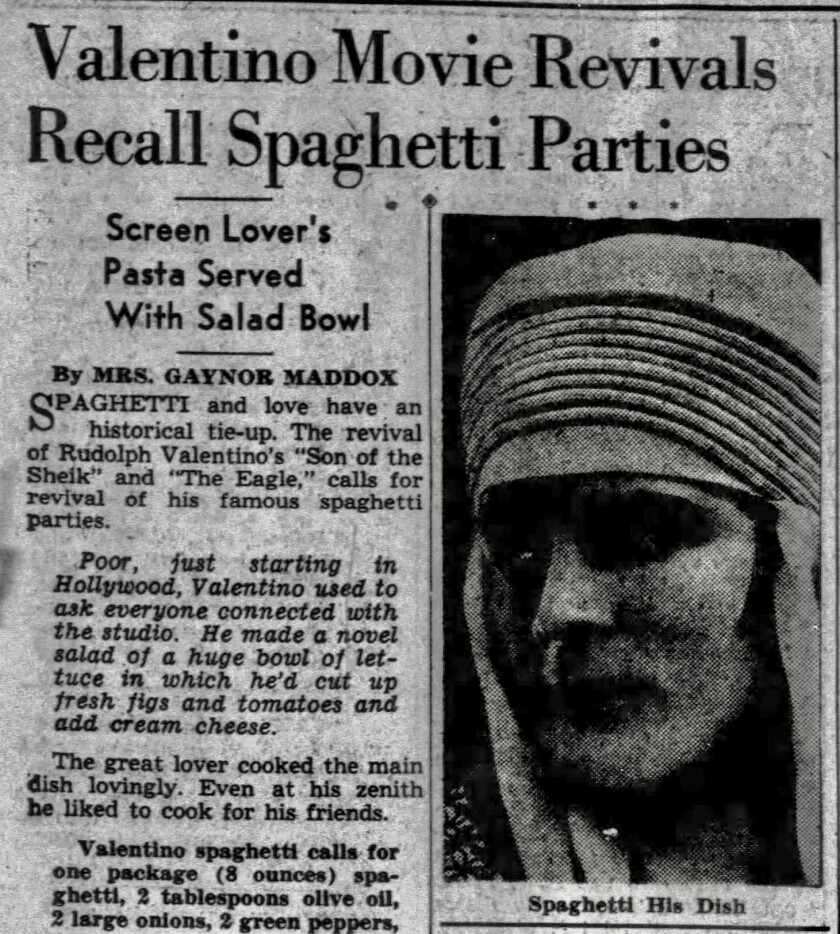
Twelve years after his death, Valentino had a revival as his movies were as popular as ever and the public learned more about his life off screen, including his spaghetti parties in the 1920s.
Contributed / Sept. 16, 1938, The Buffalo Times via Newspapers.com
The dish was hearty — strikingly so.
Two onions. Two green peppers. A modest amount of pasta. Tomato soup. Cheese. Meat. Baked together into something closer to a casserole than what we think of today as Italian food.
It wasn’t subtle. But it didn’t need to be.
In the 1920s, a dish like this could signal abundance — a table meant to impress, to entertain, to feed a Hollywood crowd.
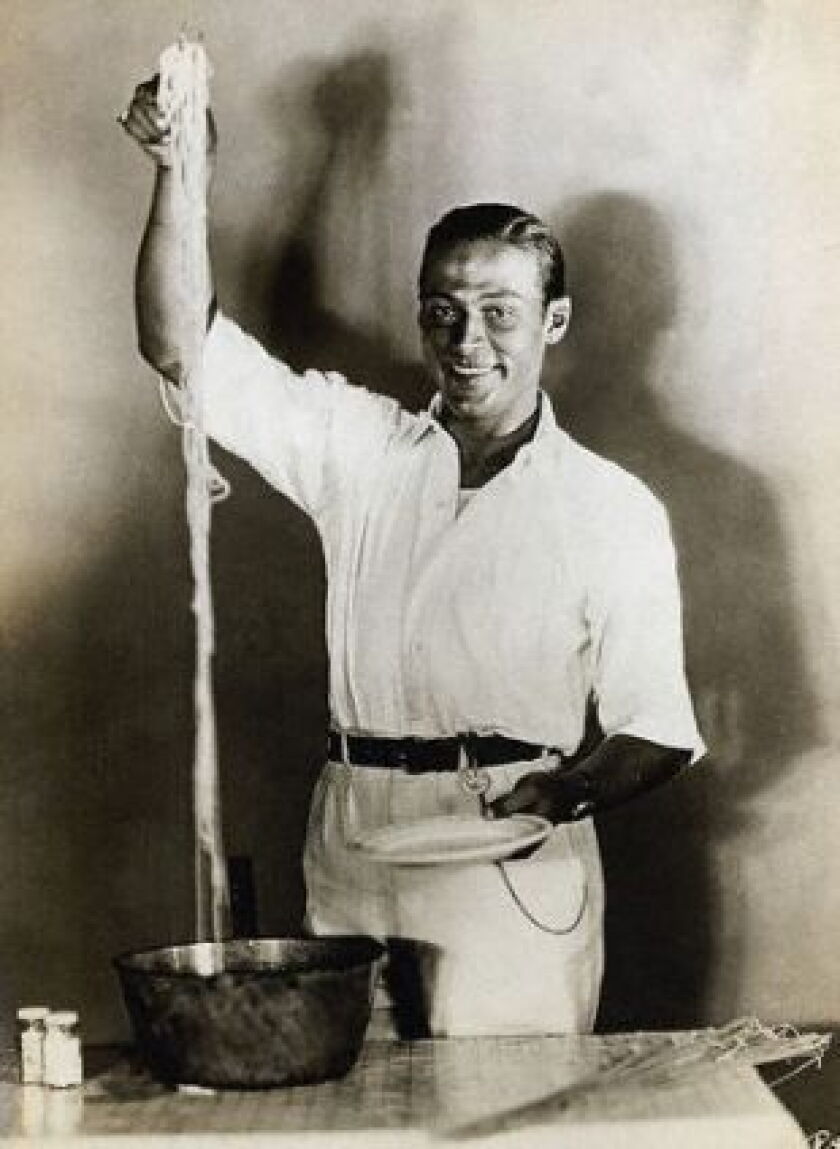
Rudolph Valentino was said to prefer homemade spaghetti that was close to six feet long, as seen in this photo, which was widely circulated around the release of his spaghetti recipe.
Contributed / Public Domain
A decade later, that same recipe made a different kind of sense.
In the 1930s, vegetables were often cheaper than meat. Dishes were built to stretch ingredients, to feed families, to satisfy both appetite and budget at the tail end of the Great Depression. What may have once felt extravagant now felt practical.
The same dish, in other words, could reflect two very different eras.
Even the idea of “Italian” food was still evolving. Basil and oregano — staples today — were not yet standard in American kitchens and are not included in Valentino’s dish.
The recipe went viral before “going viral” was a good thing, and it and follow-up stories were printed in newspapers across the country.
But not everyone agreed with Valentino’s version.
After reading Valentino’s recipe, Lena Coniglione of Hartford, Connecticut, wrote, “My Italian blood boiled over his way of cooking spaghetti!”
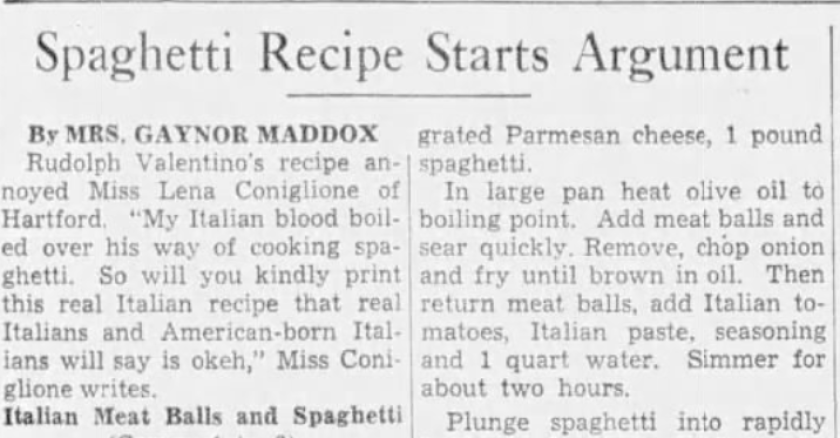
While many Americans in 1938 embraced Rudolph Valentino’s spaghetti recipe from the 1920s, some people of Italian descent cried foul with his Americanized version.
Contributed / Sept. 30, 1938, The Albuquerque Tribune via Newspapers.com
She asked Maddox to print the recipe her family used, passed down directly from her grandmother in Naples, Italy. That recipe reads like something you’d see today — featuring meatballs, garlic, tomato sauce and seasoning.
Authentic Italian is nice, but it wasn’t Valentino’s recipe.
Which raises another question: How closely did this version resemble what Valentino actually ate? As an Italian immigrant, he likely grew up with something closer to Coniglione’s recipe — the kind passed down through generations in a grandmother’s kitchen.
So was this his own adaptation, shaped for American tastes and Hollywood guests? Or was it a newspaper’s best guess at a dish that had already been transformed in translation?
For American moviegoers still fascinated with the idol, his version likely hit a sweet spot — something that felt exotic enough to be interesting, yet hearty enough to be satisfying.
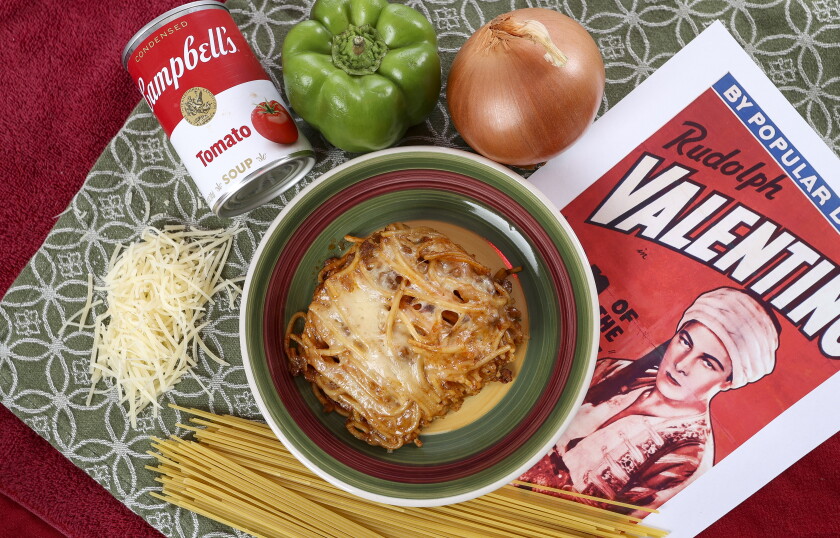
Forum reporter Tracy Briggs recreated Rudolph Valentino’s spaghetti recipe.
Alyssa Goelzer / The Forum
My curiosity was piqued. I had to try Valentino’s Spaghetti. I was skeptical. Seriously, two green peppers and two onions for just 8 ounces of pasta? That’s roughly four times the amount of onions and green peppers you’d expect in a modern spaghetti dish. And just tomato soup for sauce? Paprika and cayenne instead of oregano or basil? Craziness.
I’m not a brave cook, so I decided to tweak Rudy’s recipe just slightly while holding on to the overall concept. I cut back on the onion and pepper slightly and added more pasta. Otherwise, it’s all the same — tomato soup, paprika and all.
The result: As Valentino himself might say, “Delizioso!”
I was as surprised as you might be.
My entire family actually really liked this dish, even my green pepper-hating husband. It was definitely more like a baked spaghetti casserole. Hearty and filling. So maybe better to say: “Delizioso! Ora ho bisogno di un pisolino.”
I don’t think it’s as good as an authentic Italian spaghetti with marinara, basil and oregano. But if you’re looking for a stick-to-your-ribs dish from a bygone matinee dreamboat, this fits the bill. So nearly 100 years after his death — and on what would have been his 131st birthday — Valentino still has a way of warming people up.
Thanks, Rudy. I never met you, but I get it now — the swooning, the romance … and yes, even the spaghetti.
Rudolph Valentino’s Spaghetti Casserole (updated 2026)
Ingredients:
16 ounces spaghetti
2 tablespoons olive oil
1 large onion
1 large green pepper
1 pound ground beef
8 ounces (or more) parmesan cheese
3 cans tomato soup
1 teaspoon salt
1/2 teaspoon pepper
1 teaspoon paprika
Pinch of cayenne pepper
Directions:
1. Chop onion and pepper into small pieces.
2. Heat olive oil in large frying pan.
3. Cook onion and pepper until nicely browned about 5 minutes. Remove from pan.
4. Brown one pound of hamburger in the same pan.
5. Cook spaghetti in a large kettle of boiling salt water until al dente. Drain and set aside.
6. Add onion and pepper back to the pan with the hamburger. Stir in tomato soup and seasonings. Mix well and simmer for 15 minutes.
7. Rub large baking dish with a pat or two of butter and a clove of garlic.
8. Add spaghetti to the sauce pan. Combine and pour into baking dish.
9. Sprinkle cheese on top. Cover with foil.
10. Bake in preheated 325 degree oven for 20 minutes. Take off the foil for the last 5 minutes or so to allow the cheese to brown.
Dining and Cooking