
Kitchn and Yahoo may earn commission from links in this article.

Credit: Petra Ford
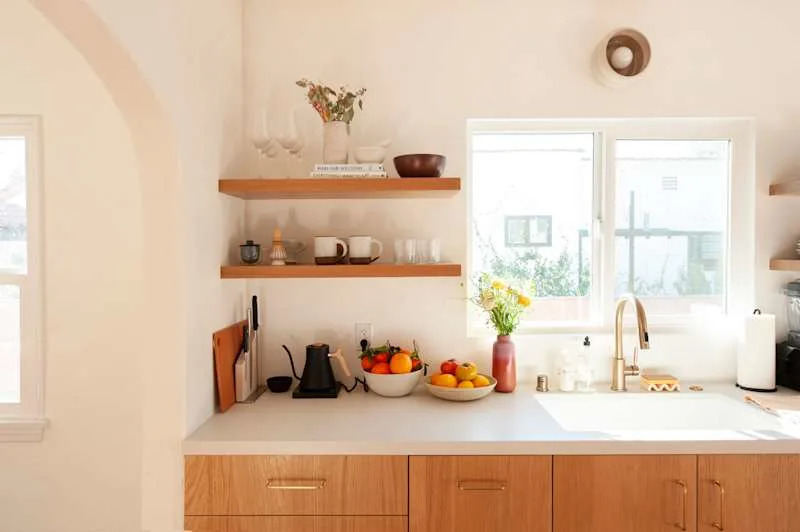
For a few months while I’m living in Paris, I’m getting up close and personal with a real-life French kitchen. Not a vacation rental or Airbnb setup; I was fortunate to rent this studio while the person who’s owned it for 20 years is away. That means I’m getting an immersion into what is and is not in a typical Paris kitchen (albeit one with a recent thoughtful renovation and niceties like a dishwasher and new induction oven!).
I’ve been spending time and cooking most of my meals in this kitchen, plus hanging out with a friend who lives nearby, French-Canadian artist Zoé Duchesne, who also has a beautiful kitchen in her loft. During this time, I’ve found some differences in American and French kitchens that just make sense. Here’s what I’ve noticed:
Related: Chocolate Bark Recipe1. Fewer gadgets
I said au revoir to my Instant Pot, along with any and all other kitchen gadgets when I came to Paris. Zoé has been in Paris for 20-plus years now, but has lived in Quebec and New York, so she’s well acquainted with our North American penchant for unitaskers and gadgets, which … just aren’t a thing here.
“They don’t have as much equipment,” Zoé says. Rather than blenders or “things used to press the lemon, make the juice,” for example, she says, here they’ll do these things by hand. That tracks with the culture of quality here, of taking the time to do things by hand (even if your kitchen does have space for tools). My lemon squeezer is at home with the rest of my gadgets, but I’ve found there’s just something satisfying about squeezing a lemon, the feel and the scent of the fruit that’s about to make something more delicious.
2. Way less food
Smaller kitchens, of course, mean less space for storing things, and my grocery shopping rhythm has changed drastically. Before living in Paris, Zoé says she would stock up on way too much stuff. “If I get a tomato can to make my tomato sauce, I always [get] like eight cans … [and for] things like rice and things that are dry, it’s like I prepare for war.” Same. In my U.S. home, we’ve always tended to stay stocked up, just because we can.
Here, though, not only is there simply not enough space, but you’re carrying your groceries home, either in bags over your shoulder, or in a small wheeled caddy. If you don’t need eight cans of tomatoes that day, no way are you going to carry them several blocks home and up several flights of stairs! As a result, kitchens run on a much more streamlined inventory. The bonus? Everything here is always uber-fresh, because I’ve gotten in within the last day or two, and I can see all of the contents of the (tiny!) fridge, so nothing gets shoved to the back and wasted. Instead, I get creative with any leftover ingredients and have concocted any number of fun salads, gratins, and egg dishes that make the most of what I already have.

Credit: Dana McMahan
3. No food storage containers
Most people have cabinets brimming with storage containers at home, right? Here, Zoé explains, rather than having the massive stock of storage containers and the like, French people are more likely to just put their plate directly in the refrigerator if there’s something left they want to keep. How do they cover it? “With a plate,” she says — which, of course, seems obvious once she says it (and makes me wonder why we’ve been conditioned to think we need special and separate items just for storage).
4. But they do have jars
Ah, j’adore French storage jars! These are perfect for storing everything from dry goods to things you’ve preserved yourself. They’re easy to buy at the French equivalent of hardware stores (or IKEA!), or you can also just repurpose jars that delicious groceries come in. Since I have limited storage space, I use jars on an open shelf to store things like Müeslix, dried tomatoes, and sugar, rather than take up limited pantry space, aka one single drawer. It’s not just about aesthetics (although I’ve always been Team Open shelf) — but there’s something soothing, to me anyway, about decanting into something pretty that I can also then easily see. No running out of that yummy granola from my favorite coffee shop when I can see at a glance how much is left!

Credit: Dana McMahan
5. Silverware organization is next-level
The French silverware drawer is a marvelous thing. It’s generally far, far bigger than ours in the States, and I’ve yet to see one without a perfectly fit, no-space-wasted organizer in it (like this one!). Because these drawers don’t hold just the basic cutlery; you’ll find all manner of accoutrements from small tools like whisks and peelers to necessities like champagne savers. This efficiency matters — a lot — when you’re working in a small space like a studio kitchen.
6. Cutting board, but make it work
Besides a couple of traditional cutting boards in my rental apartment kitchen, there’s one that earns its keep on the counter. Why? Its slotted top allows breadcrumbs to fall into a tray board below for easy cleanup. And when bread is as essential a part of daily life as it is in Paris, that definitely makes sense!
While I probably won’t adopt every French kitchen practice when I’m back home (I do miss my Instant Pot on busy days), there’s something refreshing about a kitchen where everything has its place and serves a clear purpose. These thoughtful solutions make even a tiny studio kitchen work beautifully — and might just inspire a few changes in my own kitchen back home.
Further Reading
Grandma’s Roasted Potatoes
The Ina Garten Recipes We’re Cooking for Fall
We Tested 4 Famous Chocolate Cake Recipes and Found a Clear Winner
Sign up for The Kitchn’s Daily newsletter to receive our best recipes, posts, and shopping tips in your inbox.
Dining and Cooking