
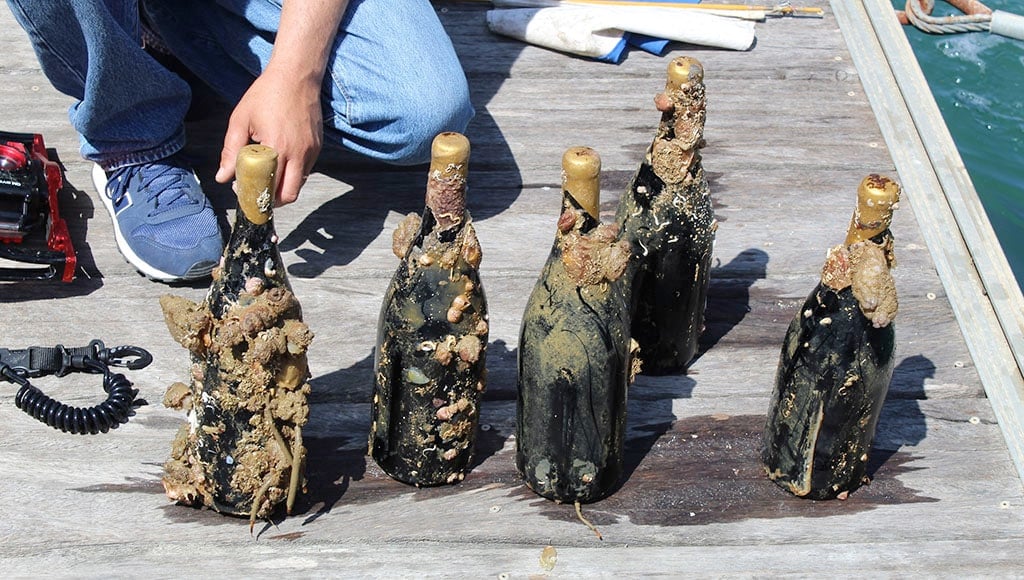
In the Algarve, the sea is shaping a new chapter in the story of wine. At Albufeira Marina, bottles are ageing on the seabed as part of a project exploring how the underwater environment influences their development, bringing together local production, research, and an innovative approach to wine ageing.
The project involves two Albufeira wineries – Quinta do Canhoto and Adega do Cantor. Since March 2025, around 1,000 bottles have been submerged, alongside a French oak barrel specially designed for this environment by Tonnellerie J.M. Gonçalves.
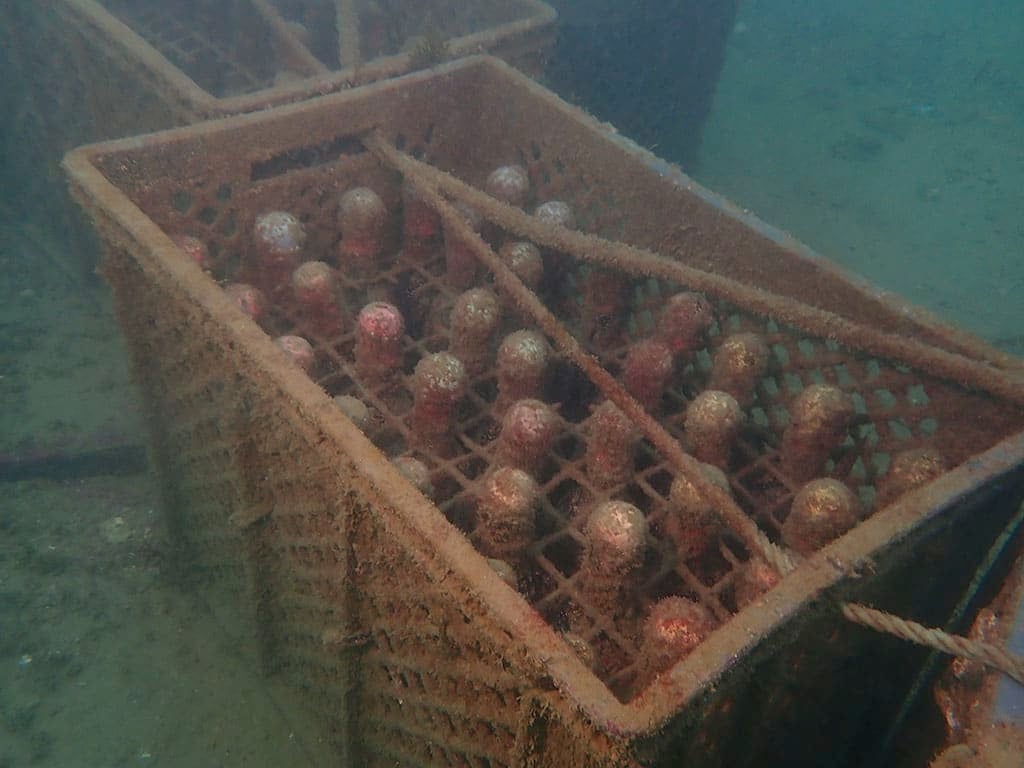 Submerged wine bottles
Photo: Adega do Mar
Introducing a barrel on the seabed is one of the project’s most distinctive features. “As far as we know, no one in the world has done this before,” says Jorge Páscoa, winemaker at Quinta do Canhoto. “This is all new, we’re learning as we go,” he adds, underlining the experimental nature of the initiative.
Above the surface, the periodic retrieval of bottles for testing – carried out every three months under controlled conditions – is as much about the science as it is about the performance. As they emerge in a diver’s hands, the bottles appear transformed, covered in oysters, barnacles and other ocean dwellers. Each one is unique, shaped by time and the sea. “No two bottles are the same,” says Joaquim Parrinha, head of Adega do Mar, which oversees the project’s technical operations. Based in Sines, the organisation has more than a decade of experience in submerging alcoholic beverages and currently manages thousands of bottles ageing underwater.
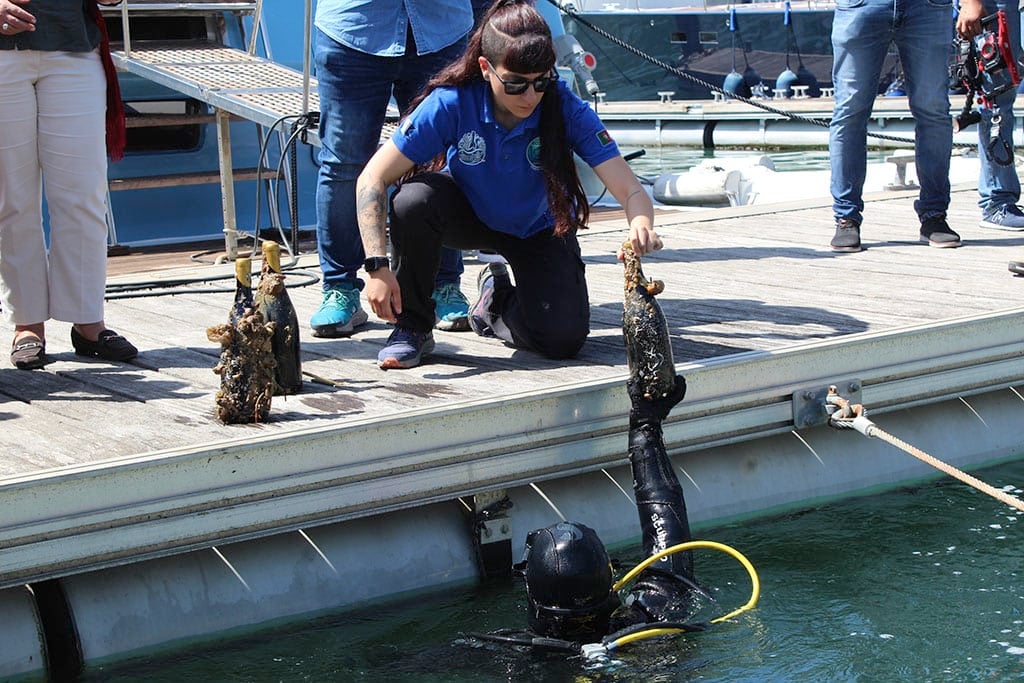 One by one, the bottles emerge
MARIA SIMIRIS/OPEN MEDIA GROUP
Inside, the transformation is more subtle, yet clearly noticeable. According to the winemakers involved in the project, wines aged underwater evolve differently, showing greater elegance and more integrated tannins.
Quinta do Canhoto’s trial focuses on a 2023 Alicante Bouschet, tested under various conditions – in bottle and barrel, both above and below water – allowing for direct comparison. Meanwhile, Adega do Cantor has submerged different labels, including young and sparkling wines, to better understand the sea’s influence at different stages of a wine’s life.
 A French oak barrel specially designed for this environment
Photo: MARIA SIMIRIS/OPEN MEDIA GROUP
The process is not without its challenges. Salinity, pressure, and marine biodiversity require specific technical solutions, from cork selection to sealing systems developed through extensive testing. Yet uncertainty is part of the journey, and precisely what makes the project so compelling.
Furthermore, by integrating diving into the experience and allowing visitors to retrieve their own bottle, the initiative adds a new dimension to the Algarve’s wine tourism offering, creating a more immersive and exclusive experience.
With further trials underway and key decisions still to be made regarding the ideal ageing period, the project continues to evolve. By taking wine to the depths of the sea, the Algarve is not simply testing a technique – it is shaping a new way of thinking about wine, where tradition, territory, and innovation come together.
 A memorable day for all
MARIA SIMIRIS/OPEN MEDIA GROUP
Dining and Cooking