
 3 min read
Jesse Katz grew up with an eye always on the camera. His father, Andy, is a legendary photographer whose work includes long-term projects chronicling vineyards from Sassicaia in Tuscany to Chateau Margaux in Bourdeaux. That’s how the young Colorado-born Katz found himself at an early age among the most esteemed vines in the world.
“I’m 12 years old. We’re in Burgundy, and all of a sudden, glasses of wine start to show up in front of me,” remembers Katz, “I’m looking around wondering if I’m going to get in trouble with my parents. That was just kind of my first introduction to wine.”
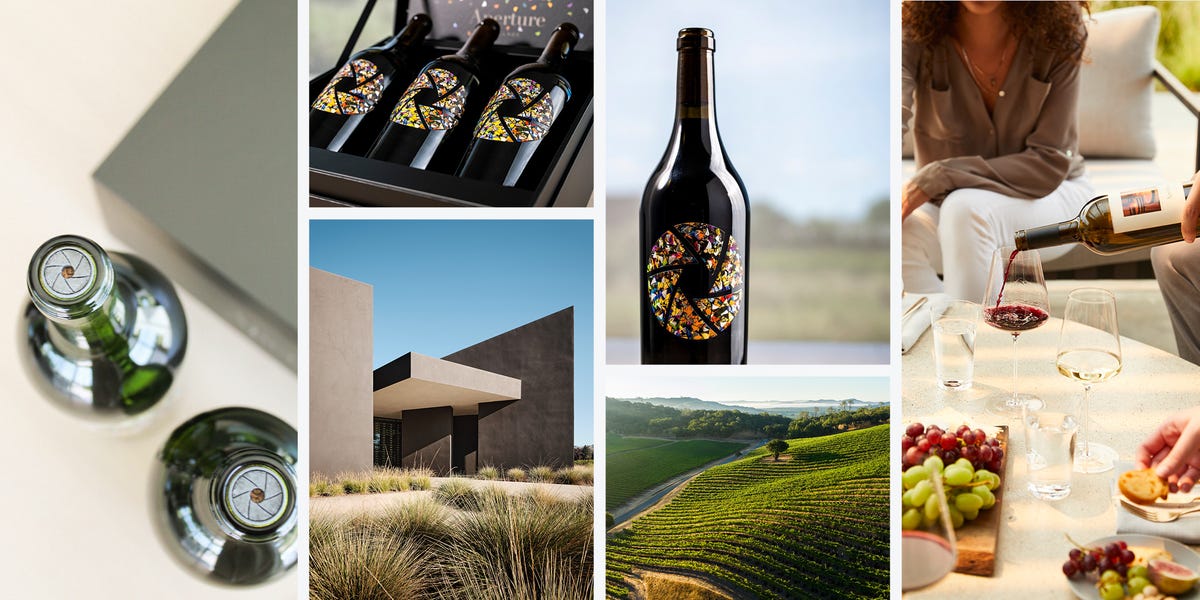
In 2009, having become a winemaker himself, and after having worked at some of the most prestigious vineyards around the world, Katz opened Aperture Cellars, a winery in Healdsburg, California. Aperture, of course, was a nod to his father, whose photographs grace the labels.
But the metaphor runs deeper than marketing. In photography, an aperture is the camera’s pupil, the opening through which light enters. To find the correct aperture, a photographer must be attuned to his subject. He must take into account the quality and strength of light, always keeping the depth of field in mind. Aperture and exposure are the X and Y axes of photography.
Similarly, as the winemaker at Aperture Cellars, Katz considered each lot of his 200 acres, spread across 5 A.V.A.s, (American Viticultural Appellation) individually.
“There are so many microclimates,” he explains, “We have more soil diversity in Sonoma County than there are in all of France.”
Katz specializes in cooler plots in the Alexander Valley both out of necessity (land in Healdsburg is as scarce as Bordeaux) and preference. As opposed to other winemakers who imprint their style onto the wine, Katz says he tries to allow the conditions to dictate his course of action.
“My goal,” he says, “is to give a sense of place and time every year with each vintage.”
That means, for every microclimate, every soil variation, every difference in diurnal shift or daylight exposure, Katz alters his approach. Almost immediately, that approach was validated.
“We’ve set every single record within the region’s history,” he says, “The first 100 point Malbec in the history of the United States; the first Cabernet from Alexander Valley; the only winery in the United States to get 100 points for every vintage from 2018 to 2023.”
All this to say, as a winery clambers its way toward legend, one might think the aperture would get increasingly narrow. After all, in terms of most wines, the more specific it is, the more prestigious it becomes. Katz started with blends of grapes, moved to single vineyards, and, eventually, a single block when, last year, he introduced his first blended wines, called Collage. Already he was playing iconoclast.
“Instead of having any limitations of varietal appellation,” explains Katz, “what if I tried to make the absolute best, no-holds-barred blend from the best lots, one white, one red each year?”
This year’s release builds on the success of last year’s vintage.
“2023,” says Katz, “will be considered one of the greatest vintages we’ve seen in California in a long time.”
Katz selected from about 300 individual lots for the Red Proprietary Blend and from between 60–70 for the White Proprietary blend. As for the red, which is Cab Sav but with the presence of all Bordeaux varieties, the wine is both muscular—thanks to the tannins—and lithe, thanks to the mineral-rich soils. After 24 months in barrel and six in specially made concrete, it doesn’t sit on your palate as much as dance on it. (Of note, the release was accompanied by a vinyl record by DJ Truthlive.)
As for the Propriatary White Blend, it’s Sav Blanc all the way. This one spends slightly less time in barrels than its red brethren and emerges nimble. It’s textured and nuanced, with fruits like papaya and lemon flitting across the tongue. As befits a Collage, it is a harmonious blend that somehow is greater than the sum of its parts.
Dining and Cooking