
I used to buy pasta with absolutely no strategy whatsoever. Whatever packet was on special, whichever shape looked right for my dish in the moment, into the trolley it went.
After all, my trips to the supermarket needed to be squeezed into the mere minutes between work, school sport, taking the dog for a walk and cooking, etc.
So the idea of looking at ANY product packaging for more than a couple of seconds seemed like a great way to waste precious time.
Then I learned there’s actually one word worth seeking out on a packet of dried pasta, if you want to dine on Italian food at home that’s practically as good as if an Italian Nonna made the pasta herself.
It’s a word that probably won’t make a lot of sense to you until you know more about it, and that word is: bronze (or bronzo).
“Growing up in an Italian household meant one of two things: you were either a pasta lover or you became a pasta lover!,” says taste senior food editor Elisa Pietrantonio.
“It featured at almost every meal, so I’ve eaten my fair share of it over the years. While nothing beats homemade pasta, al bronzo is my pick when it comes to store-bought.”
RELATED: 31 easy winter pasta recipes >
Why ‘bronze’ pasta makes all the difference
The word ‘bronze’ refers to the way the pasta is made. The dough is pushed through a bronze die mould to create the many long and short pasta shapes we see.
This is actually the traditional, more ‘artisan way’ of mass producing pasta, and it creates a rougher, more textured surface on the shapes, as opposed to the super-smooth, shiny finish you get from pasta made using the more modern Teflon-coated moulds.
Teflon moulds have their place, sure – the pasta is cheaper and faster to produce, which usually means a less expensive product at the supermarket. And it tastes just fine.
However, the rustic, rough texture of bronze die-cut pasta matters more than you’d think.
“If you see ‘bronze’ on the packet, I’d always go for it,” says Elisa. “That texture is exactly what you want.”
And this is why.
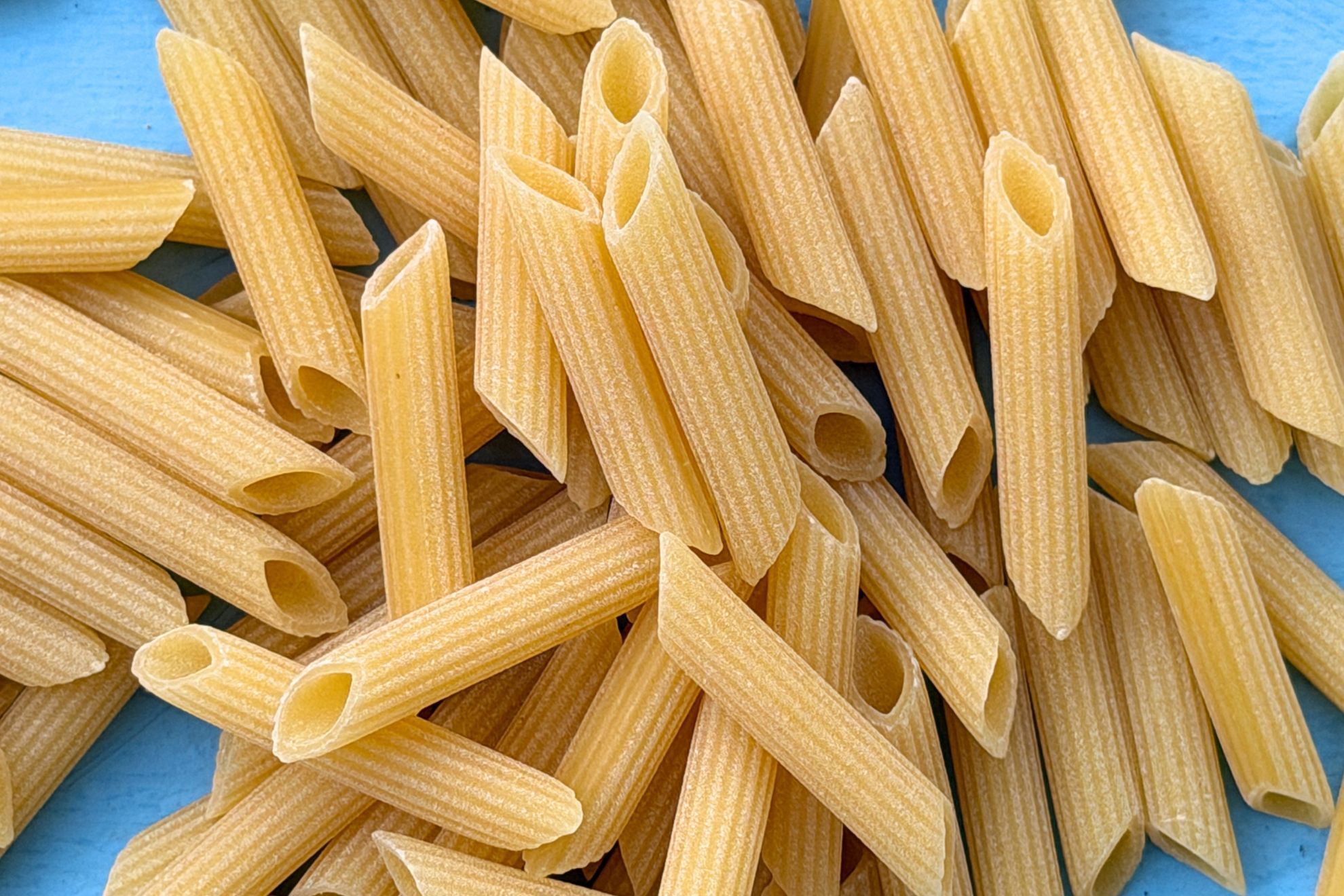
Rough bronze-drawn pasta holds the sauce
The rough texture is what helps the sauce properly cling to the pasta instead of sliding off to the bottom of the bowl. Creamy sauces coat it better, rich ragus get trapped in all those tiny ridges and become absorbed… yum.
The kids will probably never notice the difference, but just one mouthful, and you might suddenly find that your Tuesday night spaghetti tastes far closer to something you’d order at a little trattoria.
Instagrammer Alice Taylor (@alicetayloreats) is all over the visual difference of bronze die pasta. She says that if you look closely at the pasta, “it’s got these little white spots, and it’s quite rough.”
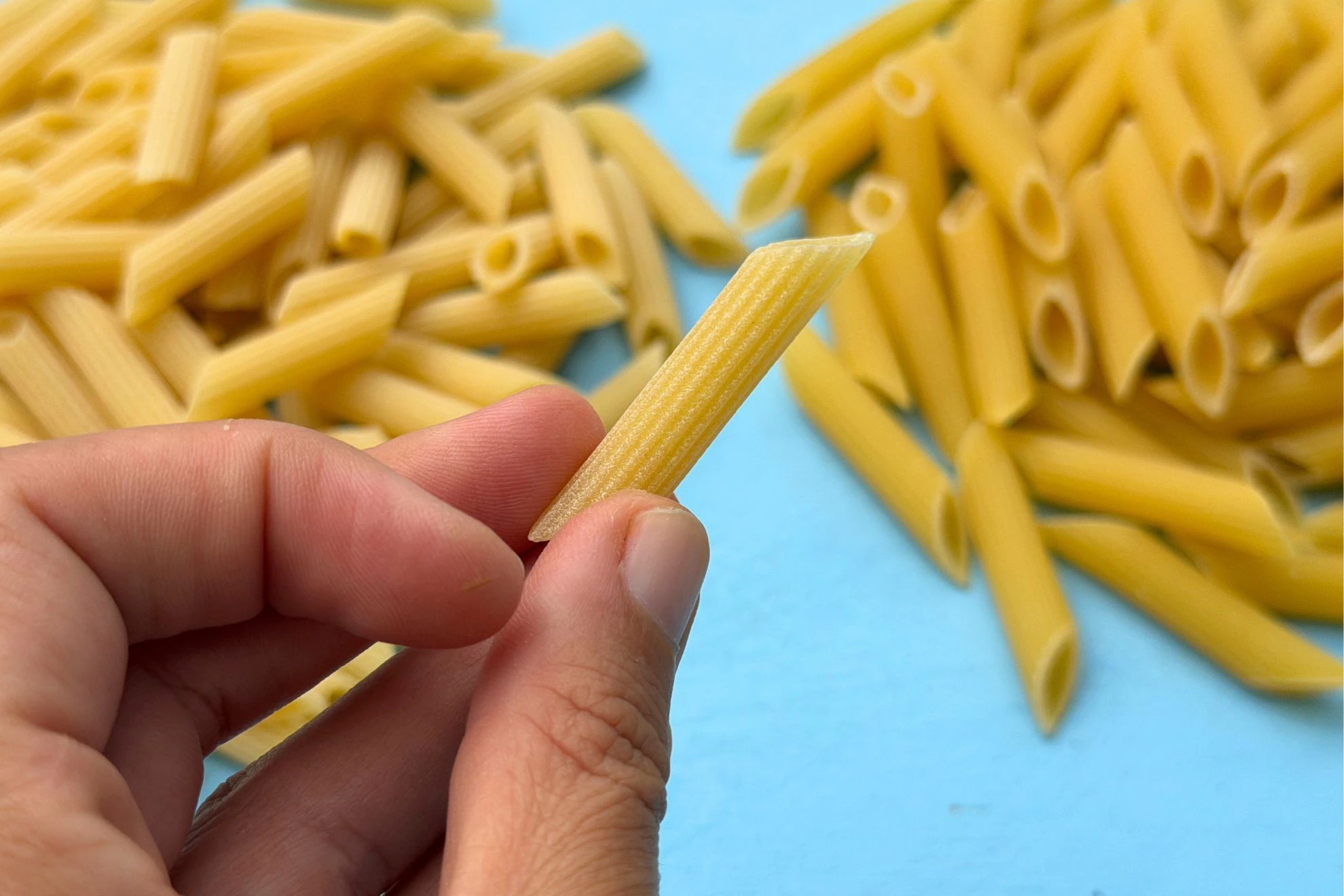
In fact, you can usually spot bronze die pasta before you even get close enough to read the label or see the texture.
You see, it’s very pale in colour, slightly chalky perhaps – not deeply golden yellow like Teflon die-made pastas.
Paler bronze drawn pasta has a better bite
“You might think that a pasta like a yellow-coloured one might be better, or more luxurious, but it’s actually not,” says Alice. “Actually, the yellow colour means that it was dried really fast at a really high temperature.”
High-temperature drying speeds up production dramatically, which is great for manufacturers trying to get their pastas on supermarket shelves, but it’s not necessarily ideal for the pasta itself.
The very high heat makes the pasta smoother and more brittle, which means it cooks a little differently, and it often won’t absorb your sauce quite as beautifully. Some pasta lovers also say it dulls the wheat flavour slightly.

“Alternatively, pastas that are a little paler and more matte in colour usually point to a slower drying process and a better texture overall,” says Elisa.
When pasta is dried slowly at lower temperatures, the starches and proteins have more time to settle and develop properly, helping create that firm, slightly chewy texture Italians call al dente.
The lower temps also help preserve the flavour and texture – the pastas tend to taste richer and more ‘wheaty’.
RELATED: Should you cook pasta in hot or cold water? A food editor explains >
All you need is an extra 10 seconds in the pasta aisle
Stop, do a quick scan for ‘bronze’ on the packet, squizz the colour, and toss it in the trolley…
That’s all you need to do.
Such little details will ensure your pasta holds its shape better, has a more satisfying bite, and – crucially – makes your sauce cling on instead of pooling underneath like soup.
Of course, none of this means you need to spend a fortune on fancy rustic pasta every week. We’ve noticed that the Coles Cucina Matese range is really affordable, and if you turn the packet over, you’ll see written on the left-hand side (in both Italian and English):
“Traditional bronze die, crafting the pasta whilst texturing the surface to perfectly hold the sauce.”

Once you know to look for words like ‘bronze die’, and you stop assuming the brightest yellow packet is automatically the most luxe one on the shelf, it does completely change the way you shop for pasta.
And the way you bite into it later!
READ NEXT: Why you always cook too much pasta and how to avoid it >
Dining and Cooking