

Swedish chef Marcus Jernmark went to Paris for the first time in 2016.
“I experienced that so late in my career,” Jernmark says. “I was already really seasoned in our industry.” By then, he’d helmed New York’s Scandinavian stalwart Aquavit and Thomas Keller’s three-Michelin-starred Per Se before decamping to Stockholm to lead Björn Frantzén’s Frantzén (which he helped become the first three-Michelin-starred Swedish restaurant).
His food knowledge was vast: After starting to work in restaurants at age 14, Jernmark attended the Culinary Institute of Grythyttan during the rise of 2004’s Nordic Food Manifesto, which created a global language around Nordic cuisine. “This was a really cool time for us in the Nordics, because the approach to food was starting to shift,” he says, “and people started talking about purity and ingredient knowledge.” He’d done a field study on restaurant trends in London — which led him to start a company marketing Sweden abroad through gastronomic experiences. Which led him to become head chef of the Swedish Consulate in New York and to spend 10 years there. But he’d never gone to Paris.
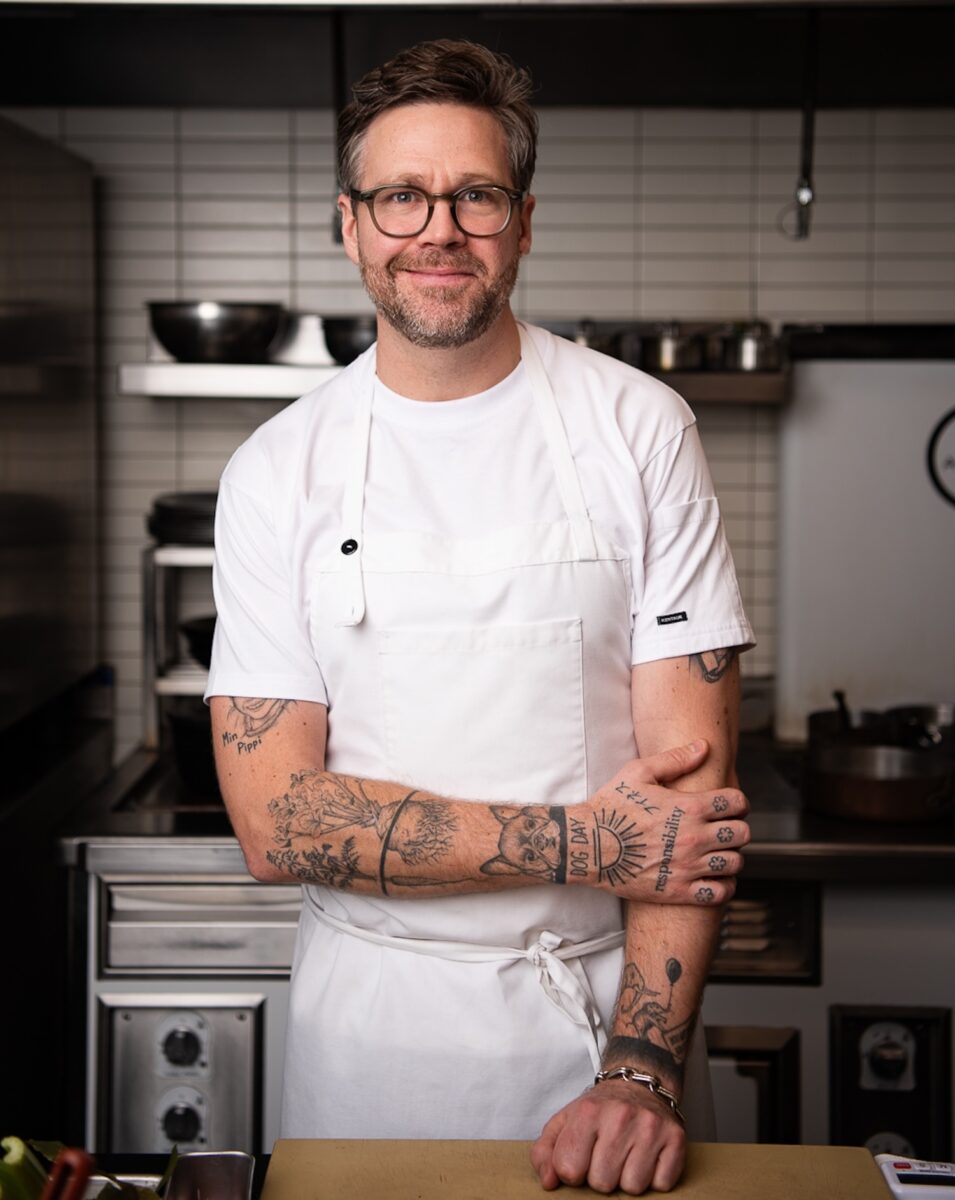 Chef Marcus JernmarkCredit: Andrea Jernmark
“French food was so uncool when I grew up,” says Jernmark, who was born in Gothenburg, Sweden in 1982 and studied wines in his 20s. “No one drank Bordeaux wines. And [that’s] all we studied in school. So I was just so floored when I went to Paris for the first time.”
He recalls sitting down at Clown Bar and ordering their duck pie. Then, he went to the sisters running Le Servan. “I was like, ‘What is this?’ How can they serve this food in this casual setting? It’s so delicious and high-quality, and it costs like a fraction of these fine-dining restaurants. And I had never experienced anything like that.” His awe continued through visits to Le Chateaubriand and later, Septime. “The whole ‘bistronomy’ changed the way I was thinking about restaurants.”
At Frantzén, they’d already started introducing a more hospitable style of service. “We became much more warm and friendly,” he says, “and we focused on everything out of a guest-centric point of view.” They did this at the expense of doing things correctly or fancily. “I was already on a path to distancing myself from my former stuffy environments that I worked in,” he says. “So going to these restaurants [in Paris] really just highlighted that generational change of like, ‘You can cook the best food in the world without a tablecloth, without having to charge a gazillion dollars.’ It materialized inside of me and I was determined to do something similar.”
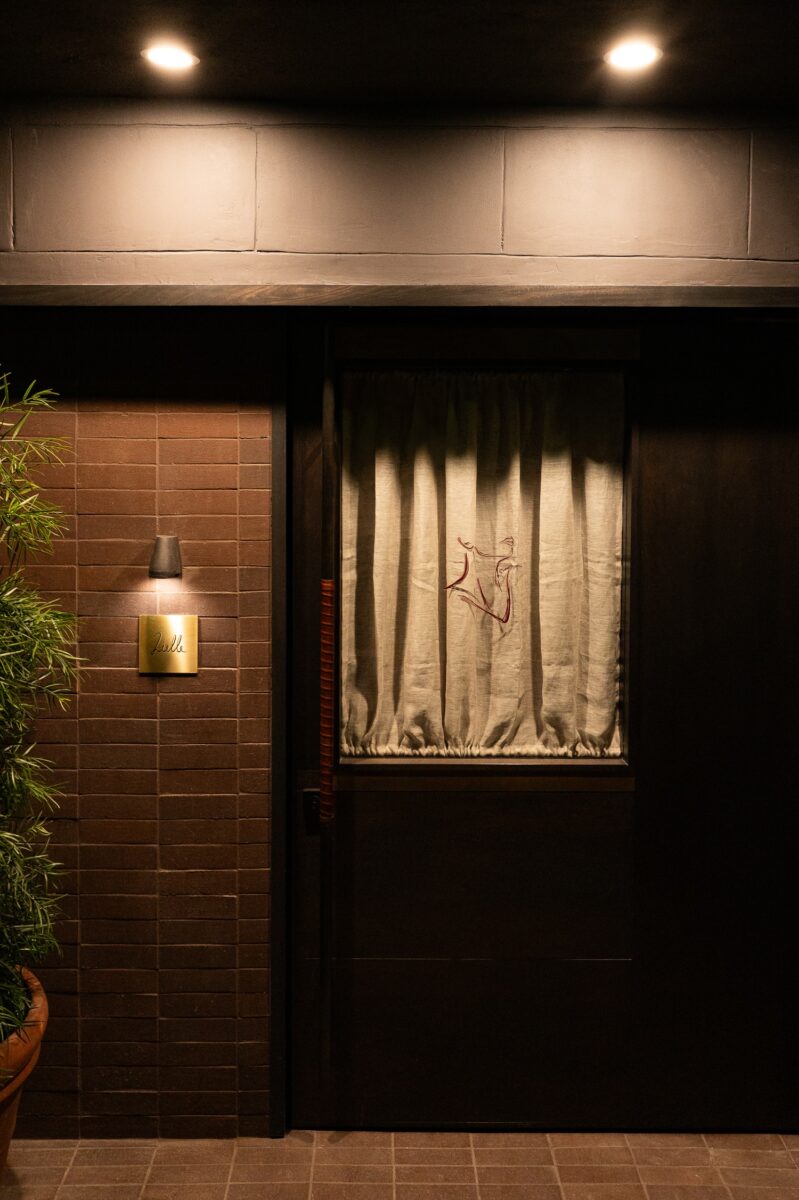 Exterior of LielleCredit: Andrea Jernmark
Scroll to continue reading
After seven years at Frantzen, from 2014-2021 — during which he also helped open Zen in Singapore in 2018, and got detained by the pandemic — Jernmark relocated to Los Angeles in 2021. “[My daughter] moved to L.A. from New York in 2017, so that’s when I started traveling to Cali,” he says.
He focused on curated dining experiences and established a catering and private chef business (serving as a chef/partner at Habitué Provisions and co-founding SRVE), while always intending to open a restaurant. To gear up, he traveled around California, forging relationships with farmers, ranchers, artisans and winemakers, including Motley Crew Ranch, Monterey Abalone Company, Broken Arrow Ranch and Petaluma’s Andante Dairy.
Then, he secured the Pico Robertson building that, until March 2024, had housed Walter and Margarita Manzke’s restaurants Manzke and Bicyclette.
 Lielle’s interiorCredit: Andrea Jernmark
“During the pandemic, there was a long shutdown here [in L.A.], and Walter was building out the Bicyclette and Manzke space for a long time,” Jernmark recalls. “Their CDC Joe Garcia came out to do an internship with us in Stockholm during the pandemic. So that’s how we got to know each other. I’m still very close with Joe, and that’s why I’ve been keeping track of what’s happening at Bicyclette and at Manzke.”
Jernmark went to both several times — including on his first night in Los Angeles. “We got into Bicyclette by my front of the house partner in Habitué. He’s a good friend of chef Walter, and I am too, today,” he says. “So it felt like a special place to me.”
Lielle, a Nordic-California restaurant named after his daughter, opened on Feb. 12.
What distinguishes Nordic food? “When you look at the seasonality and the climate, we’re very much handheld by a short season,” Jernmark says. “When you have a much colder climate, you have longer growing seasons — which means that you get an incredible flavor compound built up in your produce. The downside is that you get, often, one harvest a year. You don’t really have that secondary or fourth harvest season, like we see in California. So, we don’t really use ingredients in season.”
 Abalone at LielleCredit: Andrea Jernmark
Instead, Scandinavian regions rely on the preservation of ingredients and processes like fermenting, pickling, drying and smoking. “We don’t want to import; we want to live off what we grow,” says Jernmark of what he calls “survival cooking.” “That forces you to think sustainably about seasons and how to nurture the inventory, and I think that unlocks a lot of creativity [and] opportunities. And that’s how we approach the Nordic food at Leille — which is clearly a Californian restaurant in every regard. We work with what’s best in the sweet spot of the season, but then we’re also curating and nurturing those products to carry over for later seasons.”
For example, he cites pairing a fermented white asparagus with charred green asparagus. “When you have a seasonal product and you’re introducing it to a product that we have taken care of from a previous season, we let that guide our inspiration for that dish,” says Jernmark, who preserves peak-season ingredients. His larder at Lielle houses items like fermented yellow tomatoes from Munak Ranch, yuzu kosho featuring fruit from Girl & Dug and peppers from Weiser Family Farms, and dried “black apples” from Cuyama Orchards. He also utilizes imported Swedish ingredients, such as vendace roe, cloudberries, and rose quince vinegar. “So that’s how we work,” he says, “and I think what also exemplifies how a lot of chefs and restaurants are operating in the Nordics.”
 Vendace Roe at LielleCredit: Andrea Jernmark
Jernmark took inspiration from the bistronomy he’d encountered in Europe — combining it with California ingredients and an approach to fine-dining described in the press release as “irreverent.”
“For me, bistronomy is really a couple of simple things,” he says. “It’s about cooking excellent food and focusing on everything that the guests touch, taste and smell — and all of the other details are not as critical for us.” However, he notes how he’s doing it in a slightly more elevated environment. “At Cheateaubriand, for instance, you get only like the simple bistro plates, so they have that contrast. I wanted to run a restaurant where I embrace the things of my past that I really love — being able to work with the best farmers and the best vendors, but also artisans.”
Jernmark worked with his wife/creative partner Andrea Jernmark and design studio Lovers Unite on the venue’s décor. Ceramic tableware, sculptural wine glasses, knives, glass accessories, blankets, brass table lamps come by way of Swedish artisans — and he also incorporated items from his own home and from his travels. “Running a restaurant is something highly personal,” he says. “It can also mean that literally, you bring a piece of your home into your restaurant.” “The plates that [we] serve are from my mom’s neighbor, sitting on core coasters from [near] where my mom lives. It’s all a postcard of the travels and things that I have experienced in the past 15 years.”
 LielleCredit: Andrea Jernmark
Guests enter the multi-story building’s white edifice into Lielle’s dimly lit subterranean space inspired by midcentury Scandinavian design. The cozy and comfortable cavernous dining room conjures a wine cellar with cherry wood booths upholstered in wine-colored leather; mirror-tipped lightbulbs that evoke candles; Danish glass sconces; armchairs by Swedish maker Gemla; and cork-lined, barrel-vaulted ceilings. Equally important to Lielle’s vibe is the eclectic music, a playlist with popular rap, rock and pop songs.
In figuring that the perfect guest would come around once a month, he decided that they’d change the menu every five to six weeks. He knew he wanted to do a set menu, so he could get people to try new things. “We’re habitual people,” he says. “But when you build flavors that are truly delicious and balanced, most people share those appreciations. And you don’t get those experiences if you get to make all your own decisions, because you’re not going to put yourself out of that comfort zone.”
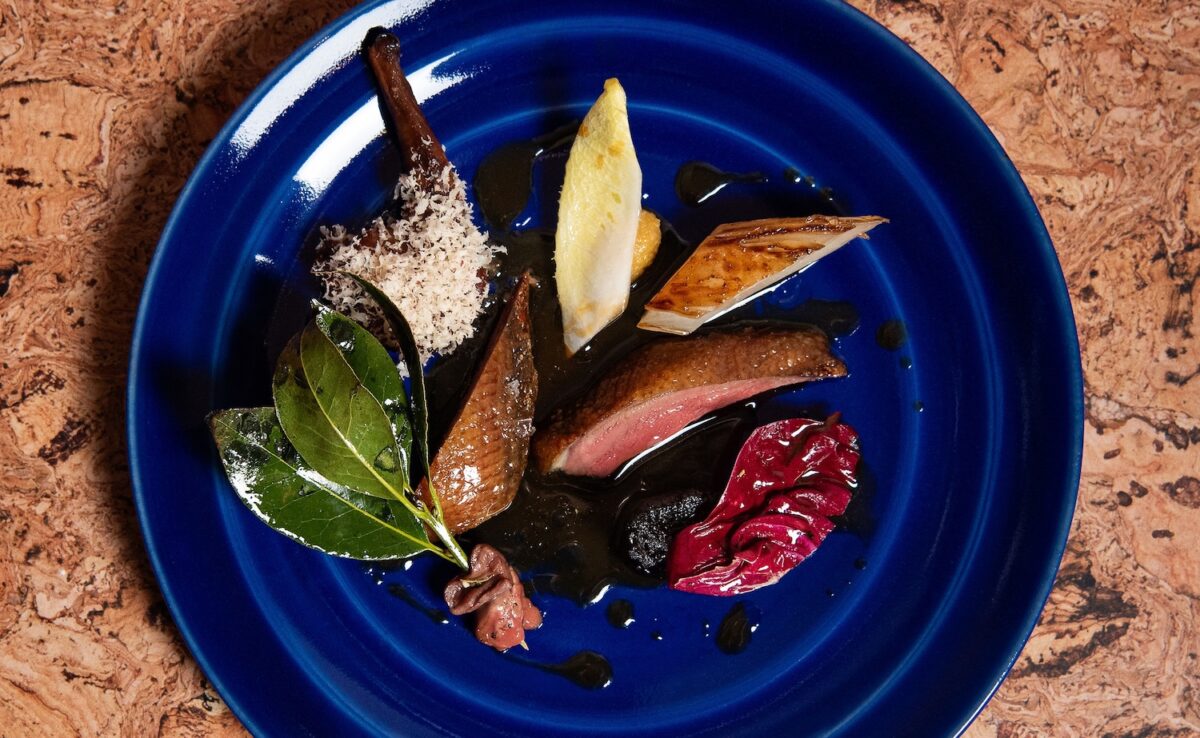 Aged Californian SquabCredit: Andrea Jernmark
Jernmark didn’t want to offer a “tasting menu” so much as a preset dinner menu. However, with fewer than Frantzen’s 10+ courses, he knew he needed more substance so people would be full. “I didn’t have to have substance in my food at Frantzen; I just had to have dialed-in small shooters of explosive stuff,” notes Jernmark, who landed on four courses (for $150). “The less dishes, the more accessible I’m going to be, as a set menu. So four was enough for me to feel like I could embrace enough products and showcase an appetizer, a warm fish or a seafood, a main course and a dessert.”
Since he wanted to do a little more and enable guests to feel in control of their experience, he added supplementary pastas that diners can add. “That section will change more frequently than it has, and it will also embrace more daily specials. It will have more protein options as well, like grilled spot prawns,” he notes. “So that gives the guests the [ability to] pivot; they can go all in, or they can just go a little lighter, and it makes the experience a little bit more modifiable — which I think L.A. diners respond to really well.”
 Spaghetti all’Assassina at LielleCredit: Andrea Jernmark
Lielle seats 42 people from 5 to 8:30 p.m., and has had three menus since it opened. The third one introduced on April 20 will run through mid-May. “Certain products, especially on the produce side, roll over,” Jernmark notes. “Like the former abalone serving got changed from Brussels sprouts and fermented mushroom sauce into charred green asparagus and fermented asparagus sauce. … We’re always going to have one or two dishes change all together, but then maybe two of the dishes are more like pivoting towards like a new season, with tweaking the flavors.”
After seating, meals start with a memorable house-baked, 36-hour-fermented Rouge de Bordeaux sourdough bread and house-cultured butter. Then come snacks, such as radishes with dip and a Chawanmushi custard with N25 caviar that pairs perfectly with sake.
 Bread at LielleCredit: Andrea Jernmark
The first menu featured artichoke and citrus, abalone “BBQ” with fermented hen of the woods sauce and aged California squab with yuzu pepper and walnut miso, complemented by two pasta additions: a spaghetti alla chitarra with red prawns and sea urchin, and an Agnolotti del Plin with blacktruffles. Desserts included iced sea buckthorn with tea, milk and honey; and Challerhocker cheese, with honeycomb and Danish rye bread.
 RadishesCredit: Andrea Jernmark
The second menu swapped artichoke for an aged striped Jack “Kombu-Jime” with peas, cucumber, wasabi, green gooseberry; and put a different twist on abalone with delta asparagus, ao nori rice and fermented white asparagus sauce. The squab was gently grilled over pine, with hazelnut miso, smoked matcha butter, hen of the woods and black truffle jus.
Pasta add-ons included the spaghetti with lobster and sea urchin, plus a new tortellini aux fines herbes, with grilled morels. For dessert, the cheese and sweet bun remained, along with Jersey Cow Milk Sherbet “Eaton Mess” (black currant, chewy beet, black tea and chamomile meringue).
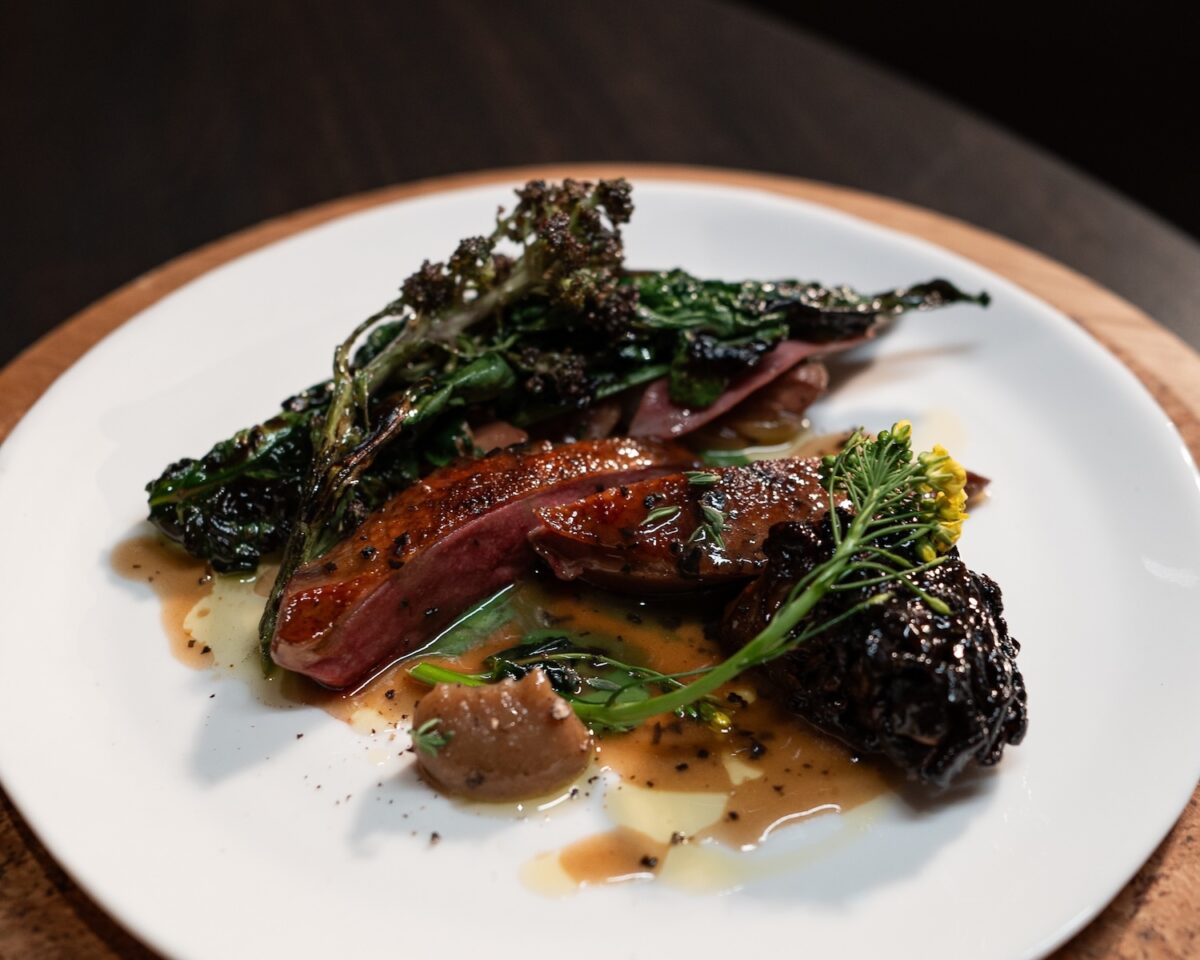 SquabCredit: Andrea Jernmark
For the third menu — launching after this interview — he’s working with local line-caught white tile fish and spring lamb. “We work with Don Watson up south of San Francisco,” he says. “And we are working with a rancher and a marketplace up in Buelton, called Motley Crew ranch. I’m using their lamb to make a lamb shoulder sausage together with the lamb sweet breads, to go with the spring lamb, and we’re going to work with some beautiful spring morels, out of Oregon. I want to do something with rhubarb as well.”
Jernmark has help from chef de cuisine Matthew Bowden, formerly of Providence, and Beverly director Phil South (The Lonely Oyster, Anajack Thai). Rather than a traditional wine pairing, South can guide guests to pick glasses from California and other regions with environmentally-responsible practices, including Outward Wines, Scar of the Sea, Amevive Wines, Phelan Farm Wines, Littorai, and Arnot-Roberts. Or, try non-alcoholic options, a Saison-style beer infused with Persian lime and spruce shoots created with Santa Cruz’s Sante Adairus and a custom coffee blend from Verve, roasted in the Arts District.
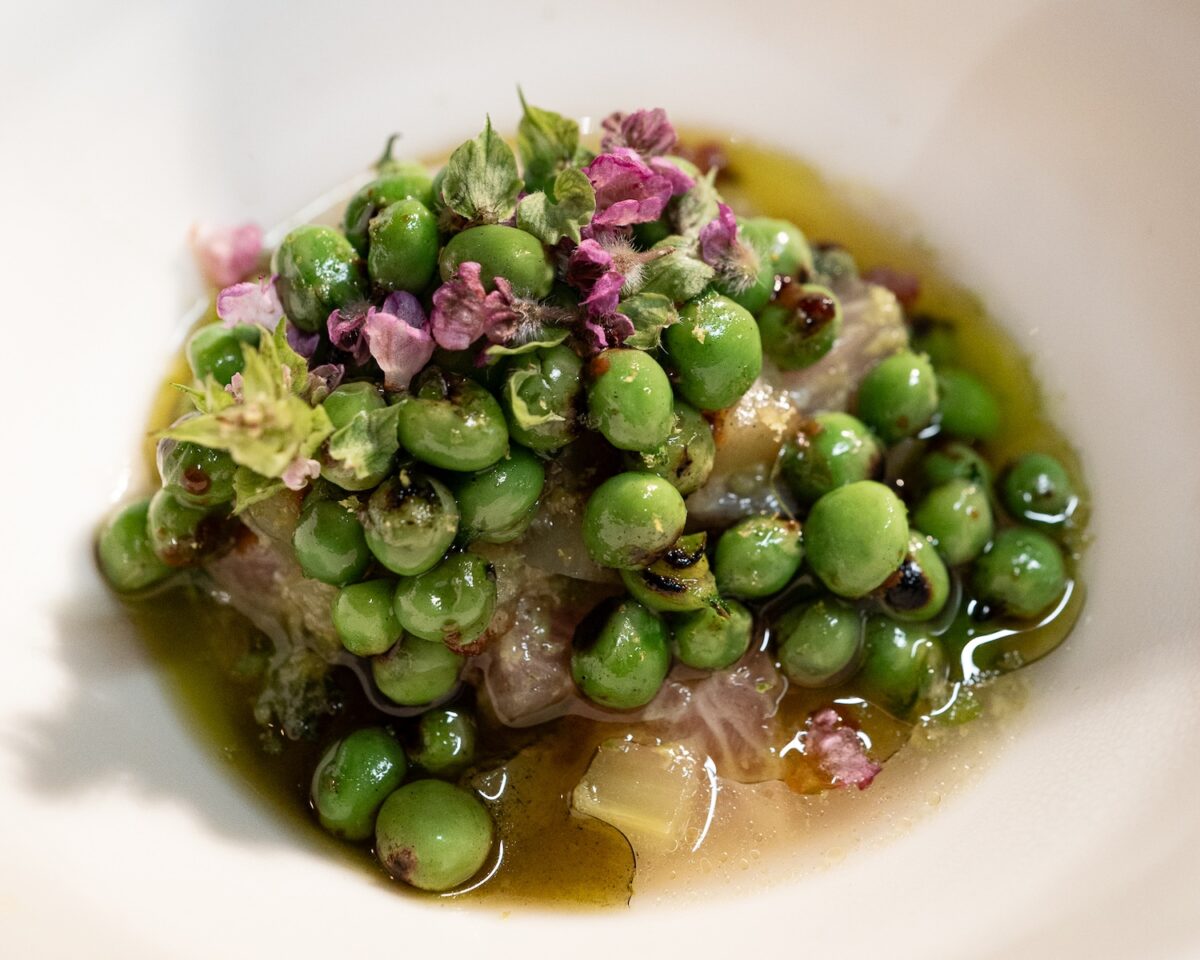 Aged Striped Jack at LielleCredit: Andrea Jernmark
After expanding Lielle’s dinner service to seven nights a week, in late summer, Jernmark plans to unveil a more casual sister restaurant in the bright and cheery upstairs space, called Marée. “We’re not in the most walkable area,” he says. “So [we’ll] be able to have two shops stacked on each other seven days a week, always lively.” He foresees guests coming for an early dinner at Lielle, before popping upstairs to Marée to share a bottle of wine in the bar — or having wine and cheese, then coming downstairs for a later dinner. The day-to-night café and coffee shop will also be a spot for weekend brunch.
 Iced Sea BuckthornCredit: Andrea Jernmark
“My biggest hope and my intention in the next 10 years, is to take Marée from a new restaurant with Parisian-Californian cooking into something [like] the Zuni Cafe of Los Angeles,” he says, acknowledging that it’s four times bigger — with capacity for 1,000 guests on a Saturday and Sunday. “I would love for Marée to be that place where you can pop in for some simple, delicious food, but done in a perfect temperature, with the greatest produce that we can get over here — and done in an impressively unimpressive way, where restraint speaks for itself.”
He adds: “It’s about not being cool; it’s about being timeless. It’s about not chasing tomorrow, but letting things just grow organically. It’s about ‘Always stay open and be hospitable.’ It’s about curating really strong relationship with our farmers — with our people in our community.”
9575 West Pico Blvd., Pico-Robertson, lielle.la
Dining and Cooking