
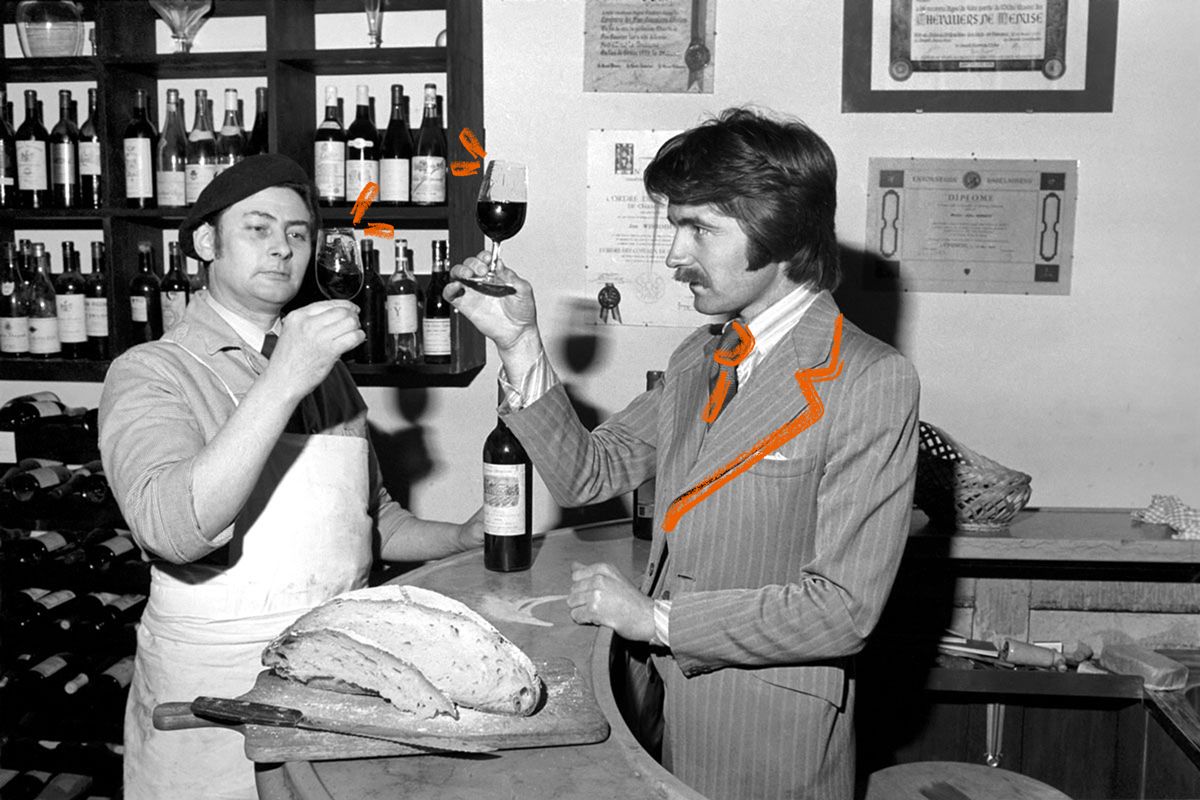
On this day in 1976 an Englishman living in Paris threw America a birthday party. The menu: wine.
Steven Spurrier, owner of L’Académie du Vin wine school, had recently been meeting a lot of American winemakers and trying a lot of great American wine. Eager to share these bottles, he invited nine of France’s most influential wine experts to the Intercontinental Hotel in Paris for a formal tasting.
Spurrier included six California cabernets and chardonnays alongside four Bordeaux and four Burgundies. At the last minute, he covered the labels on the bottles, opting to make it a blind tasting, fearing that otherwise the experts would write off the American wines too quickly.
It was a fluke that what happened next even made the news. Time magazine correspondent George Taber just happened to be attending Spurrier’s wine school at the time and accepted his invitation to observe.
The judges tasted the 10 whites first, followed by the 10 reds. Taber was given a cheat sheet marking which wines were which, and he quickly noticed something funny happening: The experts were spectacularly wrong in their attempts to determine which wines were American and which wines were French.
Some gems from the tasters’ notes in Taber’s original feature: “This is nervous and agreeable”; “It has no nose”; and “This soars out of the ordinary.”
Taber’s article gave the event its now famous (and vaguely menacing) name: the Judgment of Paris.
Trusted knowledge for those who want to know more.
SUBSCRIBE



Fun Fact
The original winning bottles from the tasting are on exhibit at the Smithsonian National Museum of American History.
When the last drop was drunk, California’s Stag’s Leap and Chateau Montelena had taken the top spot in the red and white categories, respectively. In doing so, they put New World wines on the map and made Napa Valley a place the French wine experts could no longer ignore.
The judges, however, were not amused. One even demanded her scorecard back, lest the wine world learn how highly she’d rated American wines. (Spurrier refused.)
And the judges insisted that, if the wines were all given time to age, the results would look very different.
With that in mind, Spurrier repeated the experiment in 2006. California won again.
$6.50: Cost of a bottle of the winning California Montelena white at the time
$75: Cost of a bottle of California Montelena white now
20 points: Scale the wines were rated on at the tasting
Dining and Cooking