
France has always been regarded as one of the world’s greatest culinary destinations. Famous for its fine dining culture, artisanal bakeries, elegant cafés, and globally admired gastronomy, the country has built an international reputation around food unlike almost anywhere else on Earth.
Today, however, the French foodservice industry is experiencing a major transformation.
While traditional French cuisine remains deeply respected, modern consumer lifestyles, digital ordering platforms, convenience dining, and international food trends are reshaping how people across France eat, socialize, and experience restaurants.
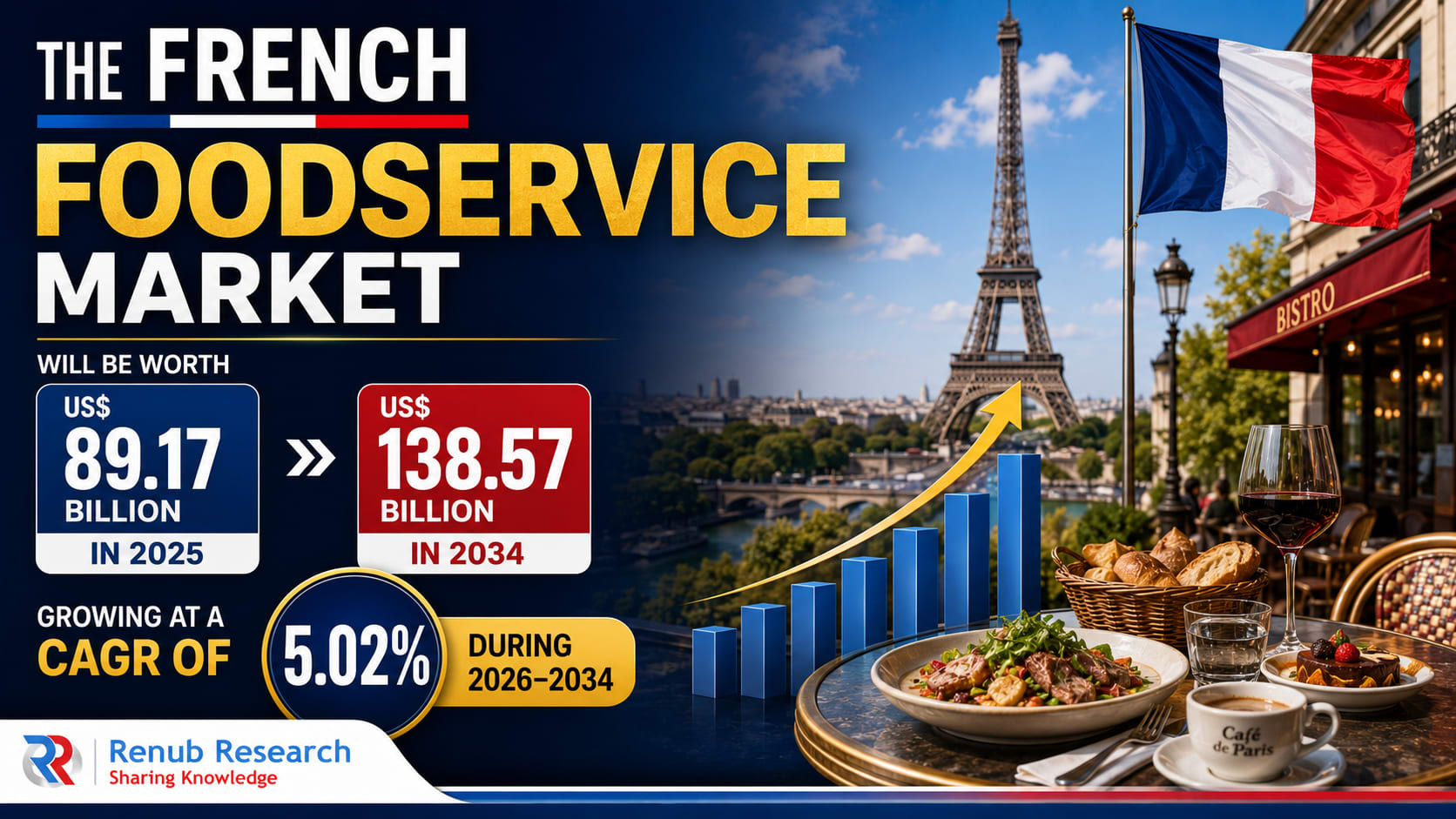
According to Renub Research, the France foodservice market is projected to grow from US$ 89.17 billion in 2025 to US$ 138.57 billion by 2034, expanding at a compound annual growth rate (CAGR) of 5.02% during 2026–2034.
The growth reflects a combination of powerful factors including tourism expansion, urbanization, rising demand for convenience foods, digital food delivery services, and evolving dining preferences among younger consumers.
France may be famous for preserving culinary tradition, but it is also rapidly adapting to the future of global foodservice.
France’s Deep Culinary Culture Continues to Drive Demand
Food is more than just nourishment in France — it is deeply connected to culture, identity, and everyday life.
The French foodservice industry includes restaurants, cafés, bakeries, bars, hotels, catering services, quick-service restaurants (QSRs), cloud kitchens, and retail dining operations. Together, these businesses form one of the country’s most important economic and social sectors.
France’s reputation for gastronomy remains one of its greatest strengths.
The country is internationally known for:
Michelin-starred restaurants Haute cuisine Artisan bakeries and patisseries Café culture Regional specialties Premium wines and gourmet dining experiences
Dining out in France is not viewed simply as convenience. Restaurants and cafés often serve as places for social interaction, cultural exchange, business discussions, and leisure experiences.
This cultural attachment to food creates stable demand across nearly every segment of the foodservice market.
French consumers place strong importance on:
High-quality ingredients Authentic flavors Presentation and atmosphere Culinary creativity Fresh and seasonal products
At the same time, chefs and restaurateurs continue innovating with modern concepts, fusion cuisines, and healthier menu options to attract younger consumers.
The combination of tradition and innovation is helping the French foodservice industry remain globally influential.
Download Free Sample Report
 Tourism Plays a Major Role in Market Growth
France consistently ranks among the world’s most visited countries, making tourism one of the largest contributors to foodservice demand.
Millions of international travelers visit France each year specifically to experience its food culture.
According to tourism reports, France welcomed approximately 102 million international tourists in 2025, once again reinforcing its position as a global tourism leader.
Cities such as Paris, Lyon, Nice, Marseille, and Bordeaux have become internationally recognized culinary destinations offering everything from luxury fine dining to local street cafés and traditional bistros.
Tourists contribute significantly to restaurant revenues, hotel dining services, bakeries, bars, and cafés throughout the country.
Luxury tourism is especially important.
High-end travelers frequently seek premium dining experiences, Michelin-starred restaurants, gourmet tasting menus, and authentic French culinary traditions. Hotels also benefit from strong in-house dining demand driven by international guests.
Seasonal tourism further strengthens foodservice consumption.
Summer tourism, international events, fashion weeks, sporting competitions, and cultural festivals all contribute to increased restaurant traffic across France.
The country’s hospitality sector continues working closely with foodservice operators to deliver integrated tourism experiences centered around gastronomy.
Convenience Dining Is Rapidly Expanding
Although France remains deeply connected to traditional dining culture, modern urban lifestyles are changing consumer behavior significantly.
Busy work schedules, dual-income households, and fast-paced city life are increasing demand for convenience-oriented foodservice solutions.
Consumers increasingly prefer:
Quick-service restaurants Casual dining concepts Food delivery platforms Takeaway meals Grab-and-go retail food options
This shift has created major growth opportunities for digital foodservice businesses.
Online ordering systems and food delivery apps have become highly popular, especially among younger urban consumers. Restaurants are investing heavily in mobile ordering technology, digital payment systems, and delivery partnerships to improve convenience and customer experience.
Cloud kitchens are also becoming more common.
These delivery-focused kitchens operate without traditional dine-in facilities and specialize in preparing meals exclusively for online orders. The model allows restaurants to reduce rental costs while expanding delivery coverage more efficiently.
French consumers still value quality and taste, but they increasingly expect speed and convenience as well.
This balance between culinary quality and modern efficiency is shaping the future of the market.
Fast-Food and Burger Segments Continue Growing
One of the fastest-growing categories within the France foodservice industry is the burger market.
French consumers are increasingly embracing burgers because of their affordability, convenience, and customization options.
International fast-food chains continue expanding aggressively across major French cities, while gourmet burger restaurants are also gaining popularity by offering premium ingredients, artisan buns, and innovative recipes.
Modern burger trends in France now include:
Gourmet burgers Organic burgers Vegan burgers Fusion-style burgers Health-conscious menu alternatives
The expansion of food delivery services has further boosted burger sales, making burgers one of the most commonly ordered fast-food items in France.
Pizza remains another dominant category.
Pizza’s affordability, convenience, and universal appeal make it extremely popular among all age groups. French consumers increasingly prefer gourmet pizzas made with fresh ingredients, artisan cheeses, and healthier crust options such as gluten-free or thin-crust varieties.
Digital ordering platforms have significantly strengthened pizza sales throughout the country.
Café Culture Remains a Central Part of French Life
Few countries in the world are as closely associated with café culture as France.
French cafés are more than dining establishments — they function as cultural spaces, meeting points, and social environments woven into daily life.
In cities like Paris, cafés serve multiple purposes:
Social gatherings Business meetings Creative workspaces Leisure experiences Tourist attractions
The café and coffee shop segment continues growing steadily, supported by both locals and international tourists.
Specialty coffee trends are also influencing the market.
Younger consumers increasingly seek premium coffee experiences, artisan beverages, gourmet pastries, and aesthetically designed café environments.
At the same time, traditional French cafés continue maintaining their historical charm and cultural significance.
This coexistence of classic café culture and modern coffee trends creates a unique advantage for the French foodservice industry.
Chained Outlets Are Expanding Across France
The chained outlet segment is experiencing strong growth within the French foodservice market.
Consumers often trust chain restaurants because they provide consistency, hygiene standards, reliable service, and recognizable branding.
The market includes:
Fast-food chains Coffee chains Casual dining franchises Bakery chains International restaurant brands
Global franchises continue expanding throughout shopping centers, transit hubs, airports, and urban commercial districts.
Franchising allows brands to scale rapidly while maintaining operational consistency across multiple locations.
Technology is also strengthening customer engagement.
Many chain restaurants now use:
Mobile apps Loyalty programs Personalized promotions Online ordering systems Digital payment technologies
Despite intense competition from independent restaurants and traditional cafés, chained outlets continue gaining market share due to convenience and operational efficiency.
Food Retail and Ready Meals Are Becoming More Popular
Another important trend in France is the rapid growth of foodservice retail.
Consumers increasingly purchase ready-to-eat meals, packaged salads, sandwiches, bakery products, and prepared foods from supermarkets and convenience stores.
Urban lifestyles are driving this shift.
Busy professionals often seek quick meal solutions that still offer freshness and quality. Retailers are responding by partnering with foodservice operators to provide premium ready-made meal options.
Technological improvements in packaging and cold-chain logistics have also helped improve food quality and shelf life.
Gourmet supermarkets and delicatessen stores are becoming especially important within this segment.
Convenience no longer means sacrificing quality — a key factor shaping the future of French food retail.
Paris Remains the Heart of French Foodservice
Paris continues to dominate the French foodservice industry.
As one of the world’s leading culinary capitals, the city offers an extraordinary range of dining experiences including:
Michelin-starred restaurants Luxury cafés Traditional bistros International restaurants Street food concepts Fast-food chains
Millions of tourists visiting Paris each year create constant demand for restaurants, bars, bakeries, and cafés.
The city’s famous café culture remains central to local life, while culinary innovation continues pushing boundaries in both traditional and modern cuisine.
Paris is also a leader in foodservice digitalization, with restaurants increasingly embracing online reservations, delivery platforms, and technology-driven customer experiences.
Lyon and Marseille Strengthen Regional Growth
Lyon holds a special place in France’s culinary identity.
Often referred to as the gastronomic capital of France, Lyon is famous for its traditional bouchons, regional specialties, and emphasis on local ingredients.
The city successfully combines traditional cooking techniques with modern food innovation, making it a major contributor to the national foodservice industry.
Marseille, meanwhile, offers a very different culinary experience shaped by Mediterranean and North African influences.
Seafood plays a major role in the city’s food culture, while multicultural dining concepts continue gaining popularity due to the city’s diverse population.
Street food, casual dining, and modern delivery services are also expanding rapidly in Marseille.
Major Challenges Facing the Industry
Despite positive growth forecasts, France’s foodservice market faces several challenges.
One of the biggest concerns is high labor cost.
France maintains strict labor protections, minimum wage regulations, and employee benefit requirements that increase operational expenses for restaurants and cafés.
Foodservice operators must also comply with rigorous:
Health regulations Food safety standards Environmental policies Licensing requirements
Operational expenses continue rising as well.
Higher rental costs, inflation, supply chain disruptions, utility expenses, and raw material prices are all affecting profit margins, particularly in major cities such as Paris.
Competition remains extremely intense.
Independent cafés, luxury restaurants, multinational chains, food delivery startups, and cloud kitchens are all competing for consumer attention.
Restaurants must continuously innovate to maintain customer loyalty.
The Future of France’s Foodservice Industry
The future of the French foodservice market will likely be shaped by a combination of tradition and modernization.
Consumers still deeply value authentic French culinary experiences, but they are also embracing convenience, technology, healthier food choices, and international flavors.
Key future trends are expected to include:
Growth in cloud kitchens Expansion of food delivery services Health-conscious dining options Sustainable and eco-friendly packaging Greater digitalization Fusion cuisines and global flavors Technology-enhanced customer experiences
Restaurants that successfully combine quality, authenticity, convenience, and innovation are expected to perform best in the evolving market.
Final Thoughts
France’s foodservice industry remains one of the most influential culinary markets in the world.
Its rich gastronomic heritage continues attracting millions of tourists and food lovers every year, while changing consumer lifestyles are pushing the industry toward greater innovation and modernization.
According to Renub Research, the market’s projected growth from US$ 89.17 billion in 2025 to US$ 138.57 billion by 2034 highlights the sector’s enormous long-term potential.
From Parisian cafés and gourmet restaurants to cloud kitchens and digital food delivery platforms, France is proving that even the world’s most traditional food cultures can evolve successfully in a modern economy.
As consumer expectations continue changing, the French foodservice market is expected to remain a global leader in culinary excellence, hospitality innovation, and dining experiences for years to come.
Dining and Cooking