
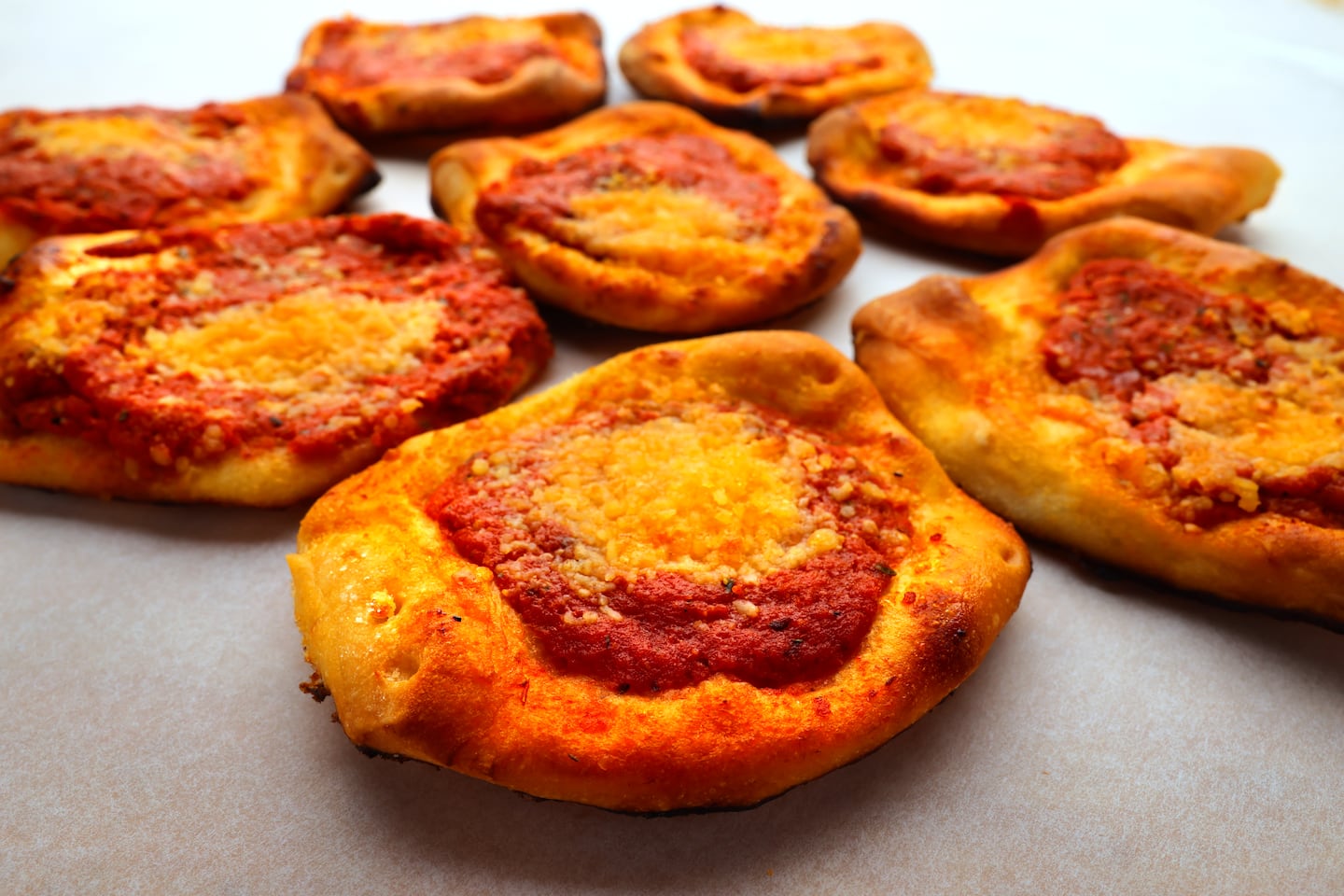
“They think it’s great, but I’m like, where’s the cheese on my pizza, because who wants a pizza without cheese?” asked Iaconetti on episode four. Turns out, plenty of Rhode Islanders do, including Carmody, who staunchly defends the chewy, savory treat she’s enjoyed since childhood.
“It’s not like a regular pizza,” Carmody explained on the show. “It’s lighter. People, like, bring it to the beach.” The pizza chip’s lack of cheese makes it an ideal beach snack, she said, because you don’t have to deal with “cheese in the sun.”
Get Food & Dining Headlines
The Globe’s most recent food stories, delivered to your inbox every Wednesday.
 LaSalle Bakery owner Michael Manni Jr. shows off a bag of pizza chips.Lane Turner/Globe Staff
Plus, “they’re not messy, and the dough and the olive oil taste so good,” Carmody told the Globe. “Everybody loves a pizza chip!”
Also known as “party pizza” or “bakery pizza,” pizza chips are a fixture at old-school, family-owned Italian bakeries across the state. Some Rhode Islanders use pizza “strips” and pizza “chips” interchangeably, but pizza chips are usually small rounds, while pizza strips are sliced into rectangular ribbons. Both strips and chips are served at room temperature; occasionally, they can be found with a light dusting of Parmesan or Romano cheese.
Regardless of the shape, pizza chips and strips have been common sights at Rhode Island birthdays, graduations, holiday parties, beaches, and just around the kitchen for generations.
 Pizza chips are a specialty of DePetrillo’s Pizza & Bakery, which has locations across Rhode Island.Andrea McHugh for The Boston Globe
“There’s no way we can know exactly, but we figured we sell about a million pizza strips a year,” said Eric John Palmieri. His great-great-grandfather opened an Italian bakery in Providence in 1905, and the family legacy continues today at D. Palmieri’s Bakery in Johnston, opened by his grandfather in 1971. Pizza strips have been a top-seller at the bakery since day one.
The flavor and texture of his pizza strips more closely resembles tomato pie than traditional pizza, Palmieri described, as they are cooked long and slow, typically on rectangular sheet pans before being cut into thin, saucy bands.
“Everybody has their own idea about what a real pizza strip is,” Palmieri said. “It’s really fascinating because it’s such a simple, basic thing. You wouldn’t think there would be a lot of variety that’s even possible, but people have really become pizza strip connoisseurs.”
 A tray of traditional Rhode Island-style pizza, sans cheese, at LaSalle Bakery in Providence.Lane Turner/Globe Staff
Chef Kevin O’Donnell, a Rhode Island native and former executive chef at the Salty Pig in Boston’s Back Bay and former chef and co-owner of SRV in the South End, now leads two Newport restaurants: James Beard Award-nominated Giusto and Mother Pizzeria. He grew up enjoying pizza strips and, having cooked in the Umbria region of Italy, researched its Sicilian origins.
“Sfincione is the Sicilian style of this red-sauce-only pizza,” O’Donnell said. “Sometimes they’ll put anchovies or breadcrumbs on it, sometimes Pecorino. When the wave of Sicilian immigrants came to the United States at the end of the 19th century, beginning of 20th century, they brought this pizza with them.
“It’s evolved over the past however many years, hundred years,” he continued, “and now it’s just become this thing in Rhode Island.”
As decades passed and Italian immigrants began to move beyond Providence’s Federal Hill neighborhood, bakeries developed a friendly rivalry, and deeply loyal customer bases passed down through generations, said chef TJ Delle Donne, assistant dean at the College of Food Innovation & Technology at Johnson & Wales University.
“It was, ‘Did you go to Palmieri’s? Did you go to LaSalle? Who had the better pizza strip or pizza chip?’” he said. “It wasn’t something that a supermarket or any other culture would appropriate. It was just something that stayed within the Italian bakery.”
A North Providence institution since 1932, LaSalle Bakery is one of the best-known pizza strip purveyors in the state. Owner Michael Manni Jr.’s father started as a “pan boy” there as a teen, buying the business in 1975. Manni Jr. said the recipe hasn’t changed much over the past near-century.
“We don’t really vary too much with our recipes,” Manni Jr. said. “The dough that we use is the same dough that we use for our Italian bread, so it’s good flour; it’s got high protein in it. We age the dough so it ferments a little bit — that’s why the pizza strips that you buy are a little bit thicker.” Firmer than a traditional triangular slice of pizza, Manni Jr. described, a LaSalle pizza strip has a sturdy crust that holds up easily in one hand.
“Everybody in Rhode Island and this area, that’s what we all ate,” he said. “People come to parties and they’d put a platter of them out there. It’s a Rhode Island thing.”
While “red strips” or other renditions of the pizza strip can sporadically be found elsewhere, Rhode Island claims the snack as its own.
“Rhode Island has a very unique and specific way of holding on to its culture,” said Delle Donne. “When you see bakery after bakery, even into North Providence, the generations kept the family businesses going. I think that speaks a little bit to why pizza strips are still so popular in Rhode Island.”
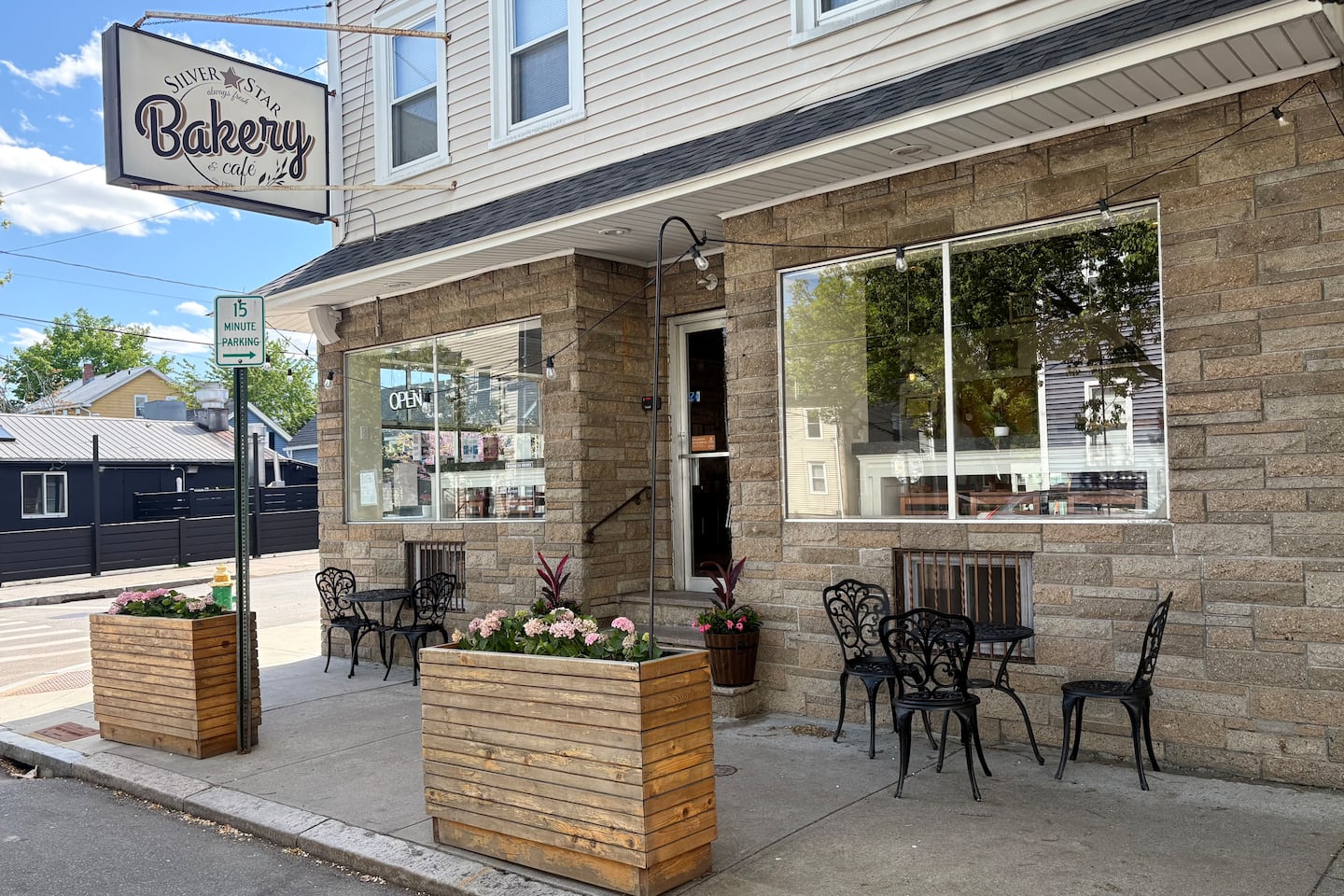 Silver Star Bakery in Providence is a well-known purveyor of pizza strips.Andrea McHugh for The Boston Globe
Some of the best-known pizza strip or chip purveyors that Rhode Islanders swear their loyalty to include Venda Ravoli, Silver Star Bakery, and Sal’s Bakery, all in Providence; The Original Italian Bakery in Johnston; Colvitto’s Pizza & Bakery in Narragansett; and DePetrillo’s Pizza & Bakery, which has five locations across the state.
But homesick Rhode Islanders may also be able to find the snack in unexpected places. In Florida, Laurie Moretti is helping preserve Rhode Island culinary culture while connecting with others who share her roots. Originally from Warwick, Moretti moved to Florida with her late husband David in 1996, opening Paisano’s Italian Bakery in Sarasota. Having established a reputation as a “Rhode Island bakery,” it draws customers with New England ties, including many who come specifically for pizza strips. Paisano’s has also converted new people into pizza-strip fans.
“My husband is from Federal Hill. He introduced me to them and at every family function of his, there were always pizza strips,” Moretti said. Before heading South, David worked at bakeries across the state, including Calvitto’s and the now-closed Rainbow Bakery, both in Cranston. When he passed, Moretti decided it was time for her “to step up.”
Today, Paisano’s pizza strips and other New England foodways are more than just culinary delights. “It’s the ties that keep us remembering who we are and how we grew up. It’s definitely a little piece of home,” Moretti said. “Now if I could get somebody to open up a clam cakes and chowder shop [in Florida], I’d be happy.”
Dining and Cooking