
Wine culture in the United States has evolved dramatically over the past decade. What was once considered a luxury hobby reserved for collectors and high-income households has now become part of mainstream American lifestyle culture. From casual dinner parties and home entertaining to personal wine collections and luxury kitchen renovations, wine consumption has increasingly become associated with comfort, sophistication, and modern living.
As this cultural shift continues, demand for proper wine storage solutions is growing rapidly across the country.
One appliance benefiting enormously from this trend is the wine cooler.
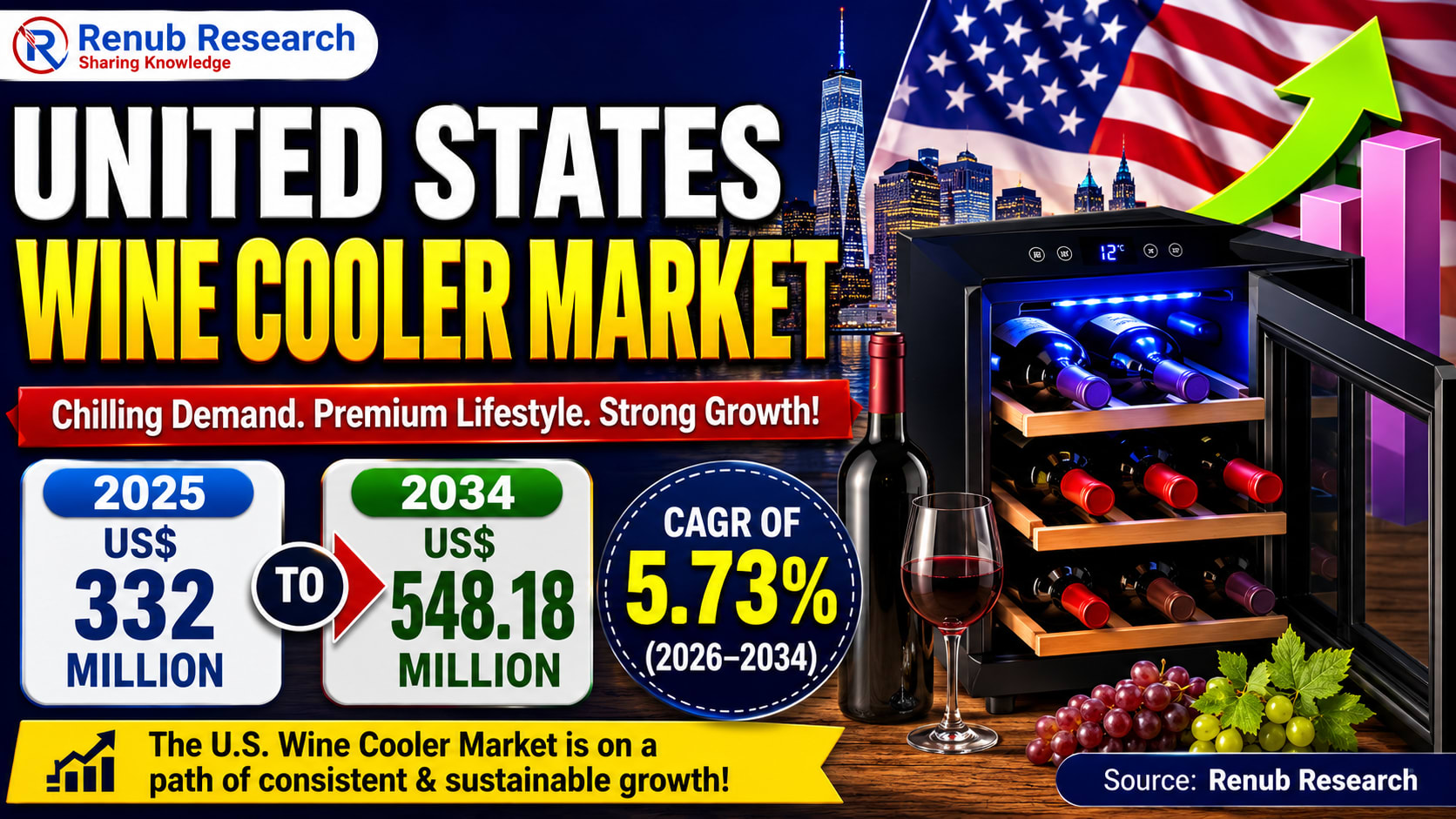
According to Renub Research, the United States Wine Cooler Market is expected to grow from US$ 332 Million in 2025 to US$ 548.18 Million by 2034, expanding at a CAGR of 5.73% between 2026 and 2034. The market is being driven by rising wine consumption, expanding home entertainment culture, and increasing demand for smart and energy-efficient appliances.
Today’s wine coolers are no longer simple storage units. Modern products now include smart connectivity, dual-zone cooling systems, app-based controls, UV-protected glass doors, premium wood shelving, and luxury built-in designs that complement modern homes.
What was once viewed as a niche appliance is quickly becoming an important lifestyle product for consumers who value convenience, design, and wine preservation.
Wine Appreciation Is Becoming Part of Everyday American Culture
One of the biggest reasons behind the rapid growth of the wine cooler market is the increasing popularity of wine itself in American households.
Wine is no longer consumed only during special occasions or upscale dining experiences. It has become a common feature at social gatherings, family dinners, celebrations, and home entertainment events.
As consumers become more interested in wine appreciation, they also become more aware of proper storage conditions.
Unlike regular refrigerators, wine coolers are specifically designed to maintain ideal temperature and humidity levels that help preserve flavor, aroma, and overall wine quality. Features such as vibration reduction and UV-resistant glass further protect wine from environmental damage.
This growing understanding of wine care is encouraging more consumers to invest in dedicated storage appliances.
Home entertaining culture is also playing a major role.
Over the past several years, Americans have spent more time socializing at home, leading many households to upgrade kitchens, dining spaces, and entertainment areas. Wine coolers fit naturally into this trend because they combine functionality with luxury aesthetics.
Consumers increasingly view wine coolers as part of a complete home experience rather than simply a storage appliance.
Download Free Sample Report
 Smart Home Technology Is Changing the Industry
Technology is rapidly transforming the wine cooler market.
Modern consumers expect appliances to deliver convenience, automation, and connectivity, and wine cooler manufacturers are responding aggressively to these expectations.
Today’s premium wine coolers often include app-controlled temperature adjustments, digital displays, humidity monitoring systems, energy-efficient cooling technology, and smart alerts that notify users when conditions fluctuate.
These features are especially attractive to younger consumers and smart-home enthusiasts who prefer appliances integrated into connected ecosystems.
The rise of smart homes in the United States has significantly increased demand for advanced kitchen appliances that combine convenience with modern design.
Luxury brands are heavily investing in innovation.
In 2023, LG introduced its SIGNATURE smart wine cellar featuring UV protection, humidity control, and premium storage technology aimed at luxury consumers. Similarly, Samsung’s “Bespoke Infinite Line” refrigerator collection introduced an integrated wine cellar capable of storing up to 101 bottles while supporting customizable modular kitchen layouts.
These innovations demonstrate how wine coolers are evolving into premium lifestyle appliances rather than simple refrigeration products.
Consumers today are not only purchasing appliances for functionality. They are also buying products that enhance aesthetics, convenience, and modern living experiences.
Home Design Trends Are Fueling Demand
Interior design trends are another major growth driver for the U.S. wine cooler market.
Modern homeowners increasingly prefer kitchens that combine luxury, minimalism, and functionality. Built-in appliances have become especially popular because they create seamless visual integration while maximizing available space.
Built-in wine coolers fit perfectly into this trend.
Unlike freestanding models, built-in units blend directly into cabinetry and premium kitchen layouts, creating a sophisticated appearance often associated with luxury homes.
As Americans continue investing heavily in home remodeling projects, wine coolers are becoming common additions to upgraded kitchens, home bars, entertainment rooms, and luxury apartments.
The rise of open-concept living spaces also supports this trend.
In many modern homes, kitchens are no longer hidden cooking areas. They are social spaces designed for entertaining guests and showcasing personal style. A sleek wine cooler with LED lighting and glass doors contributes to that premium atmosphere.
Consumers increasingly want appliances that feel elegant while also offering practical functionality.
This combination of design and convenience is helping wine coolers move into mainstream demand.
E-Commerce Is Expanding Accessibility
Online retail has dramatically changed how consumers shop for appliances, and the wine cooler market is benefiting significantly from this shift.
E-commerce platforms now allow consumers to compare features, prices, bottle capacities, and customer reviews more easily than ever before.
Previously, consumers often relied on local appliance stores with limited inventory. Today, buyers can browse hundreds of wine cooler models online and access advanced features that may not be available in nearby physical stores.
Manufacturers are also using direct-to-consumer sales strategies to strengthen online visibility.
This approach is especially effective for smart and premium wine cooler brands targeting digitally connected consumers.
One major example of this trend is the launch of the “Porta” rechargeable cordless smart wine cooler, designed primarily for online-first distribution through crowdfunding and e-commerce platforms. The portable device features app-connected temperature controls and rechargeable cooling systems aimed at modern consumers seeking flexibility and mobility.
Digital retail is therefore helping wine cooler companies expand market reach while educating consumers about the benefits of specialized wine storage.
Built-In Wine Coolers Are Becoming a Luxury Standard
Among all product segments, built-in wine coolers are experiencing especially strong growth in the United States.
Consumers increasingly prefer built-in models because they enhance kitchen aesthetics while saving floor space.
These appliances are particularly attractive in urban apartments, luxury condominiums, and newly renovated homes where efficient use of space matters.
Built-in units also support premiumization trends within the appliance market.
Many homeowners now view wine coolers as symbols of sophistication and elevated lifestyle. Dual-zone cooling systems, customizable shelving, premium wood interiors, and sleek stainless-steel finishes are becoming highly desirable features.
High-income households and wine enthusiasts are especially driving demand for advanced multi-zone storage systems capable of preserving different wine varieties simultaneously.
Additionally, quieter compressors and improved cooling technologies have made modern built-in units more appealing for residential use.
As luxury kitchen spending continues rising across the United States, built-in wine coolers are expected to remain one of the market’s fastest-growing categories.
Thermoelectric Technology Is Gaining Popularity
Another important trend shaping the market is the growing adoption of thermoelectric wine coolers.
Unlike traditional compressor-based systems, thermoelectric coolers operate quietly and use less energy, making them attractive for environmentally conscious consumers.
These models are especially popular among casual wine drinkers, apartment residents, and smaller households seeking compact storage solutions.
Thermoelectric wine coolers also offer vibration-free operation, which helps preserve wine quality by reducing unnecessary movement during storage.
Their lightweight construction and portability further support demand among younger consumers living in urban environments.
As sustainability becomes increasingly important in appliance purchasing decisions, energy-efficient wine coolers are expected to gain even greater market traction.
Manufacturers continue improving thermoelectric performance, expanding bottle capacities, and introducing affordable entry-level models aimed at mainstream buyers.
The combination of lower power consumption, quieter operation, and eco-friendly appeal positions thermoelectric systems as a key growth opportunity for the industry.
California Continues Dominating Wine Culture
California remains the most influential market in the U.S. wine industry.
The state generates approximately US$ 84.51 billion in economic activity through wine production, tourism, distribution, and retail operations. With more than 4,600 wineries and 570,000 acres of vineyards, California represents the heart of American wine culture.
This strong wine ecosystem naturally supports demand for wine coolers and premium storage solutions.
Consumers in regions such as Napa Valley, Sonoma, Los Angeles, and San Francisco often invest heavily in wine collections and home entertainment spaces, creating strong demand for luxury wine storage appliances.
Texas is also emerging as a rapidly growing wine market.
The state’s wine industry generates over US$ 24 billion in economic activity and supports strong tourism and hospitality sectors. Urban centers such as Dallas and Austin are helping drive consumer interest in wine-related lifestyle products.
Meanwhile, New York and Florida continue supporting strong demand through tourism, hospitality, and growing urban wine culture.
These regional trends demonstrate how wine appreciation is spreading far beyond traditional wine-producing areas.
Challenges Facing the Wine Cooler Industry
Despite strong growth potential, the wine cooler market still faces several important challenges.
The biggest obstacle remains high upfront costs.
Premium wine coolers with advanced features such as dual-zone cooling, built-in installation, and smart connectivity can be expensive, limiting accessibility for middle-income households.
Many consumers still view wine coolers as luxury appliances rather than essential household products.
Economic uncertainty and inflation can also reduce discretionary spending on non-essential home upgrades.
Another challenge involves space limitations.
Urban apartments and smaller homes may not have enough room for large built-in wine storage systems, restricting adoption among certain consumer groups.
Consumer awareness also remains an issue.
Some buyers still store wine in traditional refrigerators without understanding the long-term impact on flavor and preservation quality. Manufacturers therefore face the ongoing challenge of educating consumers about the benefits of specialized wine storage.
Additionally, changing beverage preferences may influence future market demand.
Younger consumers increasingly explore alternative alcoholic beverages such as craft cocktails, hard seltzers, and non-alcoholic options. The wine cooler industry must continue innovating to maintain long-term relevance in a rapidly evolving beverage market.
Final Thoughts
The United States wine cooler market is undergoing a significant transformation fueled by rising wine appreciation, luxury home trends, smart technology adoption, and changing consumer lifestyles.
What was once considered a niche appliance category is quickly becoming part of modern American living.
According to Renub Research, the market is projected to grow to US$ 548.18 Million by 2034, reflecting strong demand for advanced, energy-efficient, and aesthetically appealing wine storage solutions.
Today’s consumers are not simply buying appliances.
They are investing in experiences, lifestyle upgrades, and products that combine convenience with personal expression.
Wine coolers perfectly represent this shift.
They offer functionality, design, smart technology, and luxury all within a single appliance category. As home entertainment culture continues expanding and consumers place greater value on premium living experiences, wine coolers are expected to become increasingly common across American households.
And in a market driven by both technology and lifestyle aspirations, that momentum may only continue growing in the years ahead.
Dining and Cooking