
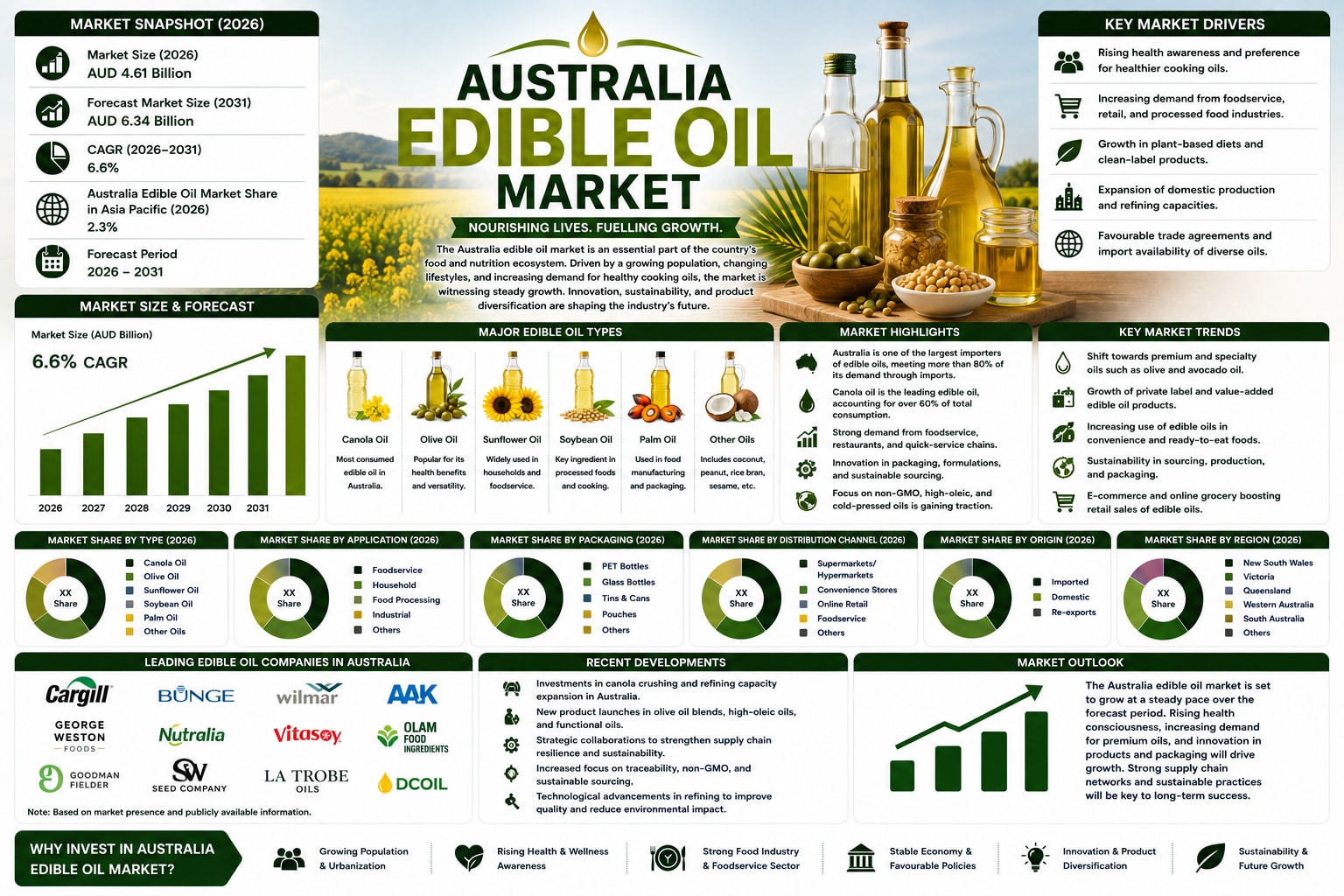
Australia’s edible oil industry is witnessing a period of stable but significant transformation as consumers increasingly prioritize health-conscious food choices and manufacturers continue innovating across food processing and culinary applications. From sunflower and olive oil to canola and palm oil, edible oils remain an essential component of household cooking, packaged foods, restaurant operations, and industrial food manufacturing. According to IMARC Group, the Australia edible oil market reached a value of USD 5.2 Billion in 2025 and is projected to grow to USD 7.4 Billion by 2034, exhibiting a CAGR of 3.90% during 2026–2034.
The market’s growth is closely linked to changing dietary preferences, increasing awareness about nutritional benefits, and the expansion of Australia’s food service and processed food sectors. Consumers are becoming more selective about the oils they use, with growing preference for products perceived as healthier, organic, and rich in beneficial nutrients. At the same time, food manufacturers are investing in premium oil blends and fortified products to meet evolving consumer expectations.
IMARC categorizes the market across several major segments. By type, the market includes palm oil, soybean oil, sunflower oil, olive oil, canola oil, and others. Applications span household cooking, food processing, bakery and confectionery products, snacks, restaurants, and industrial food production. Distribution channels include supermarkets and hypermarkets, convenience stores, online retail, and specialty food outlets.
Request a Business Sample Report for Procurement & Investment Evaluation:
Why the Market Is Growing So Rapidly
One of the primary growth drivers is the increasing consumer focus on healthier lifestyles and nutritional awareness. Australian consumers are paying closer attention to cooking ingredients and dietary habits, leading to rising demand for oils perceived as heart-friendly and nutrient-rich. Olive oil, canola oil, and sunflower oil have gained significant popularity due to their healthier fat profiles and broader use in modern diets.
The expansion of Australia’s food processing industry is also contributing strongly to market growth. Packaged foods, ready-to-eat meals, bakery products, and snack manufacturing all rely heavily on edible oils as core ingredients. As food manufacturers continue expanding production capacities and product portfolios, demand for edible oils is steadily increasing across industrial applications.
Growth in the restaurant and food service sector is another important market catalyst. Quick-service restaurants, cafes, catering businesses, and hospitality providers require large volumes of edible oils for food preparation and frying applications. Rising urbanization, busy lifestyles, and increased dining-out culture are further supporting commercial demand.
Product innovation is reshaping the competitive landscape. Manufacturers are introducing cold-pressed oils, organic variants, blended oils, and fortified products enriched with vitamins and omega fatty acids. Premiumization trends are encouraging consumers to spend more on higher-quality edible oils with perceived health and culinary benefits.
Sustainability and responsible sourcing are also becoming increasingly influential in purchasing decisions. Consumers and retailers are showing greater interest in sustainably sourced palm oil and environmentally responsible production practices. Companies investing in transparent supply chains and eco-friendly sourcing strategies are strengthening brand positioning in the market.
E-commerce growth is improving product accessibility and consumer reach. Online grocery platforms and digital retail channels are making premium edible oil brands more accessible to Australian households. This shift is particularly benefiting specialty oils and niche health-focused product categories.
What the Opportunities Are
1. Premium and Organic Oil Products
Consumers are increasingly willing to pay higher prices for organic, cold-pressed, and minimally processed edible oils. Brands focusing on premium positioning can capture strong demand growth.
2. Health-Focused Product Innovation
Edible oils enriched with omega-3, vitamins, and functional health benefits present major opportunities for food manufacturers targeting health-conscious consumers.
3. Sustainable Sourcing Initiatives
Environmentally responsible sourcing and certified sustainable palm oil programs can help companies strengthen consumer trust and improve long-term market competitiveness.
4. Expansion of Food Processing Applications
The continued growth of packaged foods, bakery products, and ready-to-eat meals creates strong industrial demand for edible oils across manufacturing operations.
5. E-Commerce and Direct-to-Consumer Sales
Digital grocery platforms and online retail channels offer brands new opportunities to expand reach, improve customer engagement, and market specialty oil products.
6. Restaurant and Hospitality Sector Growth
The expansion of Australia’s hospitality and food service industries supports rising commercial demand for high-quality edible oils used in cooking and food preparation.
7. Functional and Specialty Oil Segments
Specialty oils including avocado oil, flaxseed oil, and blended nutritional oils are attracting growing consumer interest and creating new premium market categories.
Recent News & Developments in Australia Edible Oil Market
• January 2025: Australian food manufacturers expanded investments in healthier edible oil product lines as consumer demand for nutritional food ingredients continued rising. Several brands introduced cold-pressed and fortified oil products targeting health-conscious households. Industry analysts observed increased retail shelf space dedicated to premium edible oil categories.
• May 2025: Major supermarket chains across Australia strengthened commitments toward sustainably sourced edible oil products, particularly certified sustainable palm oil. Retailers collaborated with suppliers to improve product traceability and environmental transparency within supply chains. Industry participants viewed the initiative as an important step toward responsible food sourcing practices.
• September 2025: Australia’s food service and hospitality sectors reported continued growth in demand for high-performance cooking oils amid rising restaurant activity and tourism recovery. Commercial food operators increasingly adopted premium oil blends to improve food quality and operational efficiency. Market observers noted steady expansion across both retail and industrial edible oil consumption segments.
Why Should You Know About Australia Edible Oil Market?
Australia’s edible oil market represents more than a traditional food ingredient industry. It reflects broader shifts in consumer health awareness, sustainable consumption patterns, and evolving food production systems. As dietary preferences continue changing, edible oil manufacturers are adapting through innovation, premiumization, and environmentally responsible sourcing strategies.
For investors and businesses, the sector offers stable long-term growth supported by consistent household demand, food industry expansion, and rising interest in healthier cooking alternatives. For food manufacturers and retailers, edible oils remain an essential category influencing product quality, nutritional positioning, and consumer purchasing behavior.
The market also highlights the growing importance of sustainability and wellness within the global food economy. As Australian consumers continue prioritizing healthier and ethically sourced food products, the edible oil industry is expected to remain a key contributor to the country’s evolving food and nutrition landscape.
Dining and Cooking