
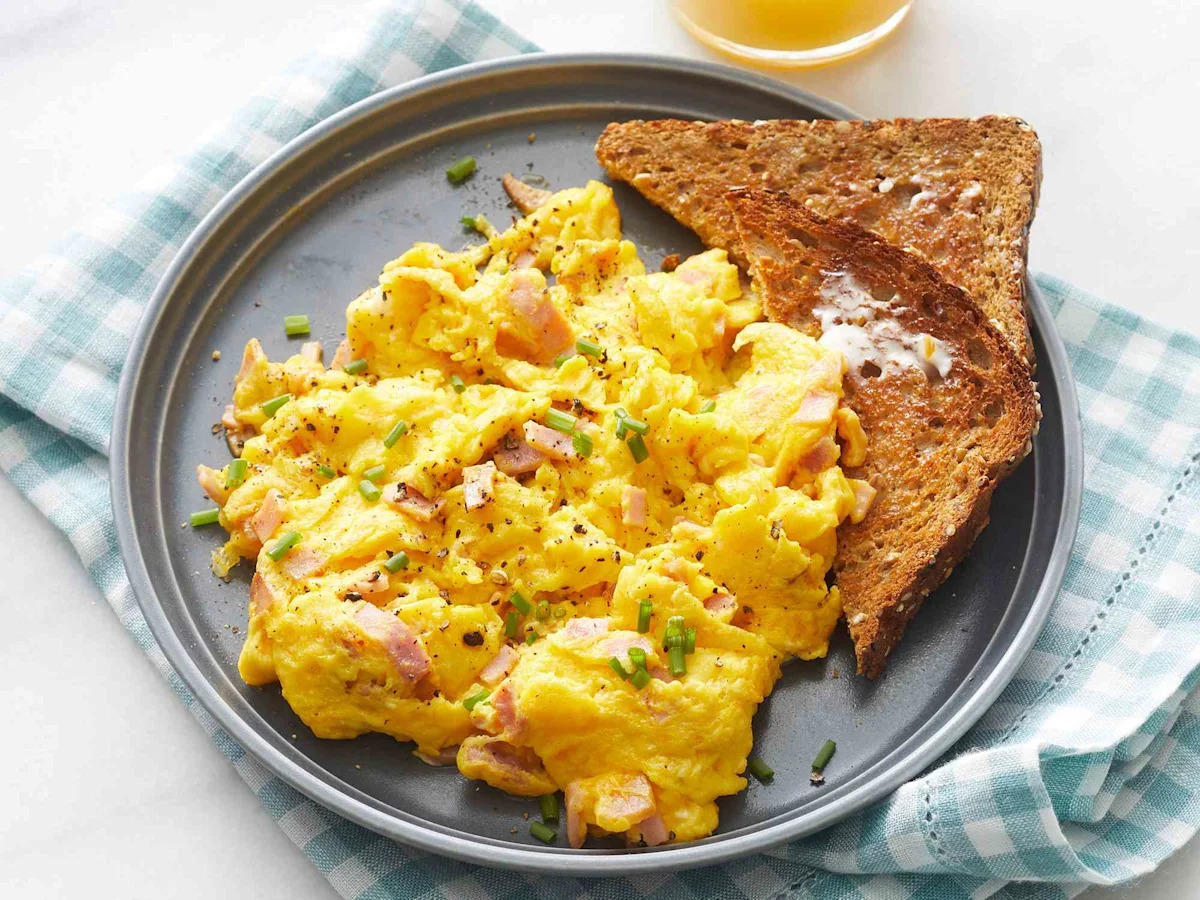
Scrambled eggs probably fall into the category of breakfasts you can make on autopilot. But if your morning eggs never taste quite as good as the fluffy, custardy versions from a diner or hotel brunch, a few small changes can make a big difference. Most people have experienced both ends of the spectrum: soft, rich eggs that melt on the fork or dry and rubbery ones that barely make it off the plate.
With so many scrambled egg tips floating around online, it can feel impossible to know which methods actually work. Instead of chasing the latest viral hack, take a cue from Julia Child. In her first cookbook, “Mastering the Art of French Cooking, Volume 1”, she devoted an entire chapter to eggs, explaining how classic French techniques can turn this humble staple into a standout dish for breakfast, lunch, or dinner.
Below, you’ll find Child’s top tips for turning out creamy, custardy, flavorful scrambled eggs every single time. That way, the next time you crack a few eggs into a pan, you’ll know exactly what to do.
Don’t Overload Your Egg Batter With Liquid or Seasonings
It may be tempting to load up your scrambled egg batter with seasonings like pepper and paprika, or to fold in ingredients like heavy cream or juicy tomatoes. However, too many additions can work against a creamy texture. Excess spices can disrupt the egg mixture, and added liquid can lead to loose, uneven results.
Child recommends a simple approach. “Salt plus half a teaspoon of liquid per egg helps blend yolks and white, but no more liquid or liquid-producing ingredients, or the eggs will turn watery,” she says.
Start With Butter
“Smear the bottom and sides of the pan with butter,” says Child. Butter delivers the richest flavor among cooking fats and gives scrambled eggs a more delicious result. The coating also creates a velvety texture as the eggs cook. It prevents sticking on the bottom and sides of the skillet, allowing the eggs to move smoothly across the surface while you stir.
Cook Your Eggs Low and Slow
Many chefs, including Chrissy Teigen and Ina Garten, recommend cooking eggs over low heat for a longer period of time. Child, decades ago, wrote about a similar approach, though she notes the process does not require standing at the stove for ten minutes straight.
“Their preparation is entirely a matter of stirring the eggs over gentle heat until they slowly thicken as a mass into a custard,” says Child. She recommends keeping the heat as low as possible. “Nothing will seem to happen for 2 to 3 minutes as the eggs gradually heat. Suddenly, they will begin to thicken into a custard,” she says.
Constant stirring keeps the eggs smooth and prevents sticking. “Stir slowly and continually, reaching all of the bottom of the pan,” says Child. This movement lifts the eggs evenly, so they cook without clinging to the pan.
Scramble Your Eggs On and Off the Heat
Child recommends moving the pan away from the flame even when cooking eggs over low heat. “Stir rapidly, moving the pan on and off the heat, until the eggs have almost thickened to the consistency you wish,” she says. This technique controls temperature and prevents overheating. The steady movement keeps the skillet at a warm, even heat that supports soft, creamy curds without drying out the eggs.
For Creamier Eggs, Finish With Butter or Cream
Once the eggs reach your desired texture, remove the pan from the heat. While the eggs are still slightly soft, add finishing fats to enhance their flavor and texture. “Just as soon as they are of the right consistency, stir in the enrichment butter or cream, which will stop the cooking,” she says. For eight eggs, add 1 to 2 tablespoons of softened butter or heavy cream. Stir whichever you choose into the eggs until it fully incorporates and creates a custardy texture.
Tips for Upgrading Your Creamy Scrambled Eggs
Now that you know how to make custardy, fluffy scrambled eggs, you can move on to simple add-ins that take them even further. Read on for our top tips below.
Use low-moisture add-ins. Avoid mixing watery ingredients such as tomatoes or zucchini directly into the eggs, as extra liquid can thin the mixture and result in a watery texture. Instead, fold in herbs such as chives, parsley, or tarragon for flavor without adding moisture.
Add cheese at the end. Stir in grated cheese once the eggs finish cooking so it melts smoothly into the mixture. Parmesan, Swiss, or cheddar all work well, depending on what you have on hand.
Read the original article on Allrecipes
Dining and Cooking