

Growing up on the Italian island of Sardinia, chef Francesco Mattana was raised on the freshest local food. Fish, eels, crabs, sweet potatoes, red wine – all caught and grown metres from his family home, prepared communally, and shared in the sunshine.
For Mattana and his fellow Sardinians, food isn’t simply fuel – it’s a pastime, a lifestyle, a chance for connection. This, he says, is one of the main reasons why Sardinians live exceptionally long, healthy lives, and why the region has become one of a handful of the globe’s Blue Zones.
“It mainly focuses on fresh seasonal ingredients, healthy fats, but one part of the cuisine as well is that you spend plenty of time cooking and eating together – it’s not just about the actual ingredients, community is part of the cuisine,” said Mattana.
Blue Zones, a term coined by National Geographic explorer Dan Buettner in the early 2000s, describes hotspots of longevity in select global locations. There are five official Blue Zones – Okinawa, Japan, Nicoya Peninsula, Costa Rica; Ikaria, Greece; Loma Linda, California; and Sardinia, Italy – all of which boast a high number of centenarians living full, healthy lives, attributed to lifestyles that include low stress levels, rich social interactions, and high-quality diets.


For Mattana, who was born and raised on the island and has built a career as a chef, teacher chef and, now, cookbook author, Sardinia’s reputation as a Blue Zone is a point of pride, and something that he has drawn on for his new recipe book, Eat Like A Sardinian: Live to 100.
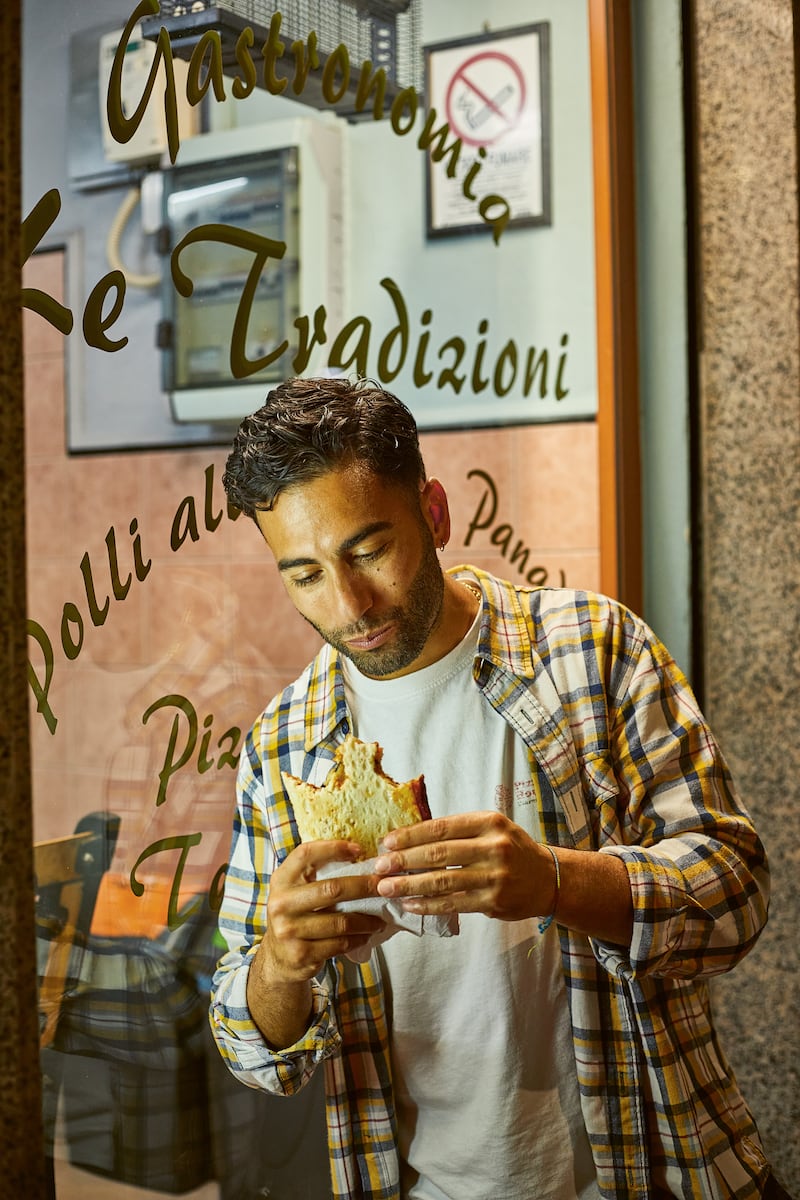 Francesco Mattana grew up on the island of Sardinia
“When I was a child, both of my grandads, one was a fisherman and one was a farmer, so I was lucky enough to have the freshest vegetables and meat and the freshest fish,” he explained.
“What I remember very well is my grandad coming back from the fishing village with fresh fish, fresh eels and crabs and all that stuff, going in the back garden in the courtyard with everyone – with all my cousins – and it was like: ‘Francesco, go pick up those crabs running around in the garden!’
“Those memories, they build up and they stick with me.
“It was about the produce and the community all together, and I have to be honest, it’s probably hard to imagine somewhere else in the world… it’s hard to have the same feeling.
“However, what I’m trying to bring everywhere else with this book is the ethos. So, you don’t have to be in Sardinia, you don’t have to be anywhere in Italy to eat like this.”
Indeed, Mattana’s book shows that anyone, anywhere in the world, can eat like a Sardinian: It’s about “seeing food in a different way, not seeing food just as something you put in your stomach”.
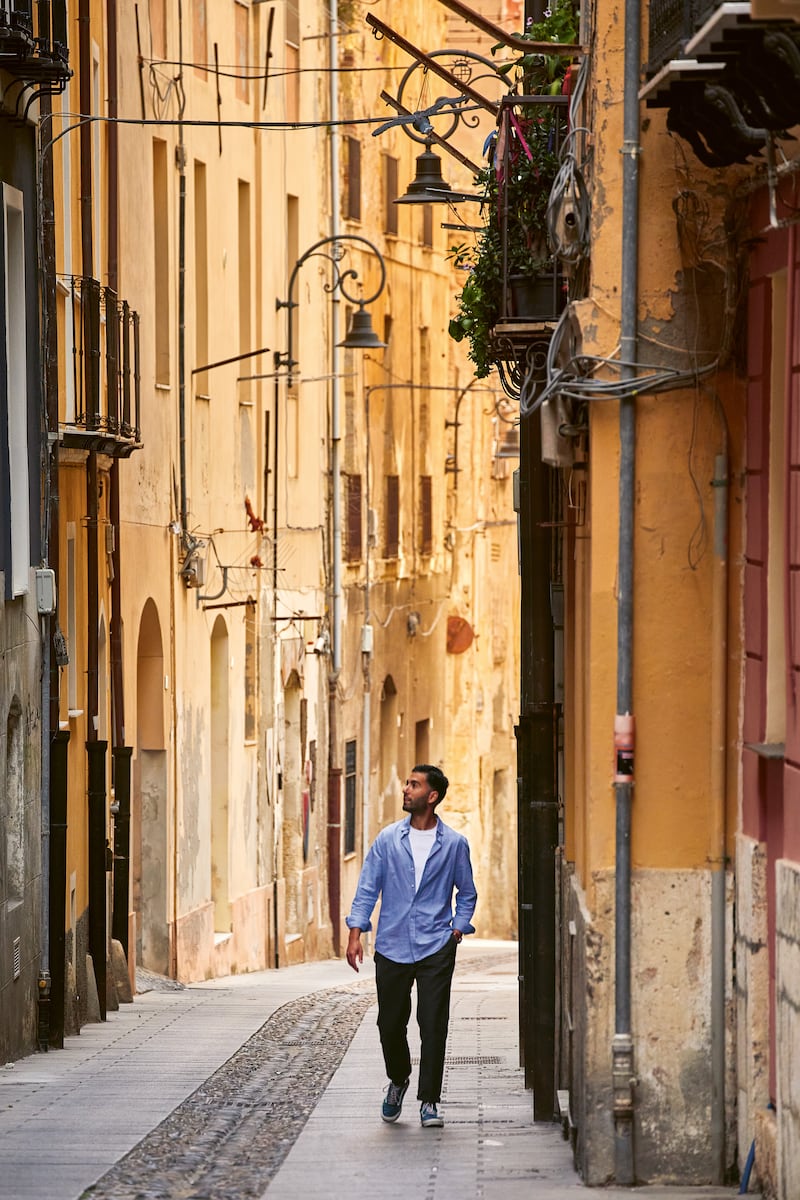 ‘You don’t have to be in Sardinia, you don’t have to be anywhere in Italy to eat like this’
The first step, he explained, is building a relationship with produce – seeing what’s in season, what’s available locally to you, and investing some time and care into what you’re buying and how you’re cooking it.
“For me, the perfect example in the cookbook is the minestrone… a recipe that we make every single month throughout the whole year,” he said.
“You can have it in springtime with asparagus, with broad beans, with peas… Then you go into summer time, where you can have it with tomatoes and fresh basil.”
One of the key dishes that Mattana attributes to Sardinian longevity is “raw vegetables – for us, raw vegetables are a celebration… because you get the best nutrition if you don’t cook them”.
“It’s a celebration of seasonality, and in fact, if you go to any restaurant, you can literally order raw vegetables to the table. Even the fanciest restaurant, you will see it… It’s a massive thing.”
Perhaps most appealingly, Mattana added that “we do drink a lot of wine” – but it is “drunk in an environment with everyone. It’s a community spirit, it’s a little glass of red without exaggeration, even every day.”
“The wine that we mainly drink is called Cannonau, a Sardinian local wine. Because of the Blue Zone, now it’s getting known everywhere around the world, but this wine is being linked to different health benefits like cardiovascular health, increased longevity, and reduced inflammation,” he said.
“We prioritise quality over quantity when it comes to this type of wine… It’s very high in antioxidants – Cannonau has two to three times the amount of flavonoids, a type of antioxidant, compared to any other red wine.
“In fact, another cool thing to say is that in Sardinia, when we ‘cheers’ with wine, we say ‘A chent’annos’ – to 100 years old.”
Mattana’s parting wisdom for those who want to eat, drink, and live to 100 like a Sardinian is that “we need to get out of our comfort zone – try new recipes, new cuisines with ingredients that you know you love”.
“See what’s around you: in Italy, especially in Sardinia, we have this (concept) called Kilometre 0 – go to your local shop, go to the Sunday farmers’ market, see what’s in season, get excited. Talk to the butcher, talk with the fishmonger. Get advice from them.
“And keep it simple, because if you go with the aspect of using things that are in season and things that haven’t travelled so much to get to you, then you’re really winning, because you know it’s going to be delicious, and you know it’s going to be really good for you, you get the best out of them.
“So, if you combine those things – making it very simple, inviting people around the table, (and) have fun with it, make mistakes… You can enjoy the process just as much as the result.”
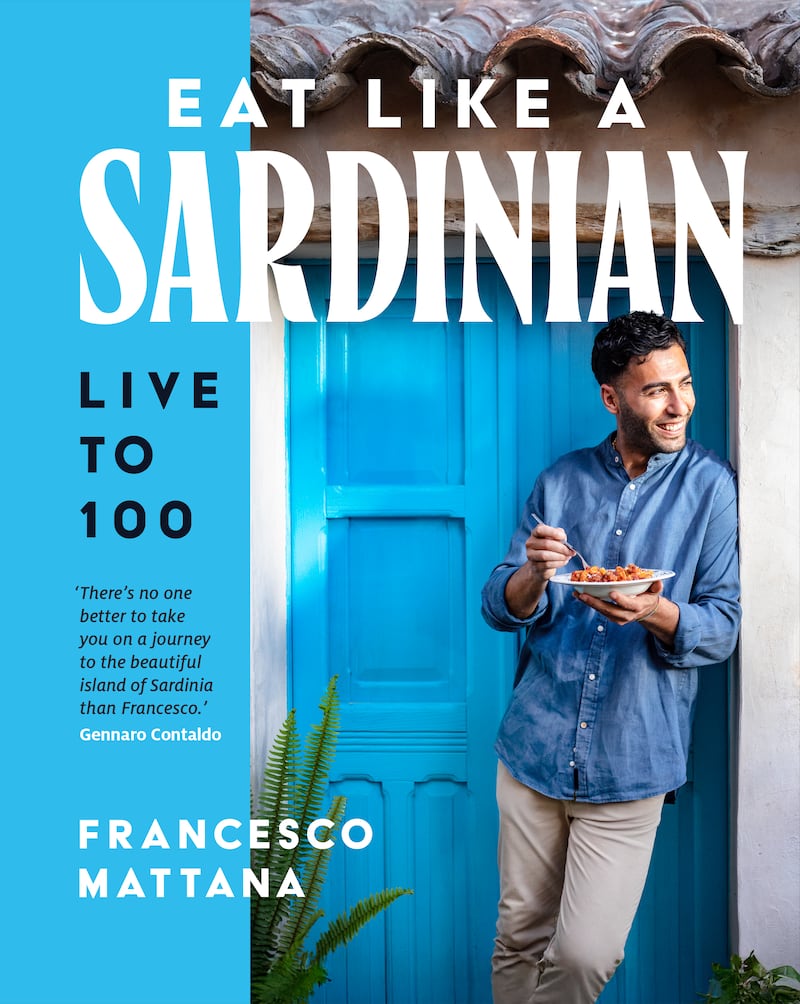 Eat Like a Sardinian by Francesco Mattana is published by Murdoch Books
Eat Like a Sardinian: Live To 100 by Francesco Mattana is published in hardback by Murdoch Books, priced £22. Photography by Dave Brown. Available May 28
Dining and Cooking