
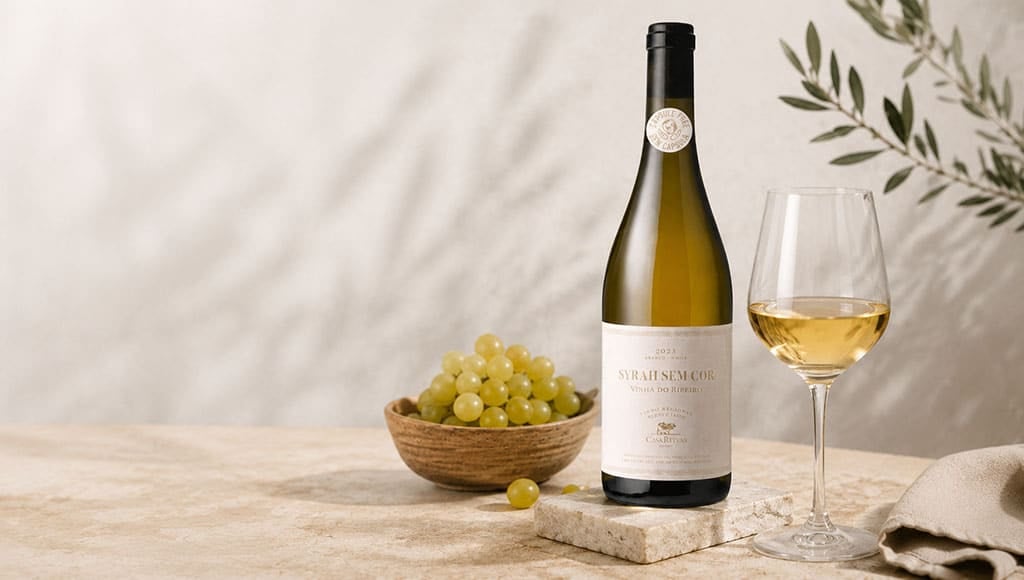
The Blanc de Noirs effect is achieved when black grapes like Syrah are pressed very gently, and the skins are separated from the juice immediately. The juice then yields a white wine, rather than a rosé or red, both of which require skin contact to impart color and tannins. In this case, the wine fermented and spent four months sur lies (in contact with the yeast sediment), which helps add texture and complexity.
The idea is to create a white wine with added complexity, and indeed it delivers with vegetal notes, orange blossom, and white peach on the nose, and bright citrus flavors and mineral notes on the palate. I’m just not sure why you would choose it over a quality white wine made from white grapes, or a rosé, for that matter.
There is nothing wrong with this wine. In fact, if you want to try a blind tasting at home, this is an ideal choice. Cover the label and see if anyone guesses the grape is Syrah.
Served well chilled, it would pair nicely with a variety of foods: fresh, herbaceous pad thai or sautéed prawns, for example. But the wine strips away much of what makes Syrah so distinctive: intense fruit, black pepper, smoke and, of course, the deep color.
With a multitude of Portuguese white wines blended with precision to achieve complexity and balance, I’m not convinced that white wines made from black grapes are necessary, or a trend that will endure here. Give it a try and decide for yourself.
Syrah Sem Cor 2025 is available at Intermarché for €9.99.
Read more from Adrienne Salerno about wine: Why Portuguese wine is worth discovering or Wine Talk – A crowd-pleasing Douro Branco
Dining and Cooking