

by Dora Desantis
President of the Italian Olive Oil Supply Chain
The Italian olive oil sector is undergoing a profound reshaping, closely tied to its companies’ ability to innovate and collaborate. In a rapidly evolving global context, where Italy cannot afford to lose its historic international prestige, reflecting on the value of an interprofessional supply chain is a strategic necessity. The FOOI – Italian Olive Oil Supply Chain was born with this very aim: to be the place where all the souls of the sector, from agricultural production to transformation, up to trade and industry, begin to dialogue as a single, large country system.
Even today, our sector is characterized by strong fragmentation and often divergent visions. Interprofession aims to overcome these limitations, encouraging and promoting dialogue among the various players in the supply chain, the definition of shared strategies, and unified representation before national and European institutions. Only a more cohesive supply chain can strengthen the protection of Made in Italy and more effectively address the challenges of global markets.
 In this complex architecture, the mill represents the point of union, both physical and strategic, of all the actors in the supply chainIn an era where sustainability, innovation, and competitiveness are the key words, the oil mill today is a true natural laboratory for cultural, environmental, and economic transition. The oil mill is the trait d’union between an agriculture that urgently needs to renew itself and an olive oil industry that shows a willingness to demand ever-improving quality extra virgin olive oil, with high nutritional and health value.
On the agricultural front, we are facing one of the most impactful emergencies in our history: the plant disease caused by Xylella fastidiosaAgricultural regeneration with resistant varieties, hopefully in ever-increasing numbers, will allow for increased biodiversity, improved ecosystem resilience, and long-term sustainable production. However, investment in research is essential: cultivar selection must also be guided by rigorous preliminary analysis of the resulting oils.
At the same time, olive growing must adopt precision technologies and integrated irrigation systems to optimize resources and reduce waste also in light of climate change and in particular of global warming. Furthermore, there is a need for correct and optimal use of pesticides, supported by targeted training programs and advanced decision-making support systems. The reason is simple: everything that goes wrong in the field ends up as a problem in the mills. On the other side of the supply chain, The olive oil industry is showing a growing interest in quality products, with high nutritional value, which are safe and well preserved.This need for excellence, however, must find concrete confirmation in the economic valorisation of extra virgin olive oil, ensuring the fair remuneration for all the links in the supply chain and giving value to Made in Italy.
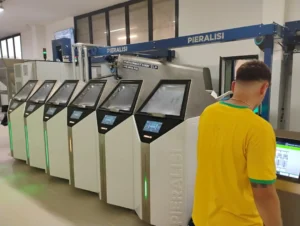 At the heart of these dynamics, the olive oil mill has undergone a radical transformation over the last fifty years. Knowledge and human capital have become the true strategic drivers of companies. Olive oil is a very specific project for the miller. It is the result of a calculated interaction between machinery and raw materials, the outcome of which must never be a surprise. Between field selection and bottling, numerous decisions must be made, and each must be tied to a precise strategy geared towards the end result, the market.
If the miller of the past was often relegated to the role of spectator of a manual process with uncertain results, the modern miller is transforming himself into a true artisanA professional who practices a craft based on solid technical knowledge. He is a well-rounded entrepreneur who also manages logistics, records, and the valorization of by-products.
And it is also on this point that the new National Olive Oil Plan It should have a decisive impact. The management of processing residues must no longer be seen as a mere bureaucratic requirement, but rather as an opportunity for the circular economy. By-products must change their meaning: what was once a cost must now become a resource. A resource capable of generating new value chains and retaining wealth within the agri-food process, improving the company’s environmental reputation and competitiveness in the local area.
To meet the challenge of competitiveness and sustainability, professional training must be the top priority. We must invest in young people, developing professionals with skills in integrated olive oil production management, capable of combining innovation, technology, and market research. Today, our sector faces epochal challenges: from climate change to soaring costs, from international competition to production crises. Yet, Italy holds an extraordinary heritage of skills, territories, culture and biodiversity.
As a supply chain, we have a duty to look to the future with a comprehensive vision, because through a modern supply chain capable of generating value at every stage, we will be able to project the excellence of Italian olive oil towards the challenges of tomorrow.
Dining and Cooking