
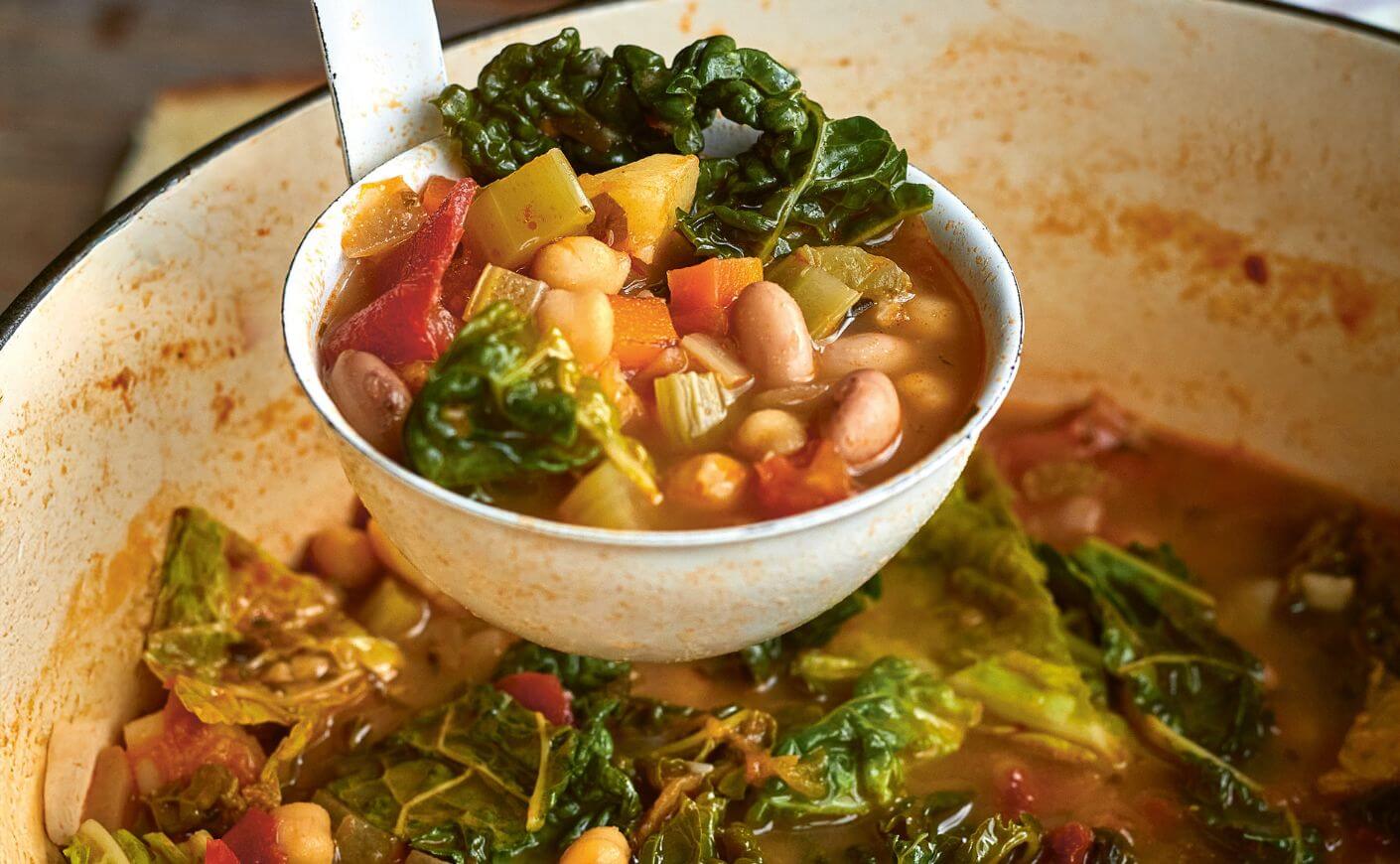
Seeking a doable main dish that may help you lead a longer, healthier life? We recommend a bowl of humble minestrone. This fiber-rich, veggie-forward soup has been popular across Italy for a long time — but chef Francesco Mattana claims that, “The most famous minestrone comes from Sardinia.”
Mattana’s cookbook, Eat Like A Sardinian, contains a recipe that Mattana cheekily calls, “Live to 100 minestrone.” He argues that the dish itself exemplifies the kind of fresh, simple cuisine that ensures a long lifespan: “Minestrone is a great example of why Sardinia is one of only five ‘blue zones’ in the world [where] people are more likely to live to 100 years old.”
Minestrone is full of beneficial ingredients. Mattana’s version (which includes an herby breadcrumb mixture you may want to eat with a spoon all on its own) calls for two kinds of beans, which are loaded with fiber. A higher fiber intake might be associated with longer, healthier lives: One large-scale analysis found that people who had the most fiber in their diets had a 15 percent to 30 percent reduced risk of death and chronic diseases, compared with those with the lowest intake. So even if you’re not planning to retire to a blue zone anytime soon, it certainly can’t hurt to cook with beans more often.
“My advice would be to use my recipe as a guide but try to make it seasonal, just like we do in Sardinia,” Mattana continues. “Swap things in and out — if you prefer to use different pulses or greens, you can try chard, lacinato kale, zucchini, cauliflower — the list goes on.” While the ingredients may change, a generous helping of greens will add even more fiber and antioxidants to your bowl. In other words, even if you’re not too stressed about becoming a centenarian, building meals around vegetables and fiber-rich greens is one of the simplest, most reliable ways to feel great on a daily basis.
Live to 100 Minestrone
Serves 4
Ingredients
3 ½ oz (100g) dried borlotti (cranberry) beans
3 ½ oz (100g) dried chickpeas (garbanzo beans)
1 onion, roughly diced
2 celery sticks, chopped into ½ inch (1cm) cubes
1 large carrot, peeled and chopped into ½ inch (1cm) cubes
2 tablespoons extra virgin olive oil, plus extra for drizzling
2 garlic cloves, finely chopped
3 sun-dried tomatoes, finely chopped
½ oz (15g) basil
½ oz (15g) parsley, finely chopped
3 large tomatoes, roughly chopped (or halved if using small tomatoes)
1 large potato, peeled and chopped into ¾ inch (2cm) cubes
4 large Savoy cabbage leaves, tough stalks removed and roughly chopped
1 ½ oz (40g) pecorino, grated, or 4 tablespoons Pangrattato (below)
fine sea salt and freshly ground black pepper
Instructions
The night before, wash the beans and chickpeas in cold water. Place them in a large bowl and cover them with fresh cold water; they will expand as they soak, so make sure the container is large enough, and there is plenty of water. Cover the bowl and leave them to soak for at least 12 hours (or longer – check the packet). The next day, drain and then rinse the beans and chickpeas thoroughly with fresh water. Set aside.
Place a large casserole dish (Dutch oven) or ceramic pan over a medium heat. Add the onion, celery, carrots, and olive oil and cook for 8–10 minutes, stirring occasionally. Now add the garlic and sun-dried tomatoes and cook for a further 2 minutes. Tear the basil leaves and stir them in along with the chopped parsley, and cook for another minute. Next, add the tomatoes and potato, give everything a stir and cook for a further 2 minutes, or until the tomatoes are starting to soften. Add the drained beans and chickpeas and a good pinch of salt and pepper. Cover with water and bring it to the boil. Once boiling, reduce the heat back to medium, cover, and cook for 1–1 ½ hours, or until the beans and chickpeas are soft. If needed, top up with water so that the vegetables are always submerged.
Once the beans and chickpeas are cooked, add the cabbage, cover, and cook for a final 10 minutes. Taste and adjust the seasoning before serving. To serve, use a slotted ladle to divide the vegetables, beans, and chickpeas equally between serving bowls, then pour over the warm broth. Sprinkle with cheese or pangrattato and drizzle with olive oil.
Pangrattato
Makes 1lb 2oz (1 x 500g) jar
Ingredients
10 ½ oz (300g) leftover or stale bread, chopped into small chunks
2 tablespoons extra virgin olive oil
1oz (30g) bunch of parsley, stalks discarded
2 large garlic cloves, crushed
2 teaspoons dried oregano
1 sun-dried tomato
fine sea salt and freshly ground black pepper
Instructions
Put the bread, olive oil and a generous pinch of salt and pepper into a large frying
pan over a medium-high heat and toast for 5 minutes, stirring occasionally.
Transfer the toasted bread to a food processor and add the parsley, garlic, oregano, and sun-dried tomato. Blitz it all together until a rough breadcrumb has formed, and you don’t see any large pieces of garlic, parsley, or sun-dried tomato. Avoid over-blending, as you want the pangrattato to have a rough texture. If you are working with a small food processor, do this in batches.
Transfer the breadcrumb mixture back to the frying pan and continue to cook it over a medium heat, stirring constantly until it is golden and brown all over. This could take 10–15 minutes or more, depending on how stale your bread is. Once the breadcrumbs are golden and lightly crispy, transfer them to a large baking sheet, spread them out evenly, and leave them to cool. Once cooled and fully dry, transfer the breadcrumbs to a sterilized and well-dried jar with an airtight seal and keep them in the refrigerator, or you can freeze them for months and just take out as much as you need each time.
Top tips: Bear in mind that the breadcrumbs will dry out completely while cooling, so don’t overcook them as this will result in very dark breadcrumbs with a bitter aftertaste. Make sure that the pangrattato is completely cool before storing it. Any residual heat can create condensation in the jar that will develop bacteria and will lead to spoilage.
If you want to keep pangrattato in the pantry, use only dried herbs (like dried oregano, dried rosemary, etc.) and do not use any fresh ingredients (like garlic). Fresh ingredients like garlic and fresh herbs contain moisture, which can cause the breadcrumbs to spoil faster, leading to mould or bacterial growth.
Images and text from Eat Like A Sardinian by Francesco Mattana, photography by Dave Brown. Published by Murdoch Books.

Want more great content?
Dining and Cooking