
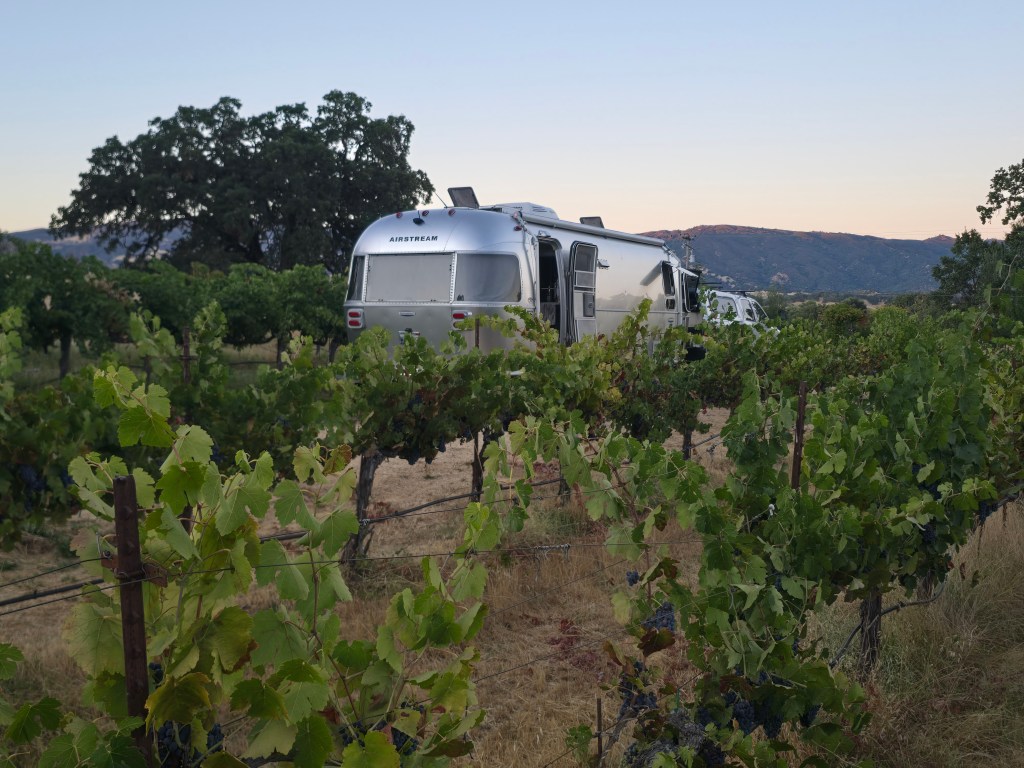
As California’s wine industry grapples with a prolonged grape surplus, some North Coast farm and vineyard operators are turning to agritourism — including farm stays, RV camping and outdoor experiences — to diversify income and attract visitors.
For Mark and Tammy Lipps, owners of The Ripe Choice Farm Stay and Catering near Lakeport, diversification has become a necessity rather than a luxury.
The couple relocated from Manhattan Beach to their 6-acre Lake County farm just two days before California’s pandemic lockdown in March 2020. Their property includes vineyards, orchards, row crops, a commercial kitchen, event facilities in a century-old barn, a barn loft rental and a restored five-bedroom farmhouse built in 1904.
Since then, the Lippses have layered multiple business activities onto the property. In addition to weddings, nonprofit meetings and seasonal dinners, they host cooking classes, school groups and overnight guests. Visitors can purchase meals, picnics and other food offerings centered on farm-grown and locally sourced ingredients.
Camping and farm-stay platforms such as Hipcamp and Harvest Hosts have become another important revenue source, drawing travelers seeking rural experiences, dark skies and close encounters with the farm’s growing collection of animals.
 Nelson Family Vineyards. (Courtesy photo)
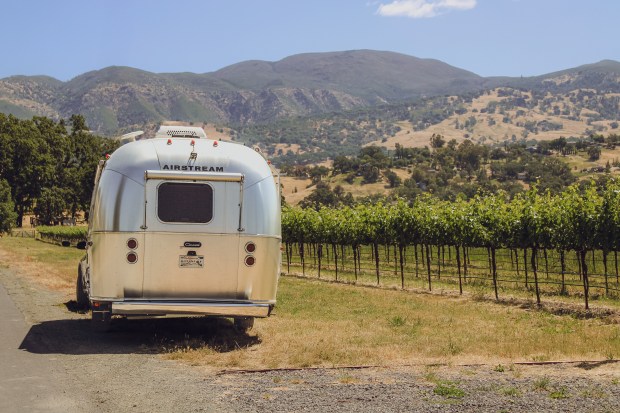 Stunning views are part of the camping experience at Nelson Family Vineyards. (Courtesy photo)
 Nelson Family Vineyards campers enjoy the quiet. (Courtesy photo)
 Nelson Family Vineyards. (Courtesy photo)
 Mark and Tammy Lipps stand in front of the refurbished century-old barn and event space at The Rip Choice Farm and Catering in Lakeport, Lake County. The couple moved from Manhattan Beach to the Lake County property just before the March 2020 pandemic lockdowns and have been adding revenue streams, including camping, short-term rentals and food prepared by chef Tammy Lipps, as sales of wine grapes from the vineyard on the property have been challenged in 2025 and 2026. (April Strait photo)
When organic grapes don’t sell
The additional income has helped offset challenges in the vineyard.
One of the farm’s vineyards is maintained through a partnership with the Lake County Symphony Wine Club. Another 1.5-acre certified organic merlot vineyard had previously supplied a winery seeking organic fruit.
“Because of the flood of grapes we couldn’t sell them last year,” Mark Lipps said.
The unsold crop was particularly painful because the vineyard still costs roughly $12,000 annually to maintain, he said.
Mendocino vineyard reinvents its business mix
Similar pressures are being felt farther north at 74-year-old Nelson Family Vineyards between Ukiah and Hopland.
The 1,500-acre ranch includes about 150 acres of wine grapes, 30 acres of pears, Christmas trees, cattle grazing land and leased acreage for strawberries. According to second-generation operator Greg Nelson, grape revenues have been under pressure for several years.
To utilize unsold fruit, the family winery has converted grapes into bulk wine for sale to other vintners. But even that market has weakened amid industry oversupply.
“It’s down about two-thirds from what it used to be,” Nelson said of bulk-wine sales.
The winery’s tasting room and wholesale business have remained steadier, but the family has increasingly supplemented agricultural income through tourism and direct sales.
RV campers bring new customers
During the pandemic, Nelson Family Vineyards began listing RV-only campsites through Harvest Hosts before later adding Hipcamp. Today, seven dispersed campsites sit along a ridge overlooking Ukiah Valley, with no utility hookups.
Nelson said Hipcamp generates at least weekly bookings, while Harvest Hosts has produced even more traffic from travelers heading to destinations such as the North Coast redwoods and Oregon.
“Often people will do a tasting. Sometimes they’ll buy wine,” Nelson said.
Visitors also purchase ranch-produced honey and jams, and many explore the property’s five-mile hiking and biking trail.
The family’s willingness to experiment extends beyond camping. A roadside produce stand originally built in the 1970s was revived in recent years and is now operated by Saechao Farms, selling strawberries and other produce sourced locally and through a partnership with Chao Santana Farm in Upper Lake.
Reflecting on the ranch’s ongoing search for viable revenue streams, Nelson said, “Sometimes, it works. Sometimes, it doesn’t. So we keep trying.”
New state law opens door to small campgrounds
The growth of private-property camping could accelerate under Assembly Bill 518, the Low-Impact Camping Areas Act, signed into law in October.
The legislation creates a new category of small-scale campgrounds known as Low-Impact Camping Areas, or LICAs. Under the law, participating counties may allow qualifying properties to host up to nine campsites, including no more than four RV sites, on parcels of at least 2 acres while avoiding the state campground permitting process previously required for many operators.
County governments must adopt local ordinances before the law takes effect in their jurisdictions.
Counties weigh new rules
In Mendocino County, Planner Liam Crowley said traditional campgrounds currently require use permits and are generally prohibited in agricultural zoning districts where many vineyards are located.
But the county’s Board of Supervisors discussed a LICA ordinance Feb. 3, and staff is developing its language and conducting environmental review.
Crowley said officials expect many vineyard properties that are currently ineligible for campgrounds could qualify under the new framework, with a simpler and less expensive permitting process than existing campground approvals.
Sonoma County officials also are exploring implementation.
Permit Sonoma Director Scott Orr said campgrounds currently require a use permit and public hearing and are allowed in specified recreation and agricultural-resource zones. The county’s Board of Supervisors on June 3 directed staff to develop a LICA ordinance as part of a broader effort to support struggling agricultural businesses.
Supporters see benefits for access and rural economies
Supporters of AB 518 argue the law could help address California’s chronic campsite shortages while creating new economic opportunities for rural landowners.
Save the Redwoods League said expanding camping opportunities could ease pressure on heavily booked public campgrounds and create more access to outdoor recreation. The San Francisco-based organization noted support from groups including Latino Outdoors, which highlighted hopes that additional campsite supply could improve access for Latino families and lower-income Californians who often face barriers to outdoor recreation.
Hipcamp, which supported the legislation, described AB 518 as a major expansion of outdoor access and a potential economic boost for rural communities. The company said the law removes costly state permitting requirements designed for larger commercial campgrounds while allowing counties to tailor local rules.
Local spending by campers jumps
Visitors to Sonoma County campgrounds spent an estimated $99 million last year in the local economy, up 5.3% from the year before and 50% higher than in the prepandemic level in 2019, according to Visit California’s latest economic impact study. Campers contributed the highest proportional growth but least amount of annual spending among the five types of traveler accommodations tracked in the report, trailing vacation homes ($132 million), private homes ($222 million), day travel ($497 million) and hotels, motels and short-term rentals ($1.29 billion).
“The economy, people’s quest for outdoor adventures, as well as the location of some of our most spectacular campgrounds are contributing factors,” Claudia Vecchio, the tourism agency’s CEO, said about the growth in local camping.
A similar spending pattern held for Mendocino County, with the highest percentage growth for campground visitors ($72.7 million, up 3.1% from 2024 and 46% higher than 2019). In that county, camper spending ranks No. 2 behind hotels ($294.3 million and no growth).
Lake County camper spending ranked fourth behind private homes ($50.3 million, 3.1% growth), seasonal homes ($48.7 million, down 0.1%), hotels ($39.6 million, down 0.1%), but campground visitors spent more than day travelers ($22.6 million, up 0.3%).
Rules for rural campgrounds
Mendocino County
Current campground rules
Commercial campgrounds and RV parks are classified as “Transient Habitation – Campground.”
A use permit is required for all campgrounds.
Campgrounds are allowed only in certain commercial, residential and resource zoning districts.
Agricultural zoning, where many vineyards are located, does not currently allow campgrounds.
Campgrounds may also require state permits under California’s Special Occupancy Parks Act.
Operators must obtain a county business license and collect transient occupancy tax (TOT).
AB 518 implementation
County staff are drafting a Low-Impact Camping Area (LICA) ordinance.
Officials expect many vineyard properties currently barred from campgrounds could become eligible.
The county anticipates a simpler, lower-cost permitting process than the current use-permit system.
A proposed pilot program would cap LICAs at 100 permits initially.
Sonoma County
Current campground rules
All campgrounds require a use permit and public hearing.
Campgrounds are allowed in the Recreation and Visitor-Serving Commercial (K) zone and most agricultural/resource zones.
Campgrounds are prohibited on Williamson Act contract lands.
In Land Extensive Agriculture (LEA) and Diverse Agriculture (DA) zones, campgrounds are limited to 30 sites.
RV camping is allowed in Recreation-Recreation Development (RRD) and K zones.
Additional findings are required in agricultural and timber-production zones.
AB 518 implementation
Sonoma County does not yet have a Low-Impact Camping Area ordinance.
The Board of Supervisors recently directed Permit Sonoma to develop one as part of an agricultural economic-support strategy.
Staff are expected to begin work on a local ordinance during the coming fiscal year.
Provisions of AB 518
Baseline state standards for low-impact camping areas
Up to nine campsites per property.
No more than four RV sites.
Minimum 2-acre parcel.
Maximum density of 1 campsite per acre.
Host or manager available by phone 24/7.
Compliance with local rules on fire safety, waste, noise and sanitation.
Maximum stay of 14 consecutive nights or 28 nights per year.
Counties must adopt local ordinances before LICAs can operate under the law.
Sources: Counties of Mendocino and Sonoma, AB 518 text
Jeff Quackenbush joined North Bay Business Journal in May 1999. Reach him at jeff@nbbj.news or 707-521-4256.
Dining and Cooking