
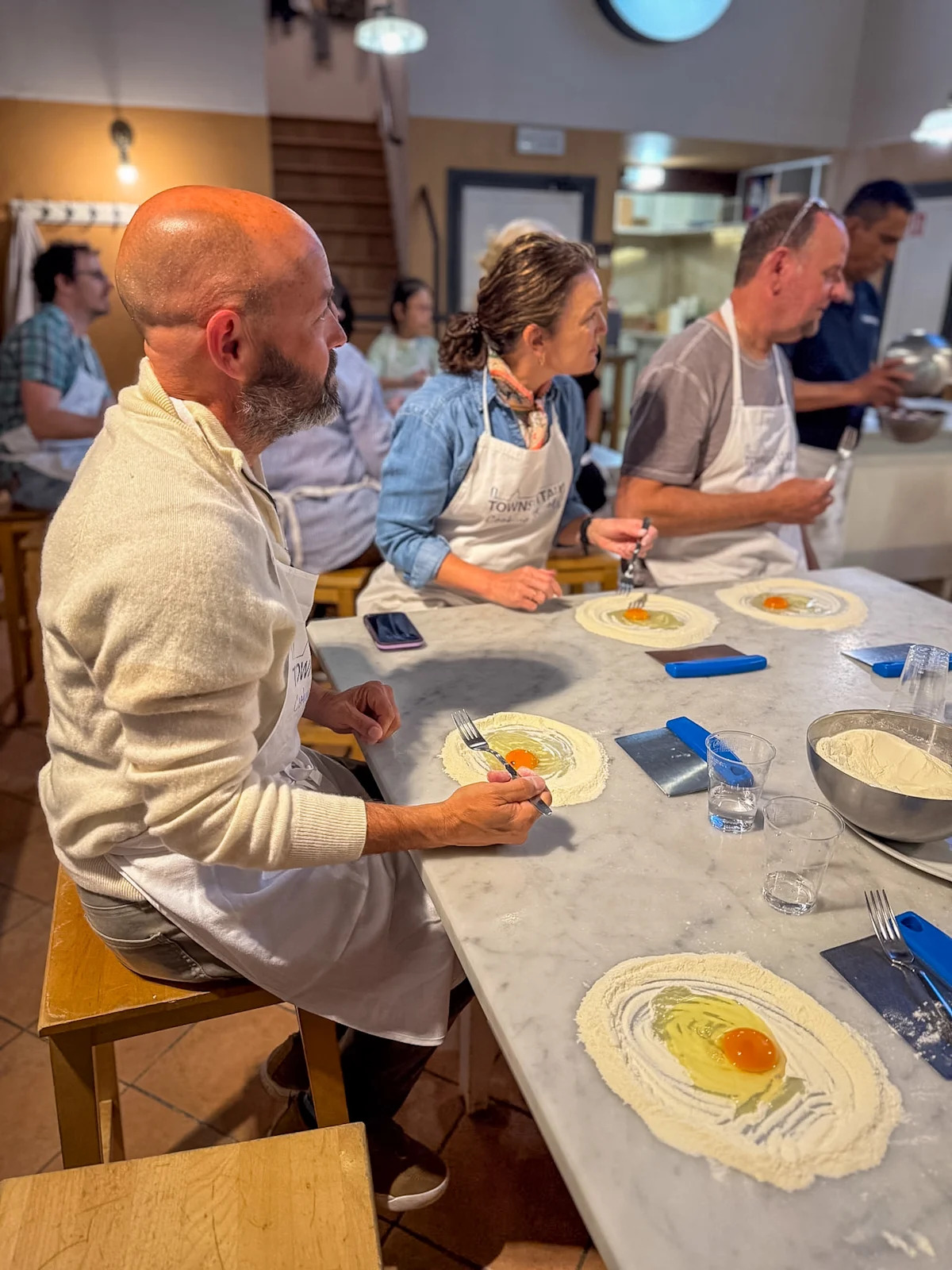
After spending six weeks traveling through Italy and the United Kingdom with nothing but carry-on luggage, one thing became clear: we couldn’t bring home nearly as many of our favorite Italian foods as we wanted. We even took an authentic pasta making class while in Italy.
From pasta and olive oil to balsamic vinegar and simple pantry staples, we found ourselves constantly commenting on how fresh everything tasted. Meals often contained fewer ingredients, flavors seemed more vibrant, and even everyday grocery store products felt different from what we were used to at home.
Once we returned to the United States, we started looking for ways to recreate some of those experiences. That led us down a rabbit hole of learning how to identify authentic Italian products and what labels shoppers should actually be looking for.
According to Robert Barletta, Executive Vice President at Marino and a specialist in Italian food culture and market development, the difference isn’t simply that Italian food is “better.”
“Italian food isn’t magically better,” Barletta explains. “Although Italy’s unique terroir, climate, and ecosystems certainly provide a head start, other countries possess their own distinct natural advantages, too. The real difference is that Italy has spent centuries protecting its food culture through law and tradition.”
He says Italian food culture is built around a mindset where eating is viewed as an important part of daily life rather than a rushed convenience.
“Italy prioritizes clean and simple ingredients free from artificial additives, ensuring food enhances both flavor and well-being,” he says.
 Why Authentic Italian Products Matter
One of the biggest surprises we discovered is that many products marketed as Italian in American grocery stores aren’t necessarily made in Italy.
Barletta says consumers should be cautious of packaging that relies heavily on Italian imagery.
“In the U.S., don’t be fooled by Italian flags or terms like ‘Italian-style,'” he says. “Even ‘Made in Italy’ can be a loophole.”
For example, some olive oils are blended from olives grown in multiple countries and then bottled in Italy.
“If you want the truth, look for ‘Product of Italy,’ which signifies the ingredients were grown and produced there,” Barletta explains.
For shoppers seeking the highest level of authenticity, he recommends looking for European certifications such as PDO (Protected Designation of Origin) and PGI (Protected Geographical Indication). These labels verify strict regional standards and production methods for products including cheeses, cured meats, olive oils, vinegars, and other specialty foods.
His advice is simple: “Stop buying the marketing on the front and verify the quality on the back.”
Italian Consumers Demand Authenticity
Barletta points out that Italy’s reputation for quality is also driven by consumer expectations.
The image of an Italian grandmother—or “nonna”—carefully preparing family recipes isn’t just a stereotype. It reflects a culture where consumers are highly knowledgeable about food and expect products to meet traditional standards.
“Italian consumers are incredibly discerning,” Barletta says. “They demand authenticity, which is why they look past clever marketing to verify a product’s true origin.”
That emphasis on transparency and tradition helps preserve many of the food-making practices that have been passed down for generations.
Made-in-Italy Brands We Found
During our search for authentic Italian products available in the United States, two brands stood out.

Garofalo Pasta
(RoamingMyPlanet.com)Pasta Garofalo
Crafted in Gragnano, often called the birthplace of pasta, Pasta Garofalo traces its heritage back to 1789. The company uses high-quality durum wheat and traditional bronze-die extrusion methods that create a textured surface designed to hold sauces more effectively.
In addition to classic pasta shapes, the company offers high-protein pasta, gluten-free options, and a line of frozen Italian meals inspired by traditional recipes.
For shoppers hoping to bring a taste of Italy into their kitchens, Garofalo offers a connection to one of Italy’s most historic pasta-making regions.

De Nigris Balsamic Vinegar
(RoamingMyPlanet.com)De Nigris Balsamic Vinegar
Another brand we discovered is De Nigris, a family-owned producer that has become one of the world’s leading balsamic vinegar companies.
The company is responsible for approximately one-quarter of the world’s Balsamic Vinegar of Modena production and has earned recognition as a Historic Brand of National Interest in Italy.
Beyond producing vinegar, De Nigris has invested heavily in preserving Italian food culture through initiatives like Balsamico Village, a destination dedicated to educating visitors about the history and craftsmanship behind authentic balsamic vinegar.
The Bottom Line
Our trip to Italy taught us that bringing home authentic flavors doesn’t necessarily require an extra suitcase.
By learning how to read labels, understand certifications, and identify brands with genuine Italian roots, consumers can make more informed choices right from their local grocery store.
Whether you’re shopping for pasta, olive oil, balsamic vinegar, or specialty foods, the key is looking beyond the marketing and understanding where a product truly comes from. Sometimes the most important information isn’t on the front of the package—it’s on the back.
Dining and Cooking