
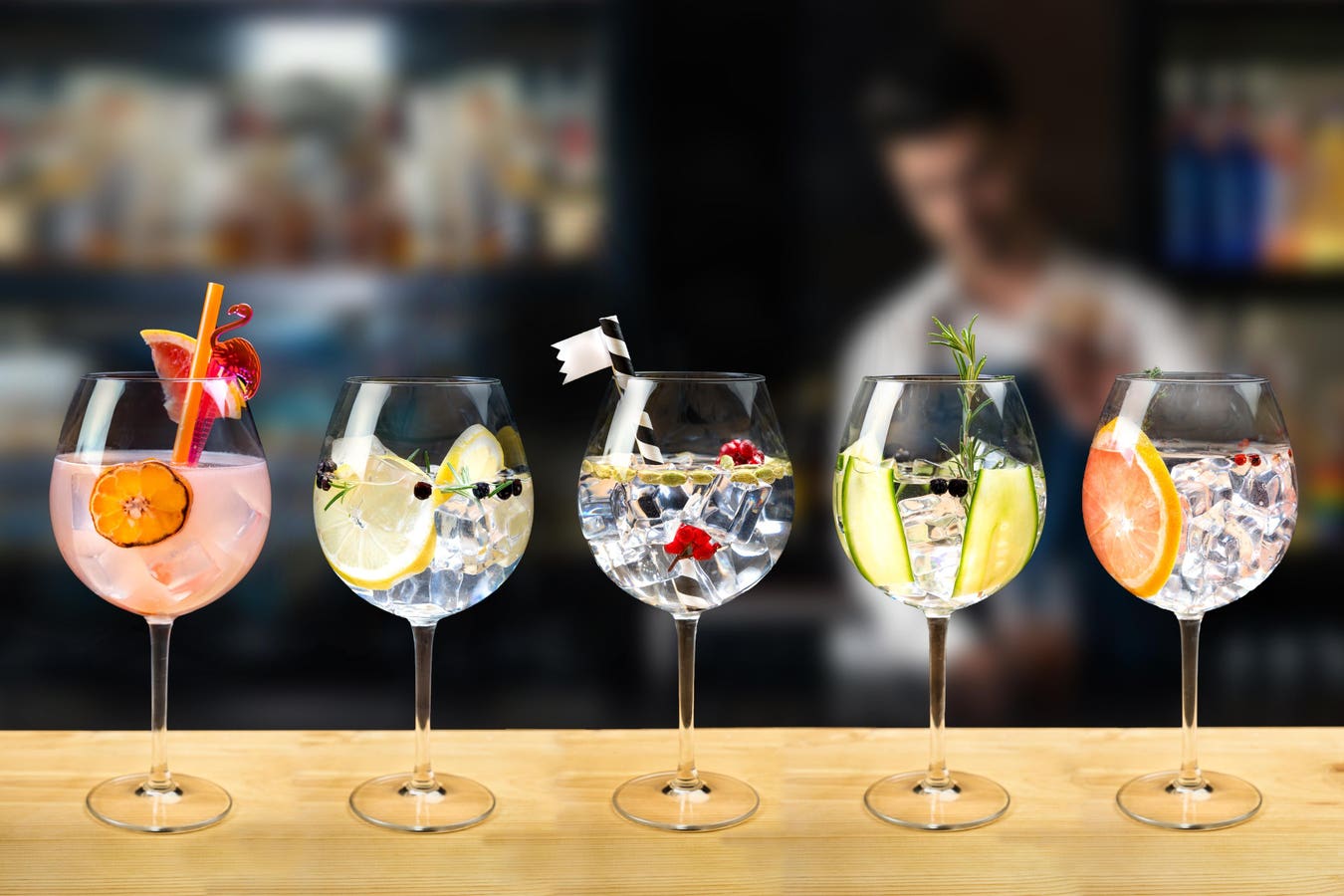
Gin and tonic mixed cocktail drinks various selection garnish bartender bar background fashion trendy
getty
For years, the story of great gin was mostly a British one. A handful of storied distilleries, a few classic recipes, and a category that largely knew its place. That’s over. The 2026 International Wine & Spirit Competition (IWSC) results make that clear, and they don’t leave much room for debate.
This year’s ten highest-scoring gins — the ones the IWSC just awarded Gold Outstanding medals, its top distinction — come from New Zealand, Laos, Taiwan, Saskatchewan, and the ski towns of rural Japan. The United Kingdom, gin’s so-called spiritual home, managed a single finalist.
Founded in 1969, the IWSC ranks among the most respected drinks competitions in the world. This year, judges worked through the full gin category, handing out 233 medals across Silver, Gold, and Gold Outstanding. Only ten bottles reached that top tier. All ten now advance to trophy consideration ahead of the organization’s annual awards celebration in London on November 12.
The geographic spread says everything you need to know about where gin is heading.
The Best Classic Gins Of 2026
Traditional gin is the backbone of the category. No barrel tricks, no exotic additions — just botanicals, balance, and technical skill. These three Gold Outstanding winners in the category, including the highest-scoring gin of the entire competition, are a reminder of why that’s still the hardest thing to get right.
Navy Gin (99 Points)Clarity Distilling Company, New Zealand
Nothing else in this year’s competition came close. Navy Gin from New Zealand’s Clarity Distilling Company earned 99 points in the classic gin category — the highest score of any gin entered, full stop — and is now an early favorite heading into November’s trophy judging.
Clarity launched in Tauranga in 2022, and it has barely slowed down since. Earlier this year, their Navy Gin became the first New Zealand gin ever named Gin of the Year at the London Spirits Competition. The bottle leads with a classic juniper backbone, then layers in charcoal-smoked coriander, mānuka-smoked coriander, cardamom, and bright citrus notes, giving it a distinctly New Zealand identity.
In a field full of cask-finished, barrel-aged, and experimental expressions, the judges gave their highest score to a gin rooted firmly in tradition. That’s worth paying attention to.
Juniper Freak Gin (98 Points)Never Never Distilling, Australia
The name tells you exactly what you’re getting. Founded by three gin obsessives in South Australia, Never Never Distilling has become one of the country’s most acclaimed craft producers — built on bold, flavor-forward spirits and a near-religious commitment to botanical intensity.
Juniper Freak Gin is that commitment in a bottle. While much of the industry has drifted toward citrus, florals, and more approachable profiles, Never Never doubled down. Bottled at a muscular 58% ABV, it’s an unapologetic celebration of gin’s defining botanical. No hedging, no apologies.
Ohoro Standard Gin (98 Points)Niseko Distillery, Japan
Niseko sits on Hokkaido, Japan’s northernmost island, and is one of the world’s premier ski destinations. The distillery draws on pristine mountain water and a dramatic seasonal climate — conditions that have shaped some exceptional spirits.
Ohoro earned its Gold Outstanding medal in the classic gin category, one of the most unforgiving divisions in the competition. Without barrel influence or unusual ingredients to lean on, everything comes down to balance, clarity, and execution. Ohoro nailed all three. It’s more proof that Japan’s meticulous distilling culture, the same approach that put its whiskies on the world map, translates seamlessly into gin.
The Best Contemporary Gins Of 2026
Contemporary gin gives distillers room to move past the London Dry template and let regional ingredients and inventive botanicals take the lead. This year’s four Gold Outstanding winners in the category arrived from very different corners of the world — and each one earned its place.
Aureus Vita Fibonacci Dry Gin (98 Points)Krenngala Meurth Distilling Company, United Kingdom
The UK may have landed only one finalist, but it counts. Aureus Vita Fibonacci Dry Gin earned its Gold Outstanding medal in one of the competition’s most creative categories — a space where producers lean hard on local ingredients and unconventional botanical combinations to stand out.
Crafted using a unique distillation method, it features a high botanical oil content that lets each botanical shine. Its performance at the IWSC makes a point worth stating plainly: gin production has gone global, but British distillers can still set the standard when they’re serious about it.
Lao Gin (98 Points)The Lao Distilling Company, Laos
Few drinkers think of Laos when they think of premium gin. That’s exactly what makes this result so interesting. Produced by The Lao Distilling Company, founded in 2012, Lao Gin earned a Gold Outstanding medal and a spot among the highest-rated gins in the world.
The distillery has built its reputation on locally sourced ingredients that showcase Southeast Asia’s agricultural diversity. Its success is part of a broader shift happening across the spirits world — producers in emerging markets turning native ingredients and local traditions into something genuinely distinctive. For many drinkers, this bottle will be their first introduction to a country rarely mentioned in premium spirits conversations.
Taiwan Coriander Superb Craft Gin (98 Points)Lungtien Distillery
Taiwan spent the last decade becoming a genuine force in whisky. Now its distilling reputation has crossed categories. Taiwan Coriander Superb Craft Gin, from the corporation’s Lungtien Distillery, earned a Gold Outstanding medal, adding another layer to Taiwan’s growing international profile.
The name makes the approach clear: coriander runs the show here. Long one of gin’s most important supporting players, the botanical delivers citrus, spice, and aromatic complexity that lifts the entire spirit. Pushed to center stage, it creates something that feels both familiar and unmistakably its own.
Tanqueray No. Ten (98 Points)Diageo
Among all the small producers and emerging distilleries on this list, category giant Tanqueray No. Ten shows up looking very comfortable. Introduced in 2000, it helped define the modern super-premium gin category through its use of whole citrus fruits and a brighter, more contemporary flavor profile.
More than two decades on, it’s still one of the most decorated gins in the world and still the benchmark against which newer bottles are measured against. Its presence here is a reminder that the classics became classics for a reason.
The Best Flavored Gin Of 2026
Only one flavored gin earned a Gold Outstanding medal this year — and it made the most of the distinction.
Haskap Gin (98 Points)Black Fox Farm and Distillery, Canada
As the only flavored gin to reach Gold Outstanding in 2026, Haskap Gin from Black Fox Farm and Distillery had high expectations to meet. It met them. Black Fox runs a genuinely unusual operation: a true farm-to-glass distillery in Saskatchewan that grows many of its botanicals on-site. It’s become a fixture on the international awards circuit and put Saskatchewan craft distilling on the map in the process.
The gin is built around haskap berries — sometimes called honeyberries — a fruit native to northern climates that delivers a flavor somewhere between blueberry, raspberry, and black currant. Rather than masking the gin’s botanical character, the berries add regional depth and complexity. The result is something that tastes distinctly like where it came from.
The Best Wood-Finished Gins Of 2026
Barrel maturation is one of the fastest-growing trends in premium gin, and these two finalists show what it looks like when the approach is done right.
Awildian Coromandel Mānuka Gin (98 Points)Coromandel Distilling Company, New Zealand
New Zealand shows up twice on this list — a remarkable run for a country that barely registered on the global gin map a few years ago. Coromandel Distilling Company brings one of the competition’s most distinctive entries, made on the Coromandel Peninsula using mānuka, one of New Zealand’s most iconic native plants, before spending a full year in cask.
The result sits at the intersection of classic botanical spirit and barrel-influenced brown spirit — an expression that’s hard to put in a box, which is exactly what makes it interesting.
Barrel-Aged Gin (98 Points)Nozawa Onsen Distillery, Japan
Japan’s second finalist comes from Nozawa Onsen Distillery, a producer set in one of the country’s most famous alpine resort towns. Internationally, Nozawa Onsen is known for skiing and hot springs. Its Barrel-Aged Gin is making a case for adding gin to that list.
Barrel aging introduces vanilla, baking spice, and oak while softening the spirit’s brighter botanical edges. The challenge is keeping enough of that botanical identity intact so the gin still reads as gin. A 98-point score is a clear answer on whether Nozawa Onsen pulled it off.
MORE FROM FORBESForbesWhy America’s Non-Alcoholic Beer Movement Is Just Getting StartedBy Hudson LindenbergerForbes8 Tequilas To Drink This Cinco De Mayo And All SummerBy Hudson LindenbergerForbesFoxes Bow Irish Whiskey Is Challenging Whiskey’s Blind SpotBy Hudson Lindenberger
Dining and Cooking