
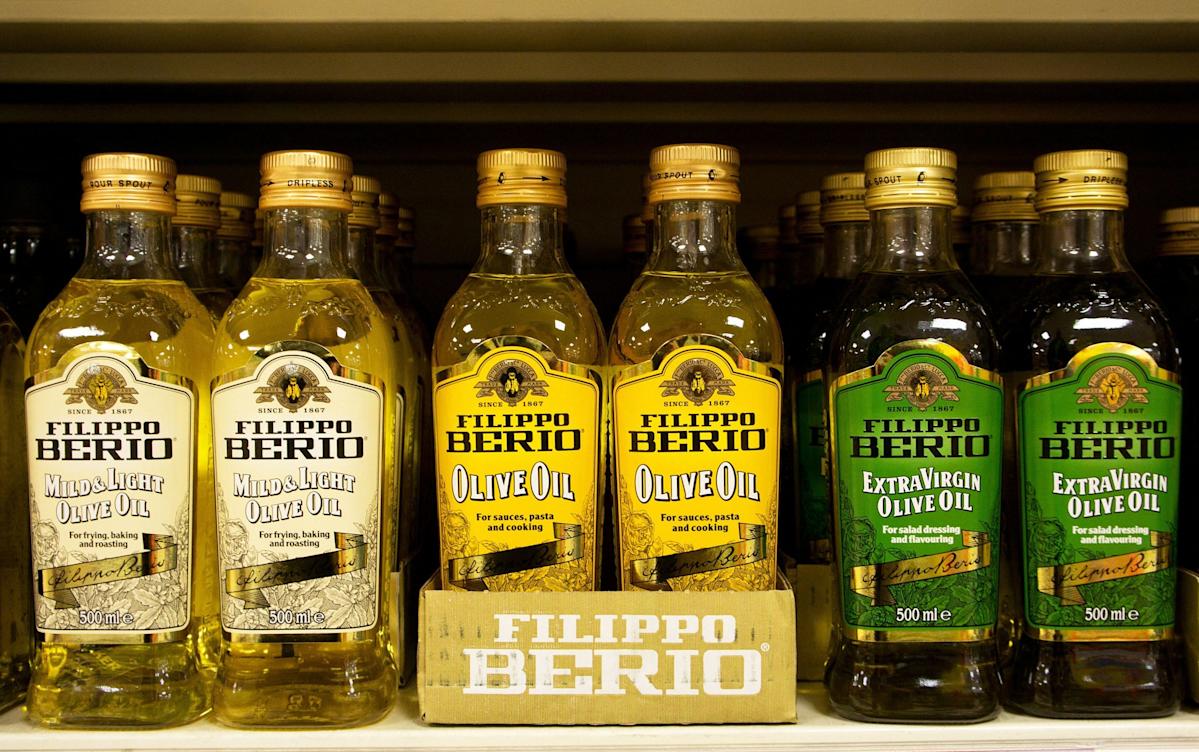
 Since 2022, the price of a 500ml bottle of Filippo Berio has doubled from £3.75 to £7.50 – Kevin Britland/Alamy
The boss of Filippo Berio has accused supermarkets of “taking the mickey” out of customers with their sky-high olive oil prices.
Walter Zanre told Sky News that wholesale olive oil prices had fallen in recent months but said supermarkets were refusing to follow suit.
“We brought prices down twice last year and it’s not all been passed on to the consumer, which is a huge frustration,” he said.
It follows a surge in the price of olive oil since 2022, after adverse weather in olive-growing countries led to poor harvests.
Spain, which produces almost half of the world’s olive oil, was hit by droughts and heatwaves in 2023 and 2024. The weather caused global olive oil production to fall by almost one million tonnes.
It caused higher prices for many well-known olive oils, including Filippo Berio, which uses a blend of oils from across Europe despite being an Italian brand.
The average price of a 500ml bottle of Filippo Berio has risen from £3.75 in 2022 to £7.50 now, according to the tracker Trolley.co.uk.
Tesco’s own-brand olive oil stands at £5.50 for 500ml. This is up from £5.20 this time last year, Trolley.co.uk data shows. The same-size bottle of Nicolas Alziari olive oil, at Waitrose, sells for £22.50.
The boss of Filippo Berio argued that prices should have come down rapidly for customers after stronger production more recently meant there was better availability of oil.
According to the International Council of Olive Growers, the wholesale Italian olive oil price was down 30pc in March compared to last year’s figures.
‘Expand their margins’
Mr Zanre, who has worked for the olive oil brand for more than 25 years, said producers had reduced the price at which they sell to supermarkets, but that this was not being seen on the shelves.
He said: “We can’t dictate retail prices. For me, it’s immensely frustrating that supermarkets have taken the opportunity to expand their margins.”
Mr Zanre accused supermarkets of profiteering from strong demand for olive oil, suggesting grocery bosses had probably been surprised at how resilient olive oil sales had been in recent years, even though it was more expensive, and so had decided not to drop prices.
His claims prompted a backlash from retail leaders on Tuesday, who argued that they passed on reductions where they could.
Andrew Opie, the director of food and sustainability at the British Retail Consortium, said: “Retailers work hard to pass on cost savings to customers wherever possible and, as confirmed by the Competition and Markets Authority, operate on very tight margins, reflecting a market driven by savvy customers.
“Olive oil, like many everyday products, is something shoppers can compare across brands and retailers to take advantage of promotions or switch to alternatives that suit their budget.”
The attack against supermarkets comes amid fears that prices for olive oil could soon start rising again.
The war in Iran, and consequent fuel crisis from the closure of the Strait of Hormuz, is expected to hit olive growers because they need diesel for their tractors as well as to fuel water pumps which irrigate the olive groves. It means production costs will probably rise this season.
It will add to pain for shoppers, who have been told to brace for higher prices across supermarket shelves. The Food & Drink Federation warned earlier this month that food inflation could hit 10pc by the end of the year, up from early forecasts of 3.2pc.
It said the war was having a “direct and immediate impact” on costs for UK food and drink manufacturers.
Try full access to The Telegraph free today. Unlock their award-winning website and essential news app, plus useful tools and expert guides for your money, health and holidays.
Dining and Cooking