
This Photo Essay celebrates Sustainable Gastronomy Day
In the hills of Odisha’s Ganjam district, the Saura community continues to draw nourishment from forests, farms, streams and traditional knowledge, keeping a rich culinary heritage alive.
Every year on June 18, Sustainable Gastronomy Day reminds us that food is more than what appears on a plate. It is a story of landscapes, biodiversity, culture and community knowledge. In the villages of Odisha’s Ganjam district, the Saura tribe has long practiced this connection through a food system rooted in local ecosystems and seasonal abundance.
For generations, Saura families have cultivated millets such as sorghum, finger millet, little millet and foxtail millet on rainfed lands, gathered wild greens from surrounding forests, harvested bamboo shoots, collected freshwater crabs from streams and paddy fields, and preserved foods using time-tested techniques. These ingredients form the foundation of a diverse culinary tradition shaped by both necessity and ecological wisdom.
Their cuisine reflects an intimate understanding of the local environment. Seasonal foods are carefully selected, processed and cooked into nourishing dishes that provide energy, and resilience. From millet laddus prepared during festivals to bamboo shoot curries, horse gram stews, moringa leaf dishes and crab curries, every recipe carries memories of land and community life.
Yet these food traditions are increasingly under pressure from changing diets, migration, market dependence and the gradual erosion of indigenous knowledge. Documenting and celebrating such culinary heritage is the need of the hour.
This photo essay offers a glimpse into the Saura kitchen, where traditional foods continue to nourish both people and culture. Through these dishes, the community’s enduring knowledge of local biodiversity, sustainable agriculture and seasonal eating remains alive, one meal at a time.
Khuroe Laddu

Made from little millet flour, jaggery and nuts, Khuroe Laddu is a festive sweet cherished by the Saura community. Prepared during Tusu Porab, family celebrations and special occasions, it reflects the nutritional value of millets and the community’s tradition of turning local grains into wholesome foods. Photo/Pratyusa Kumar Panda.
Janha Kudu

Janha Kudu, a porridge made from sorghum, has sustained Saura households for generations. Simple, filling and nutritious, it is commonly eaten for breakfast or during hot summer days, providing energy for farming, forest work and daily activities. Photo/Pratyusa Kumar Panda.
Janha Lia

Puffed sorghum, locally known as Janha Lia, is a light snack prepared by roasting sorghum grains until they puff. Popular during festivals, journeys and community gatherings, it showcases a traditional method of preserving and enhancing millet-based foods. Photo/Pratyusa Kumar Panda.
Buroe Kudu
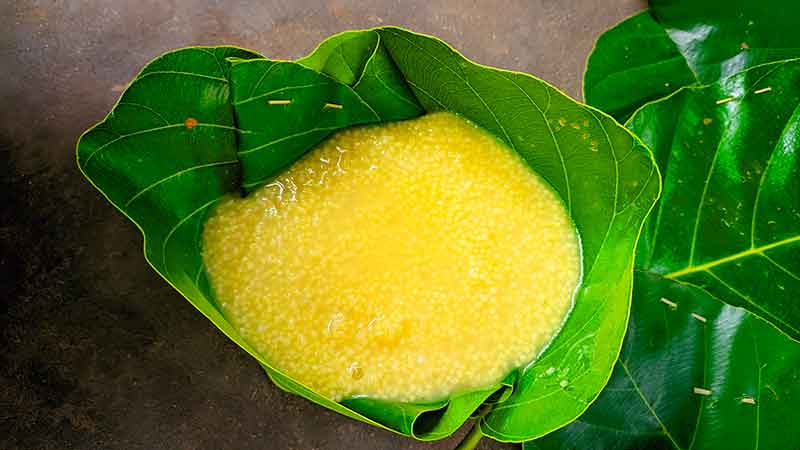
This foxtail millet porridge is a staple in many Saura homes. Cooked with water and often paired with vegetables, pulses or buttermilk, Buroe Kudu combines nutrition, simplicity and the enduring importance of millets in tribal food systems. Photo/Pratyusa Kumar Panda.
Khamba Aloo Tanangal

Prepared with locally grown yam, cluster beans and traditional spices, Khamba Aloo Tanangal is a flavourful dish often served during community meals. The recipe highlights the role of tubers in ensuring household nutrition and food security. Photo/Pratyusa Kumar Panda.
Jhata Karadi
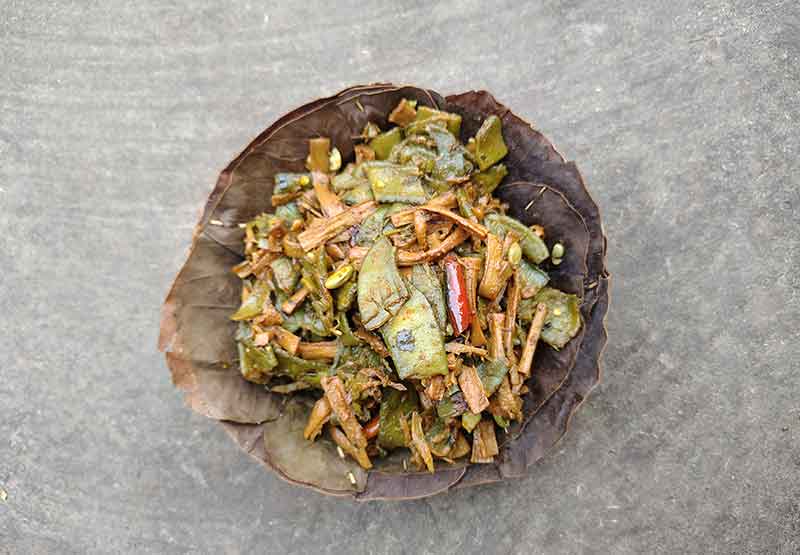
Jhata Karadi brings together dried bamboo shoots and fresh flat beans, combining preserved and seasonal ingredients in a single dish. It reflects the Saura community’s knowledge of food storage and their ability to enjoy forest foods throughout the year. Photo/Pratyusa Kumar Panda.
Kolatha Tanangal

Made with horse gram and dried bamboo shoots, Kolatha Tanangal is a curry traditionally eaten during winter. Rich in flavour and nutrition, it demonstrates how hardy indigenous pulses contribute to food security in rainfed regions. Photo/Pratyusa Kumar Panda.
Sajana Aeba

Prepared from tender moringa leaves harvested during the monsoon, Sajana Aeba is a nutritious accompaniment to millet porridge and pakhala. The dish reflects the ecological knowledge of Saura women, who have long relied on seasonal greens for nourishment. Photo/Pratyusa Kumar Panda.
Ayab Tanangal

This curry combines dried fish, bamboo shoots, potatoes and local spices to create a distinctive flavour. Ayab Tanangal embodies traditional food preservation practices that allow communities to store and enjoy nutrient-rich foods across seasons. Photo/Pratyusa Kumar Panda.
Khinard Tanangal

Freshwater crabs collected from streams and paddy fields are transformed into Khinard Tanangal, a protein-rich curry enjoyed with rice or millet porridge. The dish reflects the close relationship between the Saura community and the aquatic ecosystems that support their livelihoods. Photo/Pratyusa Kumar Panda.
Subscribe to Our Newsletter
Get the latest CounterCurrents updates delivered straight to your inbox.
Pratyusa Kumar Panda is a development sector professional who works as a Program Officer at Watershed Support Services and Activities Network (WASSAN) in Ganjam, Odisha. He is passionate about visual storytelling from rural areas, covering culinary heritage and sustainable food systems.
Dining and Cooking