
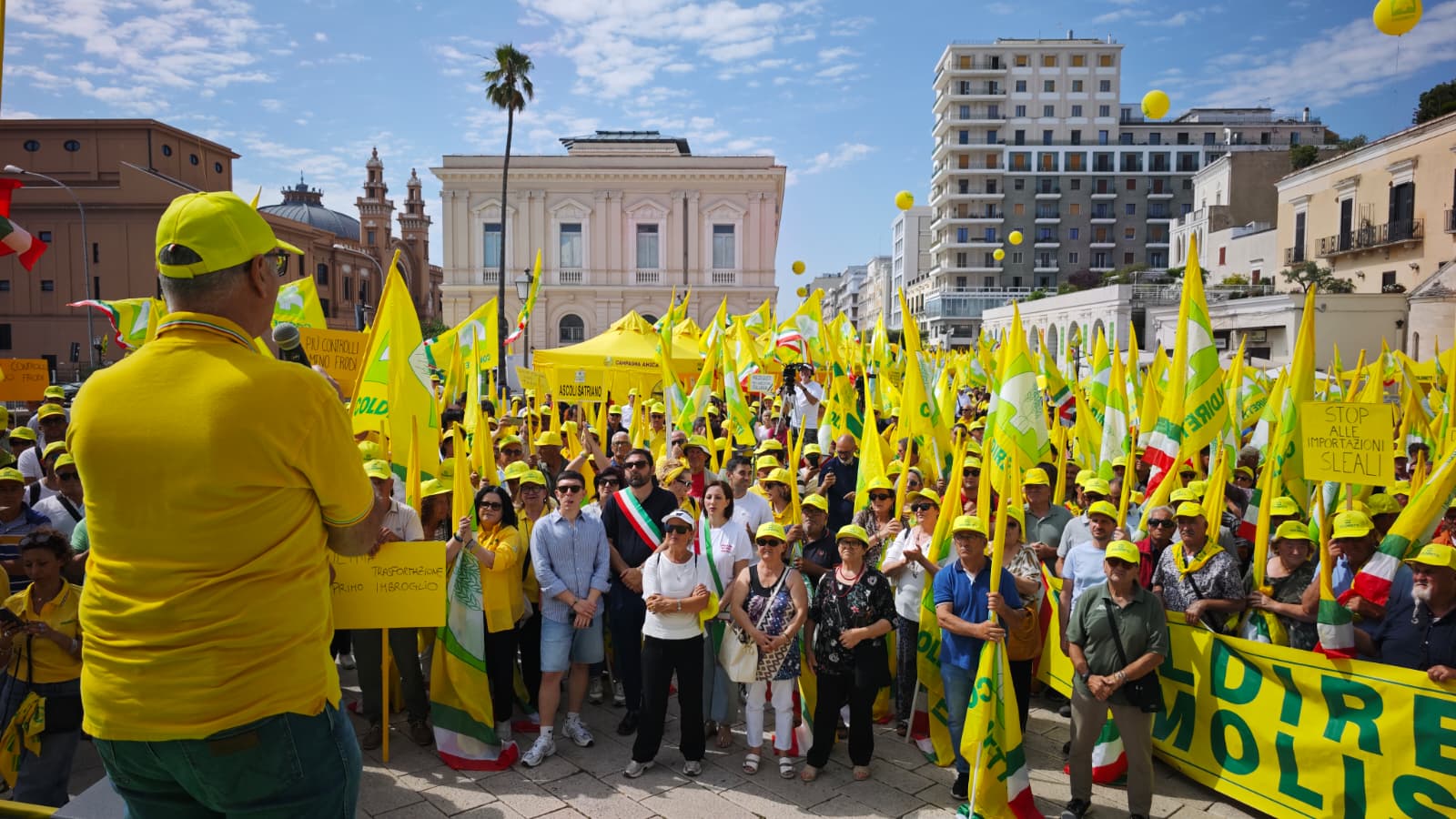
At risk the health of citizens and the survival of Italian olive oil companies due to speculation and deception carried out by oil traffickers. This is the alarm raised by Coldiretti e Unaprol, which led to Bari Thousands of farmers have gathered to denounce the collapse in the price of Italian extra virgin olive oil, which has practically halved compared to last year.
Chlorophyll, deodorized oil e chemical substances Used to alter product quality and characteristics, these are among the most widespread practices that, according to Coldiretti and Unaprol, put consumer health at risk and damage the entire national agri-food system.
Prices halved and costs rising for olive growers
All this while imports from abroad continue to push prices down, encouraging speculation and fraud that threaten the survival of Italian farms and deceive consumers. These products also end up in school and hospital cafeterias, risking compromising the quality of nutrition for children and patients.
Coldiretti and Unaprol are raising the alarm, with thousands of farmers flocking to Bari to protest against those who are driving down the price of Italian extra virgin olive oil, forcing olive growers to work at a loss while low-quality products, often from non-EU countries, are selling on the shelves.
Prices paid to olive growers have dropped to around 5 euros per liter, compared to around 9 euros last year, according to an analysis by Coldiretti and Unaprol. This price is well below average production costs, exacerbated by rising energy costs linked to the international crisis and the war in Iran, which have increased costs by more than 200 euros per hectare.
Oil figures reveal market anomalies
To understand the extent of the phenomenon, just look at the official data from the supply chain. Italy produces approximately 234 million liters of extra virgin olive oil, compared to internal consumption equal to 461 million liters, exports of 318 million litres and imports reaching 545 million litres per year.
According to Coldiretti and Unaprol, these numbers highlight significant imbalances and fuel suspicions of practices that allow the product’s true origin to be altered or masked, deceiving citizens and farmers.
The table of deception to show the risks to consumers
The mobilization in Bari, organized after the protests held in front of the prefectures throughout Italy, was attended by the David Granieri, national vice president of Coldiretti and president of Unaprol, President of Coldiretti Puglia Alfonso Cavallo and director Pietro Piccioni.
For the occasion, a “deception table” was set up to expose the public to the main fraudulent practices used in the olive oil sector, including dangerous and uncontrolled blending. The initiative also allowed for a comparison of quality extra virgin olive oils with counterfeit products that reach consumers’ tables without adequate guarantees of origin and quality.
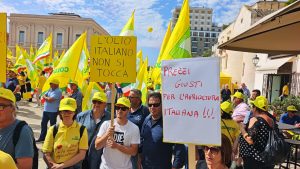

More controls and new technologies against fraud
To protect the Italian extra virgin olive oil supply chain and the health of citizens, Coldiretti and Unaprol are calling for a significant strengthening of the activity of control along the entire supply chain.
Among the key demands is the systematic use of advanced scientific tools such as nuclear magnetic resonance and isotopic mapping, technologies capable of precisely identifying the oil’s origin and which should be accepted as evidence in legal proceedings.
Coldiretti and Unaprol’s requests
The organizations also ask:
strict enforcement of legislation against unfair commercial practices;
fight against below-cost sales;
ban on marketing as extra virgin blends obtained with subsequent additions of lower quality oils;
introduction of the electronic transport document for olives to ensure complete traceability of the supply chain;
suspension of imports of Tunisian oil at zero duty;
overcoming the Inward Processing Traffic (IPT) regime, considered a potential critical point for the entry of products susceptible to fraud.
FAQ
Why are Coldiretti and Unaprol denouncing the collapse in oil prices?
Because the prices paid to olive growers have dropped from around 9 euros to around 5 euros per liter, falling below production costs and putting the economic sustainability of the companies at risk.
What are the main frauds reported in the olive oil sector?
Reported practices include the use of chlorophyll, deodorized oil, undeclared blends, and systems that alter or mask the product’s true origin.
What controls do Coldiretti and Unaprol require?
The organizations are calling for increased checks throughout the supply chain and the use of technologies such as nuclear magnetic resonance and isotopic mapping to certify the origin of the oil.
Why are imports at the center of the protests?
According to Coldiretti and Unaprol, the increase in imports from abroad is contributing to depress prices, encouraging speculation and potential fraud to the detriment of Italian producers.
What does TPA mean in the oil sector?
Inward Processing Traffic (IPT) allows the import of products intended for processing and re-export. According to Coldiretti and Unaprol, it represents a potential critical point for supply chain transparency.
Set OlivoNews as your primary news source on Google News by clicking here!
Dining and Cooking