
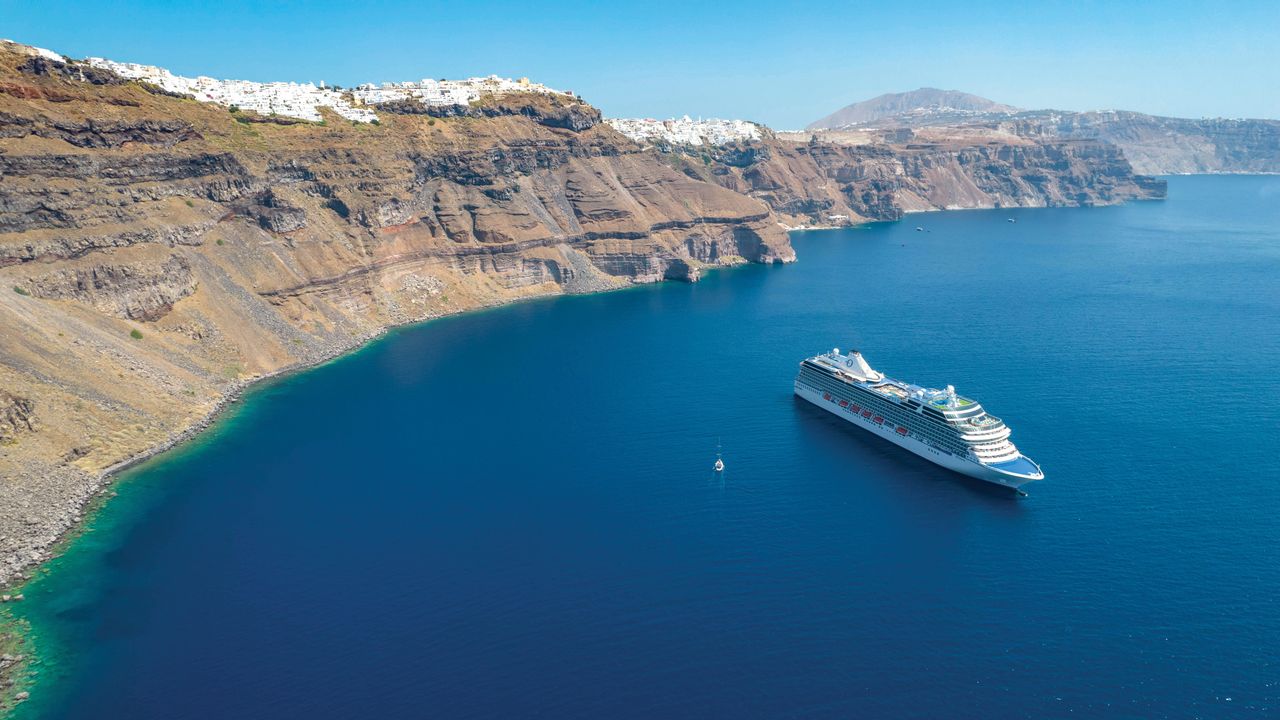
Piraeus: The authentic Greek port the postcards skip
Most ships treat Piraeus as a turnstile—the place you pass through on the bus to the Acropolis, seven miles inland. Oceania Cruises treats it as a destination in its own right. The deep-water port has moved cargo, navies, and travelers in and out of Greece since the fifth century B.C., and it remains a working city rather than a manicured gateway: 1.85 million cruise passengers came through last year, but the seafood strip along Akti Themistokleous still belongs to Athenians, who turn up for grilled octopus and cold ouzo before the city has fully woken. Here, the Condé Nast Traveler editors trade in the things guidebooks miss: the bronzes pulled from the harbor at the Archaeological Museum of Piraeus, or designer Natassa Pappa, who walks small groups through the covered arcades downtown and keeps a bookshop, Desired Pocket, tucked inside one. Even Kerameikos, the ancient necropolis Thucydides called the city’s most beautiful quarter, comes ringed not with tour buses but with the kind of neighborhood tables—Osteria Mamma, Proveleggios—that locals keep to themselves.
Monte Carlo: Limestone, gardens, and a glass of Bandol
Monaco is a square of glamour the size of a postage stamp, and most visitors never see past the casino. The richer story is geological: a principality stacked onto a limestone cliff that has spent the last year coming back to life. The Jardin Exotique de Monaco reopened in 2026 after a six-year, €18 million restoration, its cacti and succulents—planted when the garden first opened in 1933—once again clinging to the rock above Fontvieille as the elevators through the limestone caves run once more. Oceania’s instinct here is to read the land rather than the brand. Down the rock at the Hôtel Hermitage Monte-Carlo, the dining room pours rosé from Bandol and from Bellet, a Niçoise appellation so small that barely anyone outside the region can name it. And the chef-led Culinary Discovery Tours, capped at 18 guests, climb out of the principality entirely—into the Antibes market for socca, the chickpea flatbread blistered in a wood-fired oven, or up to Lourmarin, where guests cook an afternoon alongside Reine Sammut, one of the few women in France to hold a Michelin star.
Barcelona: Discover the farmers’ market the chefs prefer
Barcelona has never agreed to be simply Spanish, and its food is the loudest argument: This is Catalonia, where a smear of ripe tomato on bread is treated as an article of faith and the wine is cava from the Penedès hills. Oceania Allura berths at Moll Adossat, 10 minutes from La Rambla, but the day here bends away from the boulevard. The Barcelona Culinary Discovery Tour starts at Escribà, the Modernista pastry shop where chocolate figurines were invented, threads the stalls of La Boqueria, then cuts east into the Gothic Quarter to the mosaic-roofed Mercat de Santa Caterina—the market The Culinary Center’s own faculty tends to prefer, insisting the produce beats its more famous neighbor. The afternoon loosens into tapas at Tapeo and whatever the pastry chefs are improvising that week at Bubó. It is a city that repays an unhurried morning, and the ship is built to hand you one.
Back aboard, the coastline keeps cooking
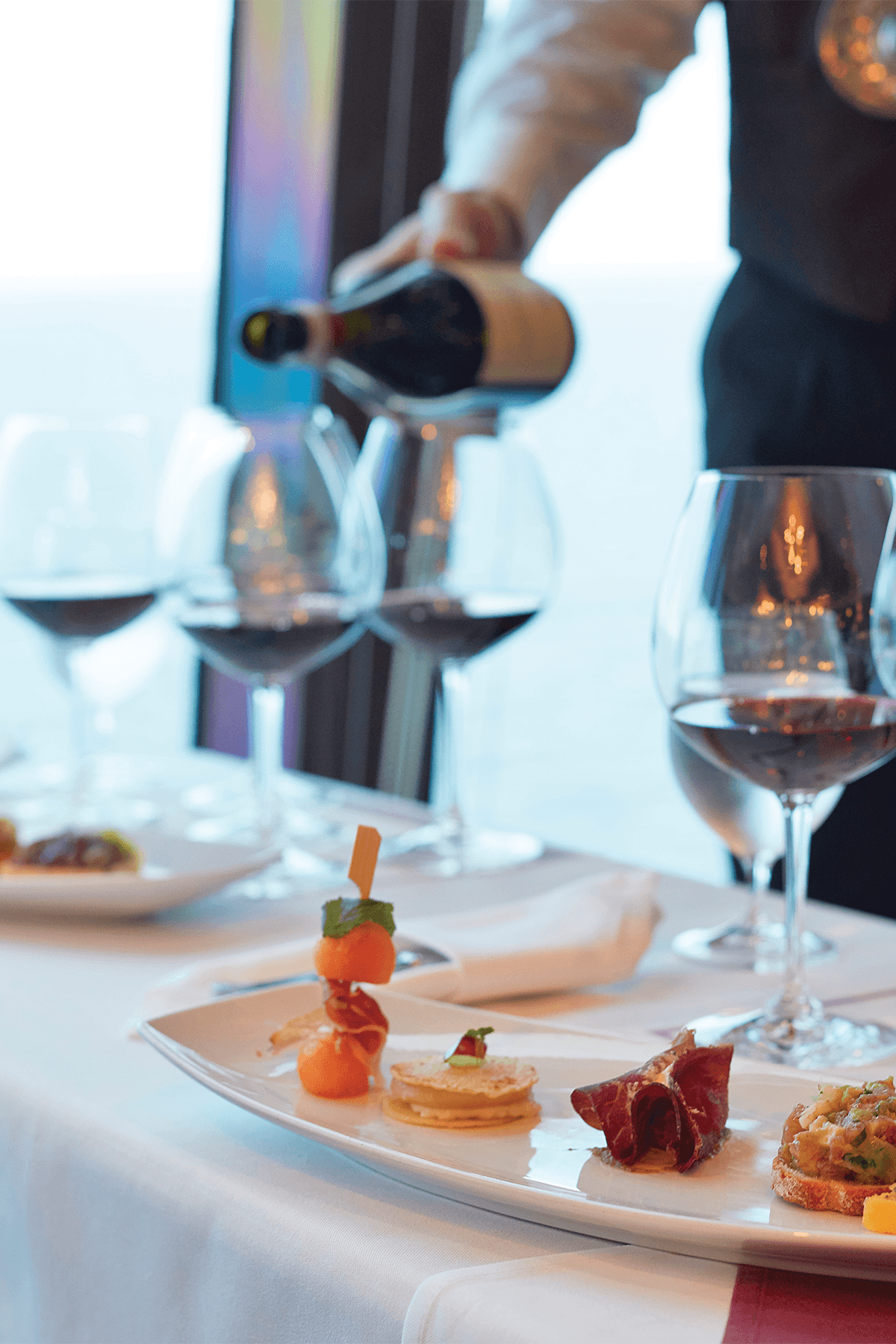
The cellar keeps the same patience as the ports. A range of food and wine pairings runs across Oceania Marina, Oceania Riviera, Oceania Vista, and Oceania Allura, several of them multicourse flights built around Bordeaux verticals and Burgundy sourced a year before the ship sails. The Gérard Bertrand lunch—six courses of biodynamic Languedoc, $175 per person, inside Jacques restaurant, capped at 40 guests—debuted on Oceania Allura in 2025 and reaches the rest of the fleet through 2026. And in August 2027, when Oceania Sonata sails her maiden voyage from Rome to the Venice region, the line will open La Table par Maîtres Cuisiniers de France: 18 seats, reservations only, the first restaurant at sea to launch with the guild’s formal endorsement.
The new dishes on Oceania Allura, the new restaurant coming to Oceania Sonata, and the garden newly reopened in Monaco—each points at the same plain fact. The kitchen sits where the coast does, and along this coast people have been cooking the same way for a very long time. The joy of traveling well, as Oceania Cruises calls it, comes down to being somewhere real, at the right pace, in good company, with the next good meal already on its way.
Explore more at oceaniacruises.com.
Dining and Cooking