
Classic Parisian pastries have shaped how the world understands the concept of patisserie. They are not seasonal creations or modern inventions, but fixed points in culinary history, refined over generations and still widely copied today.
For instance, the Paris-Brest, a cream-filled choux pastry ring, still carries the shape of a bicycle wheel in tribute to its origins. The éclair, the baba au rhum, the delicate religieuse, the impossibly precise St. Honoré — each has a lineage as recognizable as its form. Even the more understated icons, like the flan or madeleine, sit firmly inside this tradition of codified, perfected recipes.
To know them is to understand a specific language of French baking: one built on precision, repetition and technique rather than novelty. But in a city saturated with pastry shops, not every version lives up to the original intent. The following Paris bakeries are some of the places that do them justice and that you should add to your list.

Pastry Chef Maxime Frédéric is well-known for his Paris-Brest at his bakery PleinCoeur in Paris’ 17th arrondissement. ©PleinCoeur
1. Paris-Brest at PleinCoeur (Paris 17th)
The Paris-Brest is also a newer creation in the annals of classic patisserie, invented in 1909 in celebration of the Paris-Brest-Paris bike race. A ring of choux pastry resembling a bike tire is filled with praline-flavored crème mousseline and typically sprinkled with slivered almonds. At PleinCoeur in Paris’ Batignolles neighborhood, Chef-owner Maxime Frédéric crafts a version that redefines generosity.
His 15 years at some of Paris’ top hotels can certainly be felt in the almost hallowed shop, complete with glass cloches covering each cake, and his time-tested attention to detail makes his Paris-Brest the city’s clear champion.
Frédéric begins with only the best French hazelnuts sourced from small producers in the Lot-et-Garonne. They’re roasted and caramelized in copper cauldrons before being transformed into a caramel-laced praline, which isn’t just folded into the pastry cream that generously fills the choux pastry case. Frédéric also gilds the lily on top by adding a layer of pure praline, which oozes luxuriously onto the plate the moment you pierce the generously hazelnut-encrusted creation with a spoon.

Terroirs d’Avenir’s creamy, vanilla flan is a local favorite. ©Terroirs d’Avenir
2. Flan at Terroirs d’Avenir (Paris 2nd)
Madeleines aren’t the only patisserie having a moment in Paris. Flan pâtissier is a classic of French boulangeries featuring a pastry case filled with vanilla custard set with a heaping helping of cornstarch, which makes it way less wobbly than Latin American versions and thus far easier to tote to the park for a midafternoon snack.
These days, you’ll find it everywhere from palace hotels like the Crillon to single-pastry shops like Nèulo, which makes flan in no fewer than 10 flavors and forms. But for us, the best in the city come from Terroirs d’Avenir, a mission-driven bakery on the diminutive Rue du Nil in the 2nd arrondissement.
The traditional version encased in flaky pastry is designed to share with two to four of your favorite people, but the individual version is even more enticing: Sticky, caramelized pastry lines only the bottom of the eggy, vanilla-specked custard, which is slightly browned on top for even more depth. It’s neck-and-neck with the kouign amann (a caramelized layered pastry) for our favorite sweet treat from this sourdough-driven spot.
3. Baba au Rhum at Jeffrey Cagnes (Paris 2nd)
To hear the French tell it, the baba au rhum got its start when Stanislas I, the deposed king of Poland, was exiled in Lorraine in eastern France, in the 18th century. Bored by the local yeast cake kougelhopf, which he found too dry, Stanislas demanded a moister option. His pastry chef, Nicolas Stohrer, acquiesced, dousing the cake in a syrup spiked with Tokaji, a Hungarian dessert wine, which would later be replaced by rum gleaned from France’s colonies in the Caribbean.
Stohrer would go on to open his own pastry shop in 1730: Today it’s the oldest patisserie in Paris and still stands proudly on the pedestrian Rue Montorgueil. But while you can still get your hands on a rummy baba there, you’re even better off walking a few doors down to Jeffrey Cagnes, where the former executive pastry chef at Stohrer’s now soaks his airy babas in a rum syrup generously flavored with vanilla and orange. Watching one of the vendeuses scoop your baba from the copper cauldron in which they marinate is almost as delightful as the first bite.
While you’re here, don’t miss Cagnes’ play on a classic flan Parisien, which is baked on a rustic tart base coated in crunchy cane sugar.

Moreish chocolate éclairs at Paris pastry shop Maison Louvard. ©Maison Louvard
4. Eclairs at Maison Louvard (Paris 9th)
The 2025 Apple TV series Carême dramatizes the life of France’s first celebrity chef, and while many of the details of this pâtissier’s life in service to Napoleon’s top diplomat and Alexander I of Russia were exaggerated, his incredible output was not. Experts attribute some 2,000 classic French recipes to Marie-Antoine Carême, including the éclair.
A finger of airy, eggy choux pastry is filled with pastry cream, sometimes flavored with coffee or chocolate, and glazed with icing or fondant. It’s a simple creation that’s unfortunately often disappointing, with pastry that’s either soggy or dry and fillings that tend to be too sweet, too thick or too artificial in flavor. Not so at Maison Louvard, where quality is baker Stéphane Louvard’s guiding force.
His chocolate éclair begins with a cocoa choux pastry case, which is filled with a pastry cream featuring minimally roasted chocolate from Xoco, bringing pure flavour of single-variety chocolate to professional chocolate-makers and bakers, so fruitiness dominates just the slightest bitter undertones. The coffee version is similarly excellent, made with house-made organic coffee extract and topped with caramelized espresso beans for crunch. It’s impossible to mention Louvard without noting that this is where the crookie craze began, and it’s still the best place to score the super-rich croissant-cookie creations (though you’ll definitely want to share).

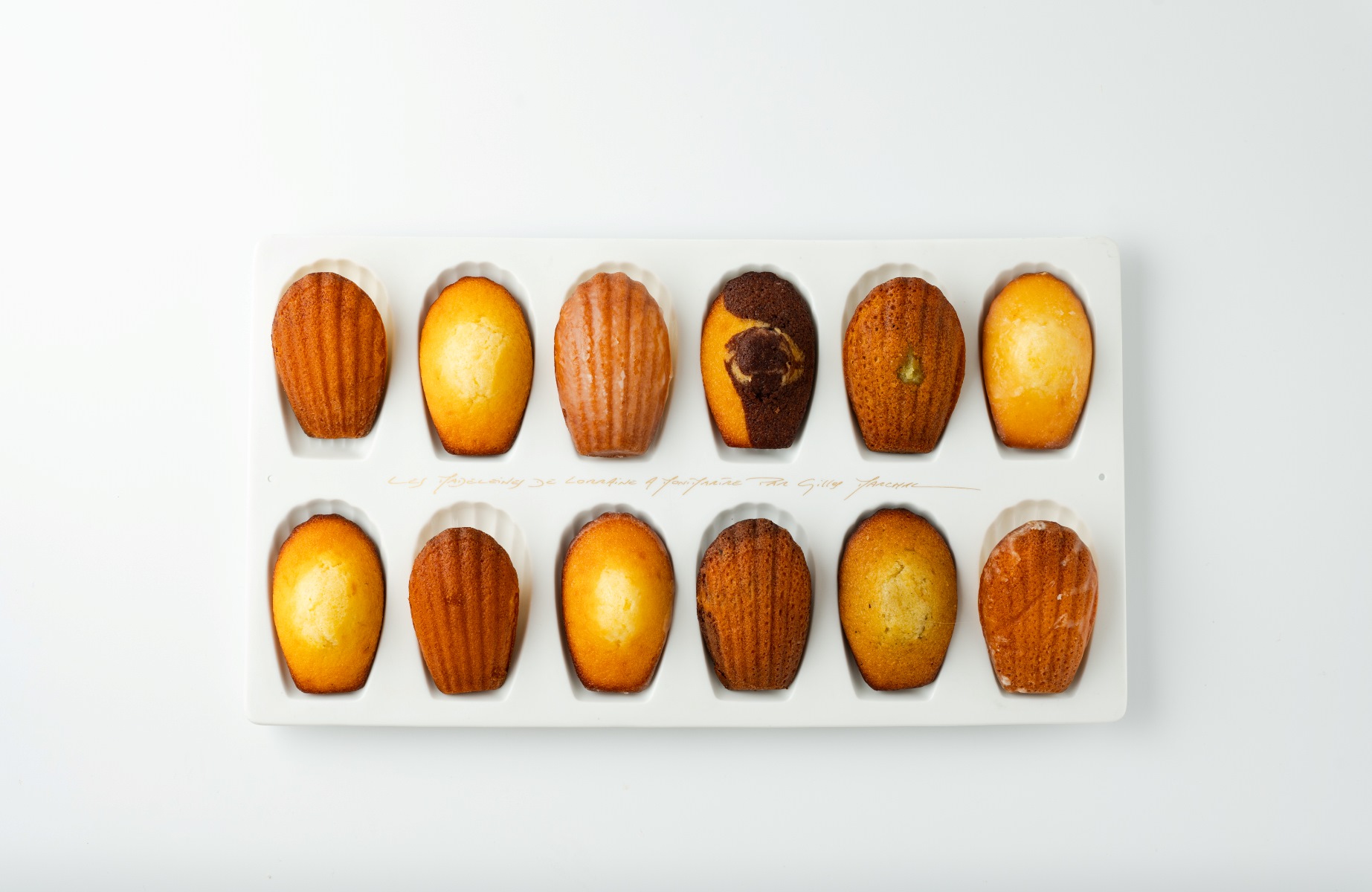
Dainty little shell-shaped madeleines at Gilles Marchal pastry shop in Paris. © Gilles Marchal
5. Madeleines at Gilles Marchal (Paris 18th)
In French, a madeleine de Proust refers to a specific kind of comfort food, something that sparks nostalgia the way the madeleine did for French writer Marcel Proust. In his novel In Search of Lost Time, his protagonist tastes a single bite of the simple sponge cake dipped in tea and finds himself catapulted into happy childhood memories.
Shell-shaped madeleines are omnipresent on the Parisian pastry scene today, cropping up everywhere from specialized mono-pastry specialists to luxe tables like Drouant or l’Espadon at the Ritz. But if you ask us, the best come from Gilles Marchal, where the light, fluffy sponge cakes are available in dozens of different flavors, which change nearly daily. Our favorite is the lime-glazed with a sprinkle of herbal thyme, though a version stuffed with deep, dark caramel is also stellar.
6. Religieuse at Carl Marletti (Paris 5th)
A more recent choux pastry creation is the religieuse, which most sources date to the 19th century. Far heftier than an éclair, a religieuse is made by stacking two iced, pastry cream-filled choux buns one on top of the other with a bit of buttercream glue. The result is meant to resemble a fat nun in her black or brown habit, thus the name of this decadent pastry.
They’re far rarer than éclairs — and good-quality ones are even scarcer — but Carl Marletti’s are the exception. In his 5th arrondissement shop, a colorful case beckons with a host of pastry jewels, from a perfectly puckery tarte au citron to a decadent désir, a chocolate-hazelnut pastry. It’s a study in sweets in many forms and textures.
While we’ve yet to have a bad pastry here, there’s something extra special about his choux pastry creations, from the pristine salted butter caramel éclair to the floral Lily Valley, a purple pastry created in honor of his florist wife. His religieuses number three, with a pale pink rose joining classic coffee and cocoa. The latter is made with 70% dark chocolate and is truly exceptional.
7. Macarons at Le Lautrec (Paris 4th)
Some would give Italians credit for inventing macarons, but while they do indeed share roots with similar almond-based biscuits like amaretti, most agree that the refined, pastel-colored sandwich cookie was invented at Paris’ famed Ladurée in the 1930s. Today, though, for the city’s best, skip the queues in favor of Le Lautrec, one of just a handful of outposts of this small family-run business rooted in Clermont-Ferrand (just like our very own MICHELIN Guide).
Here the macarons are generously filled with ganache, jam or both for a fudgy texture almost like a brownie. Seasonal creations may include a zingy lemon-raspberry or herbal pear with lovage, while carefully sourced ingredients make even classic flavors like chocolate and coffee a step above the rest. The former is made with single-origin cacao from a Brazilian plantation, while the latter’s Guatemalan coffee-and-cream base makes it taste like the best café crème you’ve ever had.
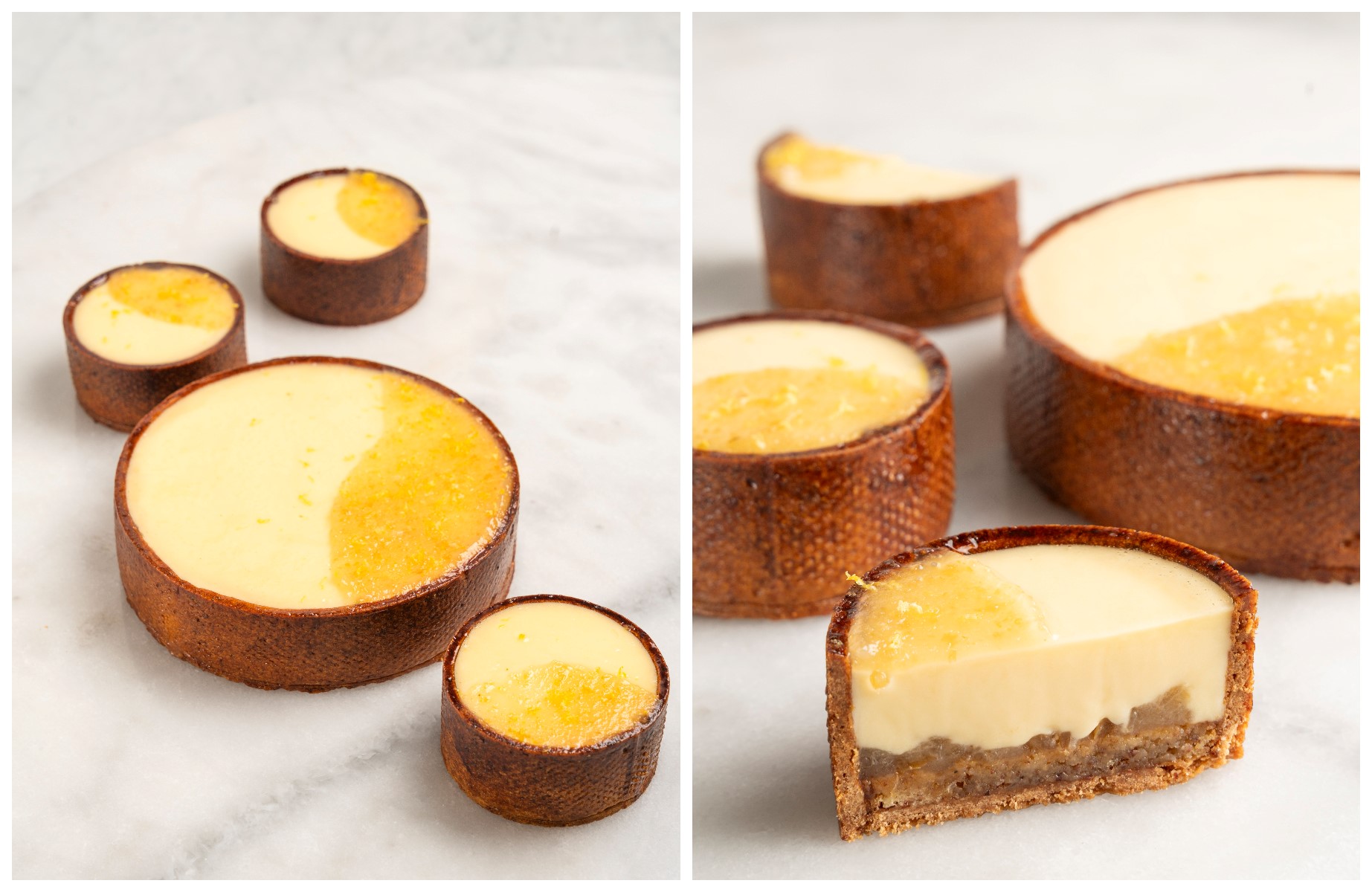
“Tarte au Citron” or lemon tart, in English, may have roots elsewhere, but it’s a French favorite, especially at Brigat’. ©Brigat’
8. Tarte au Citron at Brigat’ (Paris 3rd)
It may knock that famous French national pride, but one must give credit where credit is due: The Italian brothers behind this popular Marais bakery are making the best lemon tarts in the city. In winter, they might include an oozy black sesame praline and a garnish of puckery sudachi gel, while in spring, the lemon crémeux could conceal a touch of rich lemon-almond cream and be topped with lemongrass- and lemon thyme-infused gel.
Either way, the sablée base is buttery and rich, with deep walls to better hold a generous quantity of bright, balanced curd. And while purists may balk, modifications do not derail the identity of the classic tarte au citron. While you’re at Brigat’ be sure to snag a slice of the colorful pistachio and berry crumble, with a buttery addictiveness that’s simply swoon-inducing.
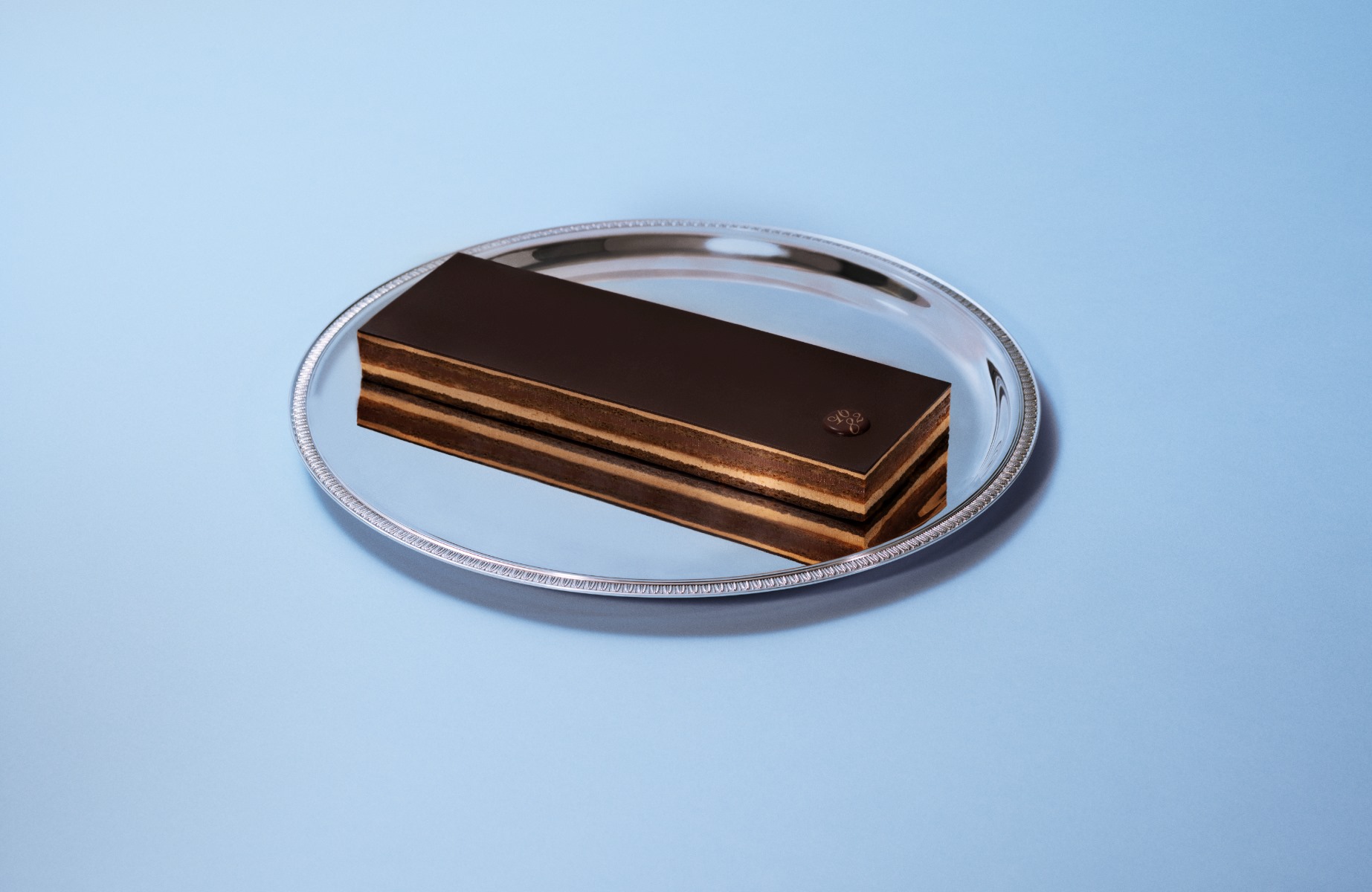
The 17th-century maison Dalloyau is known for its French patisseries like elegant opéra slice. ©Dalloyau
9. Opéra at Dalloyau (Paris 8th and 10th)
The opéra is a nine-layer ode to coffee and chocolate, and while its invention is recent, dating to the mid-20th century, sources diverge when it comes to definitively naming its maker. Cyriaque Gavillon of Dalloyau most frequently gets the credit, though his 1955 creation may have been inspired by an award-winning cake made as early as the 19th century by the Clichy family, who previously employed Gavillon’s brother-in-law.
However you slice it, the opéra has since become beloved for its architectural composition of Joconde biscuit soaked in coffee syrup sandwiched with coffee buttercream and chocolate ganache. A chocolate glaze topping is typically decorated with gold leaf, evoking the luxurious opera house from whence the cake gets its name. The maison mère is still doing things right, with an admittedly diminutive version made with powerful 72% Venezuelan dark chocolate subtly balanced by coffee.

Invented in the late 19th century at a bakery on Paris’ Rue Saint-Honoré, it has a puff pastry base topped with caramel-coated choux buns filled with pastry cream. ©Laurent Duchêne
10. Gâteau St. Honoré at Laurent Duchêne (Paris 13th and 15th)
The St. Honoré cake is named after the patron saint of pastry, which seems only apt considering how many techniques it requires. Invented in 1847 by Auguste Julien at his bakery on Paris’ Rue Saint-Honoré, it begins with a puff pastry base topped with caramel-coated choux buns that are filled with pastry cream. The center of the pastry is then filled with crème chiboust, which is made by lightening pastry cream with meringue, and it’s all finished with whipped cream using a special St. Honoré piping tip for beautiful ridges. With all that technique — and all that expensive vanilla — it’s easy to get this cake wrong.
But one person still getting it marvelously right is Laurent Duchêne. Here, crispy, buttery, flaky puff pastry is topped with beautiful choux coated in deep, dark caramel that crunches undertooth and adds a pleasantly bitter counterpoint to all that sweet cream. Madagascar vanilla subsumes the pastry with a generous floral undertone. While you’re here, don’t miss his exceptional viennoiseries, like a light and fluffy croissant or a play on a chausson filled with lemon curd.
Hero Image: Warm, just-out-of-the-oven buttery madeleines at Gilles Marchal Paris pastry shop. ©Gilles Marchal

Written by
Emily Monaco
Emily Monaco is MICHELIN Guide contributor. An American writer based in Paris since 2007, she is a culinary journalist, tour guide, podcaster and professor of French food and culture, and examines the ways food reflects and shapes history, identity and everyday life.
Dining and Cooking