
A: Welcome to “Food Delight”, where every dish tells a story. We’re A&B.
B: There’s something irresistible about walking into a bakery. The smell of warm butter, freshly baked bread and hot coffee somehow makes you want to slow down, even if only for a few minutes.
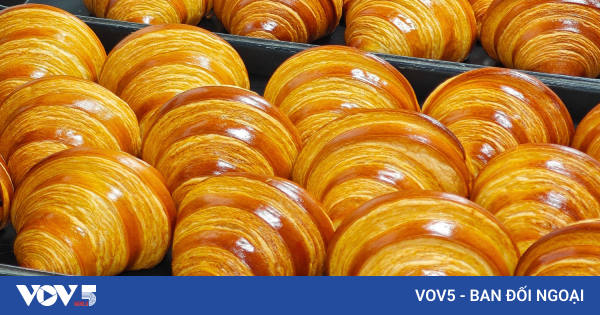
A: That’s true. And among all the pastries lined up behind the glass counter, one always seems to catch people’s attention – the croissant. With its golden crust, delicate layers and rich buttery aroma, it’s become one of the most recognizable French pastries in the world.
B: In Vietnam, croissants have become much more than a European specialty. Today, they’re a familiar sight in cafés, bakeries and coffee chains across the country. Whether it’s a quick breakfast before work, an afternoon coffee break or a leisurely weekend brunch, a croissant is often the pastry people reach for.
A: It may look simple, but every good croissant is the result of careful technique and attention to detail. Behind those crisp, flaky layers are hours of preparation, and every ingredient plays an important role.
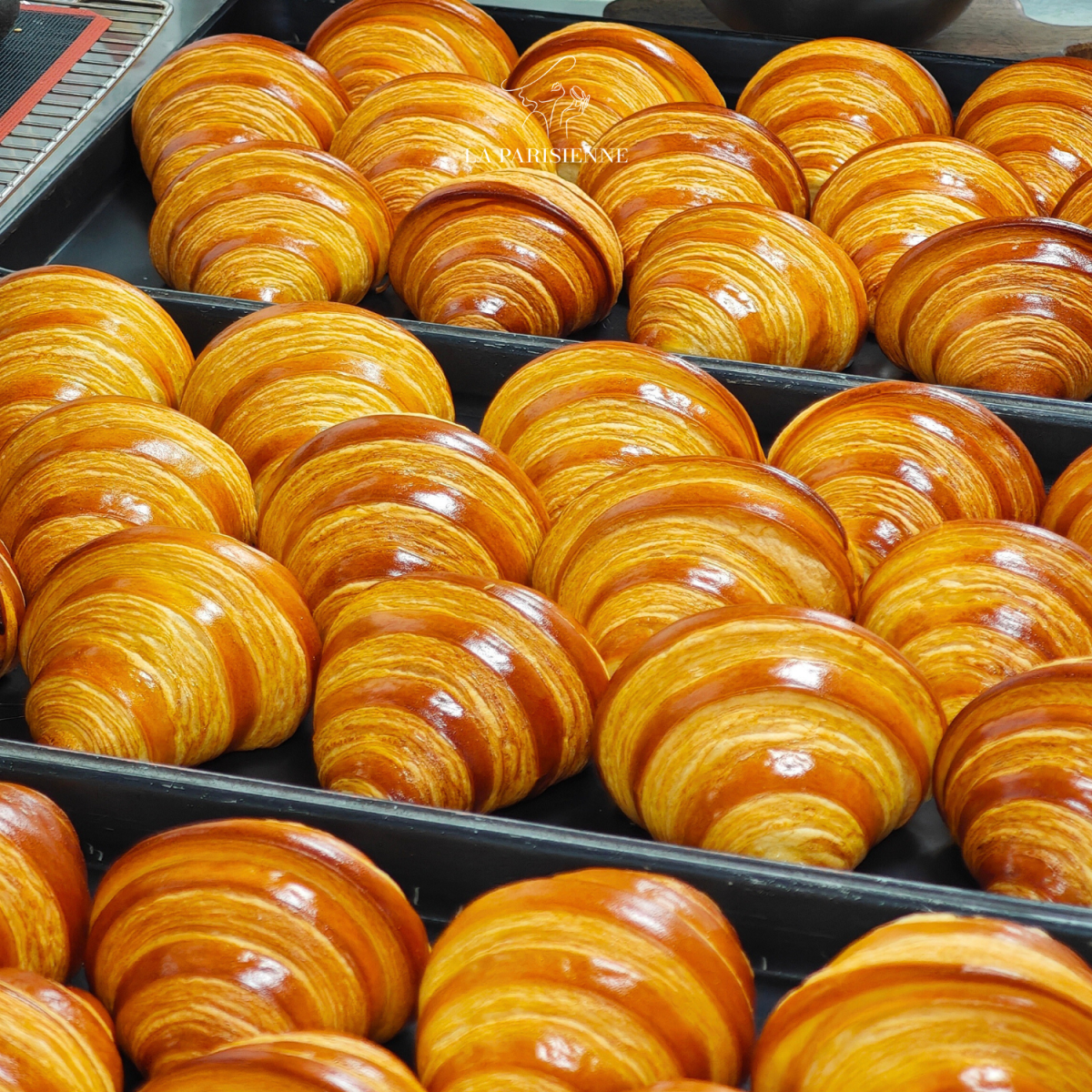
A croissant should have a golden-brown, lightly crisp crust, with delicate, airy layers inside (Photo: La Parisienne)
B: Today, we’re at La Parisienne, a charming French-style bakery in Hanoi, to discover what makes a classic butter croissant so special. We spoke with Thanh Tung, a staff member at the bakery.
“A croissant is made from just a few basic ingredients: flour, butter, yeast, milk, sugar, and salt. But what truly defines its flavor is the quality of the butter and the baker’s technique. At La Parisienne, we use Beurre d’Échiré, a renowned French butter celebrated for its distinctive aroma. It gives our croissants a rich buttery fragrance, a delicate creaminess, and the light, crisp texture that a classic French croissant is known for,” Thanh Tung said.
A: It’s amazing that with only a handful of ingredients, a croissant can have such depth of flavor.
B: It really is, and what’s interesting is how something that seems so simple at first glance actually reveals much more once you start paying closer attention to it, both in taste and in structure.
A: Especially when you see it up close and realize there’s more than just appearance involved. When you break it open, the crust gives a light crack, and inside are those thin, delicate layers—soft, airy, and carefully formed into a structure that feels almost effortless but is actually very precise.
A: That structure is one of the key signs bakers use to judge a well-made croissant. So how are those layers created? Let’s hear from Tung.
“The dough is prepared using the lamination technique, where it is repeatedly folded and rolled with layers of butter. During baking, the butter melts and the steam created inside gently separates the layers of dough, producing the signature flaky, multi-layered structure of a well-made croissant. This careful process is what gives the croissant its light texture and beautifully defined layers when it comes out of the oven,” Thanh Tung again.
A: It sounds almost like a little bit of science happening inside the oven.
B: It really is. Bakers often say that you can judge a croissant before you even taste it. A beautifully baked one should have a deep golden color, a crisp exterior and a light feel in your hand. If it’s too dense, something probably went wrong during the process.
A: It’s a pastry that appeals to almost every sense—the look, the sound, the texture and, of course, the flavor. But once the croissant comes out of the oven, how should it be enjoyed?
“A croissant should have a golden-brown, lightly crisp crust, with delicate, airy layers inside. When you break it apart, you can clearly see the flaky layers and immediately notice the aroma of the butter. In France, croissants are traditionally enjoyed for breakfast, and they’re especially delicious with a café au lait, a cappuccino, or simply a cup of hot tea, which complements the buttery flavour beautifully,” Thanh Tung said.
A: Sometimes the best food doesn’t need much at all. A freshly baked croissant and a warm drink can be enough to turn an ordinary morning into something a little more special.
B: And that’s probably one of the reasons why croissants have become so popular in Vietnam. They fit naturally into the local café culture. You don’t need a formal breakfast or a special occasion to enjoy one. Whether you’re catching up with friends, reading a book or simply grabbing a coffee before work, a croissant always feels like the right companion.
A: That’s all for this edition of “Food Delight”. Thanks for listening. Until next time, happy eating!
Dining and Cooking