
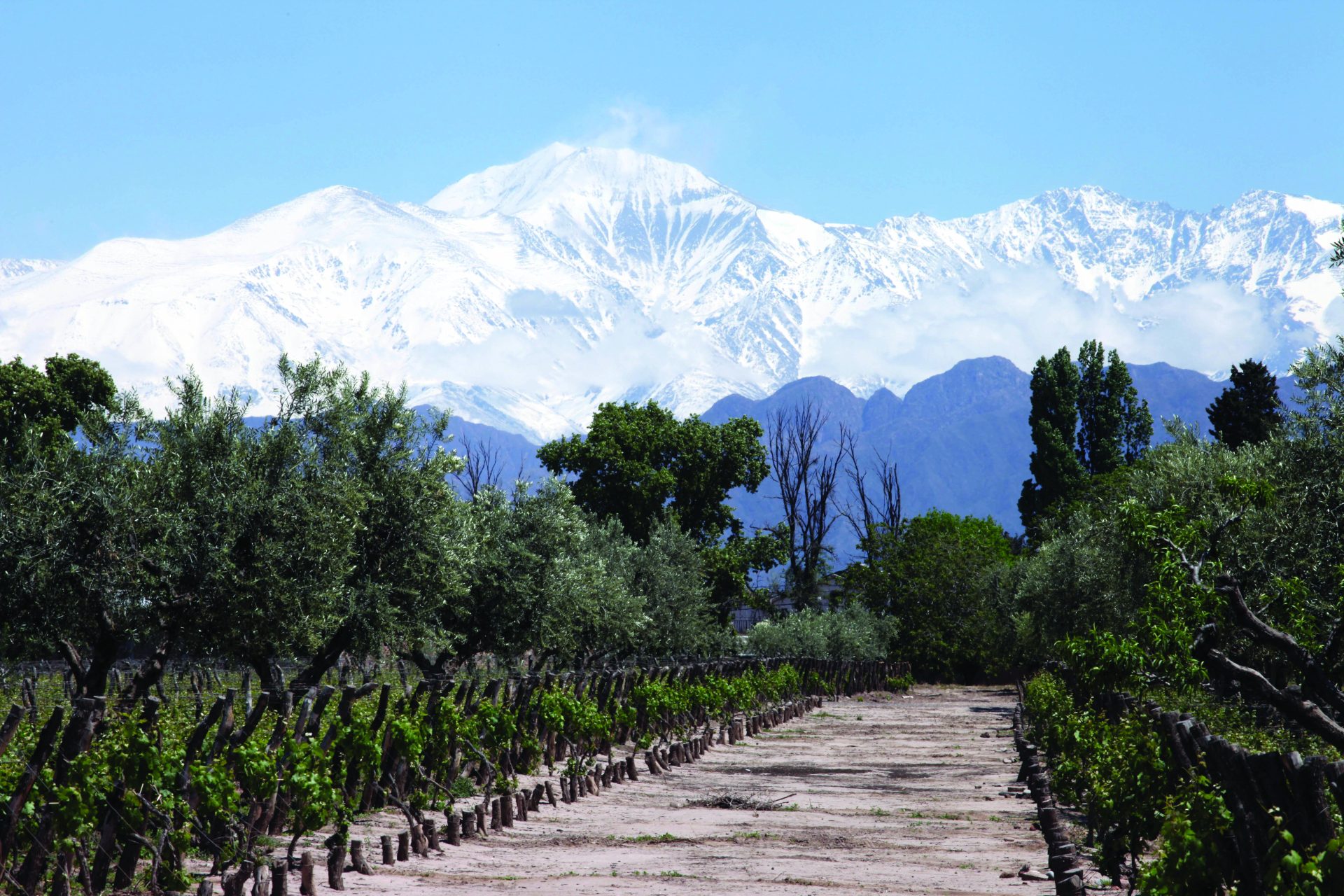
Economically the past few years have been rocky for Argentina, but a level of stability is now allowing businesses to look ahead. Wineries in Mendoza talk to Oli Dodd about how they are building on diversity to encourage tourism
Argentina has packed a lot into the last couple of years. Since 2018, the country has been experiencing a severe devaluation of the peso. Inflation has been a recurrent issue since the mid-20th century, but this latest crisis began in 2018, when an intense drought decimated crops. At the same time, the US Federal Reserve increased interest rates from 0.25% to 2%. The price of the US dollar in Argentina soared, and President Mauricio Macri turned to the International Monetary Fund for a loan that would rise to US$57bn, the largest in the organisation’s history.
As the Covid pandemic hit, the peso continued to fall. In 2022, the inflation rate passed 100%. By the end of the following year it had hit 143%, and the Catholic University of Argentina reported that 55% of the population were living below the poverty line.
Amid the turmoil, Mendoza, the continent’s flagship wine region, was flying. One of the few in the New World that possesses brand power to compete with the storied regions of Europe. A case in point is Catena Zapata, which now seems bolted on to the top position in Drinks International’s annual The World’s Most Admired Wine Brands ranking. The economic downturn that began in 2018 may have spelt trouble for the nation at large, but for a wine tourist, Mendoza had become a budget break.
“In Mendoza, 2019 was our highest year for tourism before the pandemic, 3.8 million visitors,” says Sofia Pescarmona, co-owner & chief executive of Bodega Lagarde and vice-president of the Wines of Argentina trade body.
“Then the pandemic happened, but by 2023, we had recuperated all that we had lost during the pandemic and actually exceeded pre-pandemic numbers. Those post-pandemic years, 2022 and 2023, were a bit like Narnia. The affordability that Mendoza offered then was a bit out of this world. You were able to dine in a Michelin-star restaurant, with wine, for $40. I don’t think you’ll see that anywhere else in the world.”
That was the region’s offer for tourists. Caviar hospitality experiences at fried egg prices. And with the peso as low as it was, domestic travel became the only holiday option for many Argentines.
“Tourism was going really well,” says Julia Zuccardi, head of tourism, hospitality & social responsibility at her family vineyard. In 2019, 2020 and 2021, Zuccardi’s Valle de Uco was named The World’s Best Vineyard by 50 Best.
“Before the pandemic, Argentina was cheap for people coming from elsewhere, and it was expensive for Argentinians to travel abroad. Covid happened, everything shut down, and we had a difficult year, but afterwards it was amazing. We became a great option for tourism because, as well as being even cheaper for people coming in and still expensive for Argentinians to travel abroad, we also had lots of open space and people were looking for an experience outside in nature after being locked down. So, 2022 and 2023 were excellent years for wine tourism in Mendoza.”
Outside, the economic crisis had worsened. Enter Javier Milei, the chainsaw-wielding, self-described anarcho-capitalist who promised to gut public spending and to introduce economic shock therapy. Again, inflation rose, peaking at just shy of 300% in April 2024, but it’s steadily fallen since and by the end of last year, it reached 31.5% – its lowest rate since 2017. That stability has come at a social cost. Inflation has slowed, but with it has come recessionary pressure and lower purchasing power. The economic rollercoaster had taken another turn.
“Everything started to change,” explains Zuccardi. “In 2024, the change of government and policy meant that Argentina suddenly became very expensive, and it was cheaper for Argentinians to travel abroad. For us, our main tourism comes from Argentina or Brazil. Here, we’ve really missed the Brazilians. Brazilians were very good visitors. For them, Mendoza was relatively cheap, so they consumed and bought a lot, and there were a lot of them. Today, we only get the wealthiest Brazilian visitors. We only get people who really care about food and wine; they don’t care about what they’re paying, but in comparison to before, it’s not many people.
“Last year, we had a 27% decrease in wine tourism visitors compared to 2024. This year, it’s like 2025; it started a bit better, but it’s trending down again. Inflation has changed the reality of tourism. After Covid, when there was a lot of tourism, wineries and restaurants opened, and now many of them are suffering. There aren’t enough tourists at the moment for everybody.”
While the demographics have shifted, individual destinations have felt the pinch. Data from Wines of Argentina tells a less volatile tale. In 2019, there were 3.8 million domestic and international tourists to Mendoza. Following the pandemic, in 2022, that figure had fallen to 3.5 million but was back at 3.8 million in 2023. The following year saw a decline to 3.6 million, a figure that was stable into 2025.
“I was surprised by the data,” says Pescarmona. “From 2023 to 2024, there was a drop of 200,000 people. The numbers make it seem quite stable, but there are some changes, especially with our neighbours. Chile is right next door to Mendoza, and they come by car. With the appreciation of the peso last year, we have substantially fewer Chileans coming over, Chileans who were big customers at the wineries. So, you do sense it; we saw about 20% less volume in our winery across those years.
“And Brazilians too. The Brazilian real has devalued as our currency has appreciated, and that combination has decreased tourism. Between Chilean, Argentinian and Brazilian tourism, that’s the bulk of the total tourist figures.
“In the past two years, we’ve seen a growth in visitors from the rest of the world. I think that’s a good sign for us, it means we are diversifying our market to other markets outside of the traditional audiences.”
While there is a social cost to the stability, from a business perspective, it’s been hugely significant. For the first time in the best part of a decade, business operators are able to look ahead.
“When you live in a country with 50 or 60% inflation, you don’t really have a picture of what your real margin is; you’re always chasing inflation,” says Pescarmona. “There’s still a lot of inflation; we probably will have anywhere between 20 and 30% inflation this year. For other economies, it’s crazy, but for us, it’s almost close to stability. That’s great news, and it allows us to start thinking about longer-term projects. We can start planning growth or investments, maybe even get financing from banks – with a 70% inflation rate, you don’t want to get financing from anybody, because it’s impossible to pay it back.
“We couldn’t plan two years ahead. We were always budgeting three or five months ahead. Now, with inflation closer to 20%, I see most companies starting to think in three years ahead, which is something we haven’t been able to do for the past five or so years.”
What’s emerging from the turmoil is a diverse Mendoza. Yes, there is the high end that is expected in a world-class wine region, but with domestic tourism accounting for most visitors, and those visitors having been subjected to years of financial instability, few regions can offer such a diversity of dining options.
“Now that $40 Michelin-star restaurant would be $100,” says Pescarmona. “That’s still great value in relation to other wine regions. Mendoza, for premium offerings and compared to premium offerings in other wine regions in the world, it’s very well priced. I always try to maintain prices as low as possible, understanding that one of the attractive things about coming to Argentina is that it’s great value for money, but the plane ticket to get here is much more expensive for Europeans than going to Burgundy or Spain.
“The breadth of more affordable opportunities and experiences has grown a lot in the past two years. The Argentinian market is very big, and we have to cater to the local market that maybe can’t spend $200 on a meal, so there are lots of different opportunities and different price points. It’s very diverse, and it’s still growing. Six new hotels are being built in Mendoza at the moment. There’s a lot of investment going on and, as a region, it’s got a lot to offer outside of the wine; we have the mountains for hiking, and it’s beautiful. We have the potential to continue to grow.”
Dining and Cooking