
The Ministry of Agriculture and Food Sovereignty is joining forces with agricultural organizations and Regions to support Southern Italy’s production, particularly olives and wheat, which are the basis of two strategic supply chains of the Mediterranean Diet: oil and pasta. Yesterday, at the durum wheat roundtable, Minister Francesco Lollobrigida announced a series of measures aimed at enhancing national production and supporting farmers who are facing prices lower than production costs. The minister stated that ‘farmers must be incentivized at a time when wheat is being sold at extremely low prices.’ He also assured concrete resources to ‘guarantee a strategic and identity-defining supply chain.’
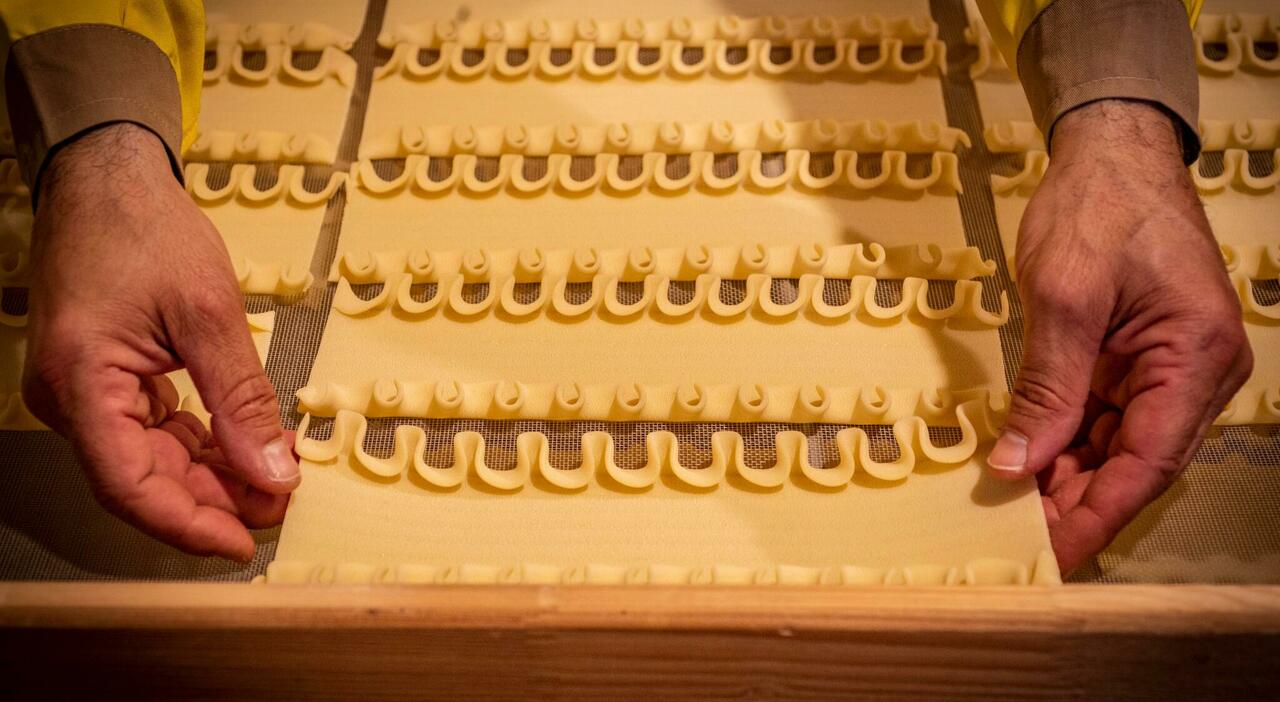
Among the revival actions, in addition to controls to verify that imported wheat does not contain residues of substances banned in Italy and investments in research, he announced promotional initiatives for 100% Italian pasta because, as he argued, ‘Italians, the world’s top pasta consumers, must be encouraged to buy Italian.’ In this context, Coldiretti proposed the creation of a ‘Southern Italy Pasta PDO’ to reward the cultivation of durum wheat in southern regions. Campania, which already boasts an outstanding product like Gragnano PGI pasta known worldwide, could benefit further from a PDO that safeguards pasta made exclusively with durum wheat from southern territories.
Lollobrigida recalled that the supply chain has not been left alone: the contribution provided by the EU crisis reserve to address the fertilizer price surge—triggered first by the war in Ukraine and now by the Hormuz Strait blockade due to the Middle East conflict, covering up to 50% of the increases—could be increased for the most affected supply chains such as durum wheat. To revive the ‘yellow gold,’ the Coltivaitalia measure, currently under approval in Parliament (to become operational in January 2027 with over a billion in funding), allocates 40 million to the supply chain. The cereals sector, the minister recalled, has received a total of 2.5 billion since 2022, including contributions from the Common Agricultural Policy, 533 million from the NRRP, 53 million from the Complementary National Plan, 64 million from the Durum Wheat Fund, and 21 million from food districts.
But more needs to be done. Coldiretti, which highlighted ‘a dramatic cyclical and structural crisis threatening the survival of thousands of farms, particularly in Southern Italy,’ requested 40 million to strengthen supply chain contracts, more controls on foreign wheat using innovative tools such as magnetic resonance, genomic mapping, and isotopic mapping, an extraordinary storage plan (over 60% of centers are more than forty years old), and a crackdown on unfair commercial practices. According to Coldiretti, fraud regarding origin and attempts to circumvent the transparency system guaranteed by the National Single Commission are weighing heavily.
The CIA denounced out-of-control imports (self-sufficiency has plummeted from 80% to 56% in just a few years) and called for an expansion of supply chain contracts, which currently involve only 15% of the land. The solution proposed by Raffaele Drei, president of Confcooperative Agroalimentare e Pesca, to enhance Italian durum wheat is to reward organized forms of producers: ‘Public funds,’ he said, ‘should reward producers who choose to join cooperatives and Producer Organizations, which are the cornerstone on which solid, structured supply chains are built and maintained.’
The new strategy for the wheat-pasta supply chain is accompanied by the one launched a few days ago for extra virgin olive oil. A circular from the Ministry of Agriculture established that oil obtained by blending extra virgin and virgin olive oil cannot be labeled as extra virgin but as a lower category product, therefore classified as ‘virgin olive oil.’ This measure was particularly welcomed by Coldiretti, which has been fighting for months to ensure maximum transparency in a key sector of Made in Italy.
In the past year, the price of extra virgin olive oil—according to the agricultural organization—has collapsed by 50%, while Italian olive growers’ costs have increased by over 200 euros per hectare: ‘A paradox that is explained by analyzing the supply chain data. Italy produces about 234 million liters of extra virgin olive oil compared to domestic consumption of 461 million liters, exports of 318 million liters, and imports reaching 545 million liters per year.’ The ministry’s action aims to strengthen controls at industries, large-scale retail, and ports, also by increasing the number of samples taken for analysis, because the MASAF’s policy is ‘zero tolerance for fraud.’
© ALL RIGHTS RESERVED
This article is automatically translated
Dining and Cooking