
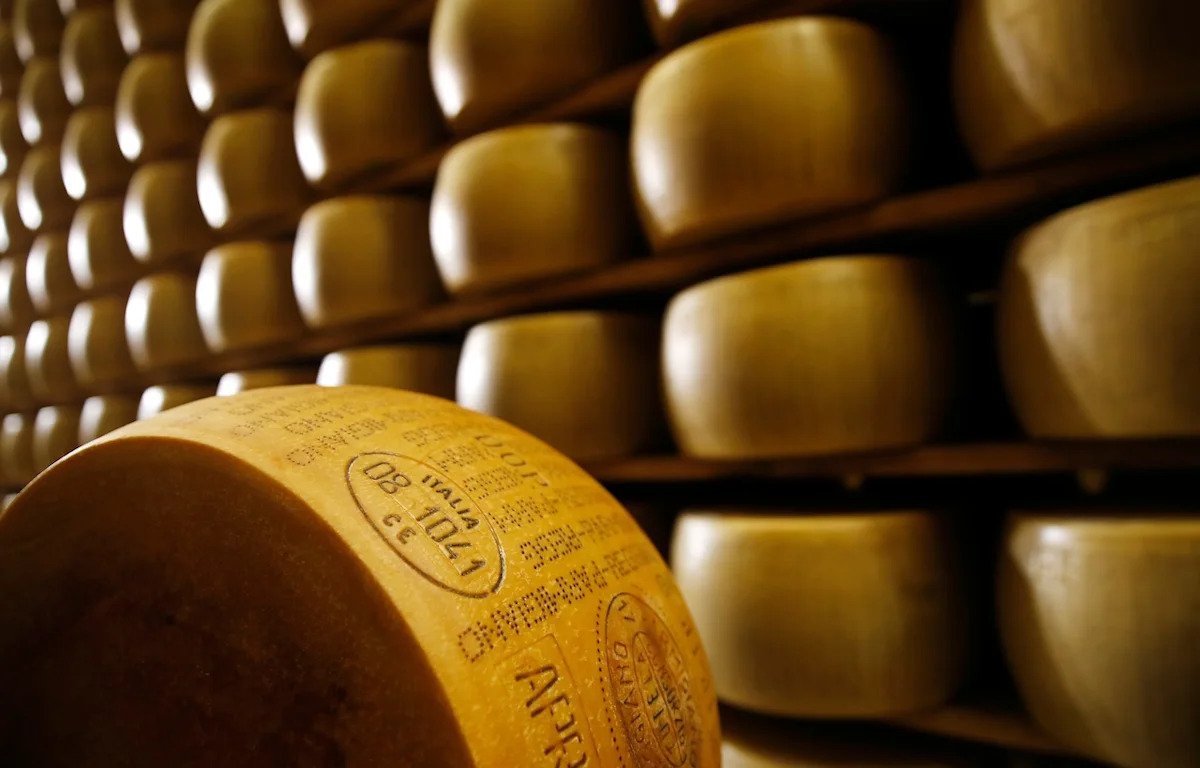
The heat waves that have hit Europe have not only been the catalyst for wildfires. They have also threatened the operations of one of Italy’s most famous exports.
According to Reuters, the current heat wave is having a significant impact on the Parmigiano Reggiano industry. Parmigiano Reggiano is made with only milk, salt and rennet. The cows are also only allowed to eat the grass in five specific provinces in Italy.
Temperatures have reached 40 degrees Celsius (104 degrees Fahrenheit), forcing the cows that produce the milk for the cheese to lie down more instead of walking around the fields and eating grass. This has led to the cows producing as much as 10% less milk.
Nicola Bertinelli, president of the Parmigiano Reggiano Consortium, said the heat has also impacted the amount of grass available for the cows to eat.
“If it doesn’t rain, grass doesn’t grow, hay cannot be produced and it’s impossible to obtain the milk needed to make the cheese,” Bertinelli said.
The heat has also driven up electricity usage at the warehouses where the cheese is stored and aged. Additionally, mist and water systems used to keep the grass in good condition have added extra expenses for farmers.
The report also said 50% of the Parmigiano Reggiano produced is shipped globally, and the United States is the biggest importer of the cheese, with the industry earning revenue of 4.5 billion euros a year ($5.15 billion).
Paolo Ganzerli, international sales director at food group GranTerre, said he is worried about what will happen if the heat wave continues.
“If extreme events become longer-lasting and more intense, they will certainly have an impact on both the quantity and quality of milk, but above all they will lead to higher costs,” Ganzerli said.
Read the original article on MassLive. Add MassLive as a Preferred Source by clicking here.
Dining and Cooking