
I’ve been cooking bacon the same way for most of my adult life. Skillet, medium heat, paper towels on standby. It works. But a while back I noticed that my best batches had something in common: flat strips, no burned edges, evenly cooked. Those were always the ones I’d practically forgotten about. That made me curious about whether I’d been doing this the hard way.
So I ran through three methods over a few weekends. Same brand of bacon, same number of strips each time. Here’s what I found.
The stovetop skillet
This is the default for most people, and it’s fine. It gives you direct heat contact, which gets you some browning fast. The problems: grease splatter everywhere, strips that curl up and cook unevenly because one end is flat and the other is sitting in a puddle of fat, and you have to babysit it the whole time. It’s also a one-layer operation unless you have two pans going. For a quick two or three strips, sure. For a pound of bacon for a big breakfast or a recipe, it takes forever and the stovetop looks like a crime scene afterward.
The microwave
I know people swear by this. Paper towels, a plate, two minutes a strip. I tried it honestly. The bacon cooks, technically. But the texture is wrong. It comes out kind of brittle and pale, like it lost something in the process. There’s no real browning, which means there’s less flavor. And you still have to do it in batches if you’re cooking more than four or five strips. I’ll use it in a pinch, but it’s not the method I’d choose if I had two other options right there.
The oven
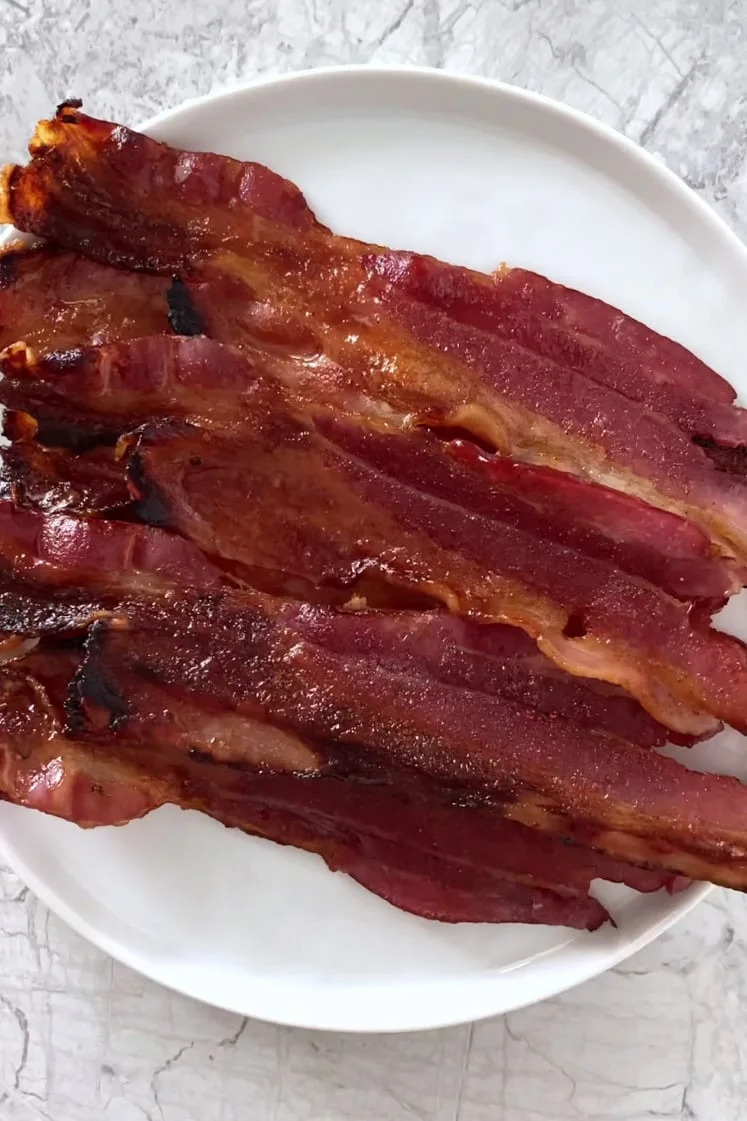
This is the one I’ve kept. You lay the strips on a wire rack over a sheet pan, slide it into a cold oven, then turn the heat to 400°F. No preheating required. The bacon comes up to temperature with the oven, and that actually helps render the fat more evenly. It takes about 17 to 20 minutes depending on thickness, and you don’t touch it once. No flipping, no monitoring, no grease spraying across the backsplash.
The strips come out flat. That matters more than I realized before. Flat bacon sits properly on a sandwich, wraps cleanly around something, or crumbles evenly when you’re adding it to a recipe. The curled, uneven stovetop strips always felt like a consolation prize.
The cleanup is also dramatically better. The grease drips down into the sheet pan, the rack goes in the dishwasher, and that’s it. Compare that to scrubbing a skillet and wiping down half the stove.
One more thing: this method scales. A full pound of bacon fits on one sheet pan. If you need two pounds for a party or a big batch cook, you run two pans at once. The stovetop has no equivalent answer to that.
What I use it for
Once I switched, I started cooking bacon more often, not just for breakfast, but as an ingredient in other things. I make spicy candied bacon in the oven now because the even heat is exactly what that recipe needs. Stovetop candied bacon burns before the glaze can set. The oven method is also what I use any time I need bacon for something like bacon egg and cheese breakfast sliders. Flat, fully rendered strips that fit the assembly without a fight. For something like bacon onion jam, the stovetop still wins because you want the drippings in the pan. But for straight-up strips, the oven is the answer.
One thing worth knowing: a wire rack gets you crispier results than laying strips directly on foil. The foil method works, but the bottom of the strip sits in rendered fat and steams a little. The rack fixes that.
If you’ve been doing the skillet shuffle for years, try one oven batch. Line the pan, put the strips on the rack, go do something else for 20 minutes. The result is better and you didn’t have to stand there watching it.
By Sara Nelson, Creator of Real Balanced.
Dining and Cooking