

Tasmania has fast emerged as the clear leader of cool-climate Australian wine. Over decade to 2025, it roughly doubled in both volume and average value per tonne, continuing to cultivate a reputation for quality not only domestically but increasingly on the world stage.
It is a bright spot for an embattled sector, with an influx of investment to match.
Despite this, Tasmanian wine will face a number of challenges over the medium term. These are largely distinct to those facing mainland producers, and hence will require different solutions and answers.
I caught up with Tom Wallace, head winemaker at Pirie, Tamar Ridge and Devil’s Corner, to discuss these pressures alongside the emerging opportunities for the island state’s wine sector.
“Something we’re going to have to really concentrate on in the future, with new plantings coming into Tasmania, is making sure that we continue to ensure quality is the thing we need to achieve,” Tom Wallace tells Drinks Trade.
“It’s not an easy place to grow grapes, and it doesn’t grow in large volumes, so we’re not pricing the wines [the same]. We’re probably quite highly priced wines, but that’s because it does cost a lot to actually grow the grapes.”
Tasmania’s 2026 winegrape crush data illustrates this.
Only 11,163 tonnes were harvested, producing approximately 10 million bottles, a 52 per cent decrease year-on-year. Grapes averaged $3,870 per tonne, far surpassing the national average of $570. Despite representing just 0.9 per cent of the national total crush by volume, it accounted for 5 per cent of the value.
While volume declines occurred nationwide, with vintage 2026 being the smallest for Australian wine since 2000, Tasmania’s lull differs as it was caused by climatic pressure, not choice.
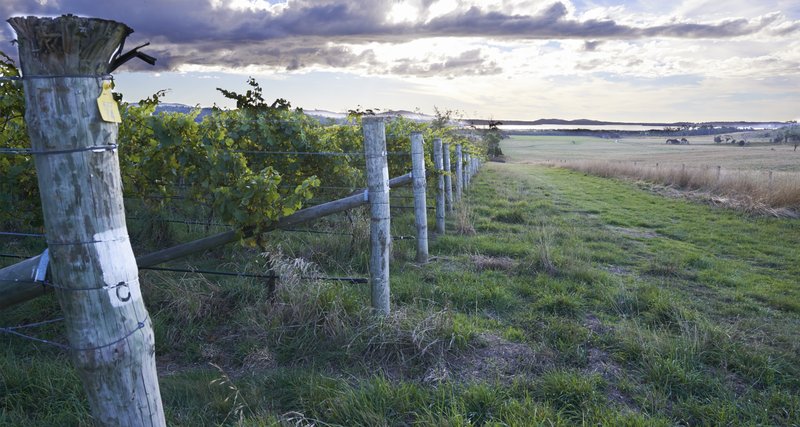
Tamar Ridge’s Kayena Vineyard
Vintage variability
Tom Wallace has been making wine for Brown Family Wine Group’s Tasmanian portfolio since 2010 and says no two vintages have been truly alike.
“No vintage is the same,” he said. “This year is probably similar to 2014, which is going back some time, but still different. You might have a cool November, December, then a warmer summer later. You’ve got time on the vine, there’s complexities – it’s about always learning and then understanding how the fruits respond to that year.”
While this is true for every wine region and agricultural product, it is particularly true for cool-climate wine production. My recent press trip to Bourgogne, the global benchmark for pinot noir and chardonnay, also highlighted this. With demand remaining high and the annual crop varying due to climatic pressures, prices of Bourgogne have crept up as producers look to compensate for lower-yielding years.
Although this has not yet occurred to any significant extent in Tasmania, its producers and regional body will have to be careful as its global demand and prestige continue to grow.
“We’re getting recognition internationally so we can take those wines hopefully to export,” said Wallace. “I suppose the restriction on that has been that they’re quite small volumes generally, and those are just starting to grow in the last few years. We’ve just got to make sure that we maintain the quality that we’re showcasing to the public in Australia and into the export.”
Tom Wallace draws a comparison to Bourgogne.
“You can really talk about grape vintages in the same sense as Burgundy, although we’re very different from Burgundy … We’re understanding it and we’re making quality wines each year. That’s not just us, but the other producers in the state as well, and that gives us the opportunity in export [markets].”
Climate change
The conversation around vintage and yield variation is closely connected to climate change, although Tom Wallace believes Tasmania has some wiggle room before any impact on quality.
“For me, I might say that we could go up a degree and we’d be making better pinot noir, or maybe more consistent pinot noir. I’m sure there’s people who would argue with that. It’s only a point of view. But, honestly, the climate change, I don’t think we’re seeing it massively here.”
What Wallace notes instead is more “unusual weather events”; for example November frosts, heavy rainfall and strong winds ahead of the 2026 harvest.
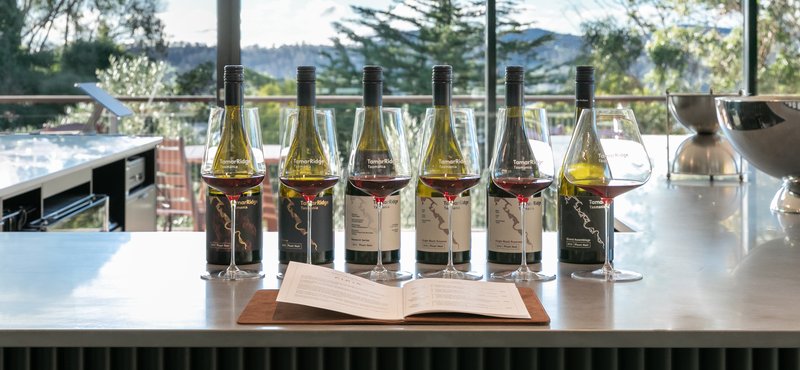
A Tamar Ridge pinot noir flight at the newly-renovated Tamar Ridge and Pirie Cellar Door in Tamar Valley
Global opportunity
The opportunity for Tasmanian wine in key export markets is significant. And it’s growing.
Wallace, who produces some of the state’s best sparkling wines and pinot noirs at Pirie and Tamar Ridge respectively, believes the latter red wine category is driving much of this reputation.
“It’s pretty amazing to see the amount of new producers making wine for themselves and creating their own sort of styles,” he said. “The quality of understanding of pinot noir has been the big one that’s really driven home. Sparkling has been fantastic and high-end for a long, long time.”
Sparkling accounted for 41 per cent of Tasmania’s 2026 winegrape crush, with the category increasingly being championed on the world stage. Ed Carr notably became the second non-French Sparkling Winemaker of the Year in 2024, with one of his wines, House of Arras E.J. Carr Late Disgorged 1998 Magnum, becoming the first non-Champagne sparkling to receive a 100-point score in Robert Parker’s The Wine Advocate in March 2026.
Pirie has also received widespread critical acclaim, with Late Disgorged 2011 receiving two trophies at the 2024 Tasmanian Wine Show and 2020 Vintage was named both Best Sparkling Wine in Show and Best Australian Wine at the 2025 International Cool Climate Wine Show.
Tom Wallace identified the UK and Canada as two focus markets for Brown Family Wine Group’s Tasmanian wine brands moving forwards.
“There’s a few things happening in Canada. Quebec, French Canada, is an interesting place. They understand the style of wines that we produce in Tasmania, and most of the wine they have to import from other countries. They’ve got a very small domestic wine market there, but there’s not a lot of great table pinots and things like that. They’re quite unique in their styles. There’s opportunity there,” he said.
Wine Australia’s lates Export Report also revealed Canada as the most significant growth opportunity for Australian wine over the 12 months ended June 2026, with the value of its Australian imports up 20 per cent and volumes up 13 per cent.
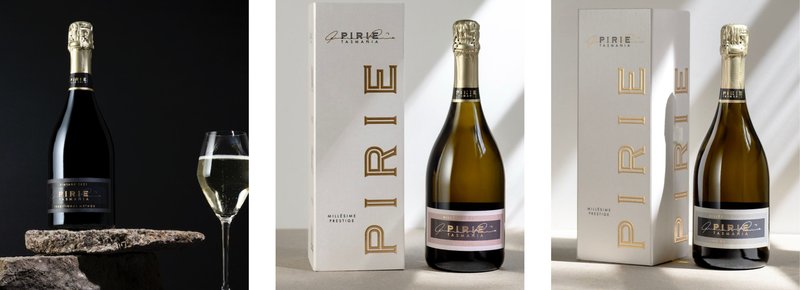
(L-R): Brown Family Wine Group launched Pirie 2021 Vintage in March, and Millésime Prestige BdB 2022 and Rosé 2023 in November
Does Tasmania need more GIs?
Although Tasmania is diverse, with sub-zones such as Tamar Valley, Pipers River, Derwent Valley, Coal River Valley and more all offering distinctly different wine profiles, Tom Wallace doesn’t see the need for more geographical indications.
“Generally the first thing that’s on a bottle of [premium Tasmanian] wine, either on the back label or on the front label, is Coal River Valley in Tasmania, or Tamar Valley in Tasmania. We have a great strength in brand in Tasmania at the moment, and if you grab formal GIs, then you have these steps within that are pulling for themselves. For the moment, and hopefully for a fair while, I think we should keep it together.”
He continues: “The ocean here is our biggest strength, and obviously the climate that retains the prettiness of the wines. And Champagne, similar. The differences are the same thing.”
What’s next for Tasmanian wine?
Another key aspect to the conversation around Tasmanian wine – and coincidentally also Tasmanian whisky – is whether it should be viewed as a separate category to its mainland counterparts. Of course, every wine region in every state has a different reputation already, but Tasmania has managed to distinguish itself just a little bit more, and not only in Australia.
Tasmania has won the battle for attention, but this is just the start. It will have to continue to circumnavigate scarcity and quality as the industry expands, while also working towards consolidating its regional identity.
Although the comparisons with Bourgogne for pinot noir and chardonnay and Champagne for sparkling are imperfect, they are revealing. The regions are defined by vintage variation and by the pressures of supply and demand, especially when a few low-yielding years fall in a row.
Wallace says the future of Tasmanian wine lies not in becoming a larger wine region but in becoming one that leans in to the thing it can deliver consistently: premium quality.
“It’s nature that’s giving you the resource, and you’re trying to work with nature to get the best grapes,” Tom Wallace concludes. “That’s what you work with each year, and perhaps introducing some of your own knowledge and styles to get consistency. I’m just pretty lucky to be in a position where I found myself in Tasmania at an exciting time where I think we have the opportunity to make some of the best wines in the world, and across a number of different styles.”
//
Interview: Inside Brown Family Wine Group’s luxury vision with Julien Marteau
Tamar Ridge Wines: Coastal terroir, Pinot precision, and Tasmania’s food-and-wine renaissance
Looking 30 years into the past and future with House of Arras’ Ed Carr
Dining and Cooking