

 3 min read
Olive oil is the base of some of our favorite recipes, from fresh salad dressings to slow-cooked pasta sauces. And since Graza helped popularize flexible plastic squeeze bottles for home cooks, plenty of other olive oil brands have embraced that format too. Given how convenient and easy they are to control, it makes a lot of sense. But their rise also begs the question: Is plastic actually a good material for storing olive oil?
Plastic food packaging has been getting extra scrutiny lately, with concerns ranging from microplastics to PFAS exposure. So how worried should we be about the material of our olive oil containers? I asked food safety expert Jessica Brantley-Lopez, MBA, RDN, to break down everything you need to know.
Can Plastic Bottles Affect Olive Oil?
Carbonero Stock//Getty Images
The short answer: potentially.
“There may be some risk of PFAS exposure if the plastic bottle was fluorinated or treated with PFAS during manufacturing,” Brantley-Lopez says. “In those cases, PFAS may migrate from the packaging into the oil over time.”
While some bottles may advertise “PFAS-free” packaging, Brantley-Lopez notes that there’s no enforceable standard for this claim, and you can’t “always guarantee that no PFAS are present.”
That doesn’t mean every plastic olive oil bottle is automatically a problem, as Brantley-Lopez clarifies that not all plastic bottles are made with PFAS.
“The risk depends on the type of plastic, how the bottle was made, and how long the oil has been stored,” she says.
Fluorinated plastic is not typically used to package olive oil, but it can be used to store pesticides, fertilizers, and other industrial products that may be used at different stages of the olive oil production process. Researchers at the University of Notre Dame note, “If substances like pesticides are stored in these containers, and then are used on agricultural crops, these same PFAS will get into human food sources that way.”
What’s The Best Material For Olive Oil Storage?
very good//Getty Images
For long-term storage, plastic may not be your ideal material, and PFAS is not the only reason. Light, oxygen, and heat can all speed up olive oil’s oxidation process, which affects quality and can cause the oil to go rancid. Rancidity does not necessarily make food unsafe, but it can give your oil a bitter, stale, or sour flavor.

Add Delish as a preferred source in your Google search results.
Use your Google account to add this to your settings.

Add to Google settings
Compared to glass or metal, plastic is more porous, which can leave your oil more vulnerable to quality changes over time. The rate at which your oil oxidizes—and the rate at which chemicals may migrate from packaging—can also increase if you leave the bottle near the stove or exposed to bright light.
“The potential for chemicals to migrate from packaging generally increases with longer storage, especially with heat and repeated use,” Brantley-Lopez says.
Metal does a better job of limiting exposure to light, but Brantley-Lopez notes that some tins may have a plastic inner lining to keep the material from reacting with the oil. Her preferred olive oil container is dark glass because it protects the oil from light and requires little, if any, plastic.
What Is The Safest Way To Use Plastic Olive Oil Bottles?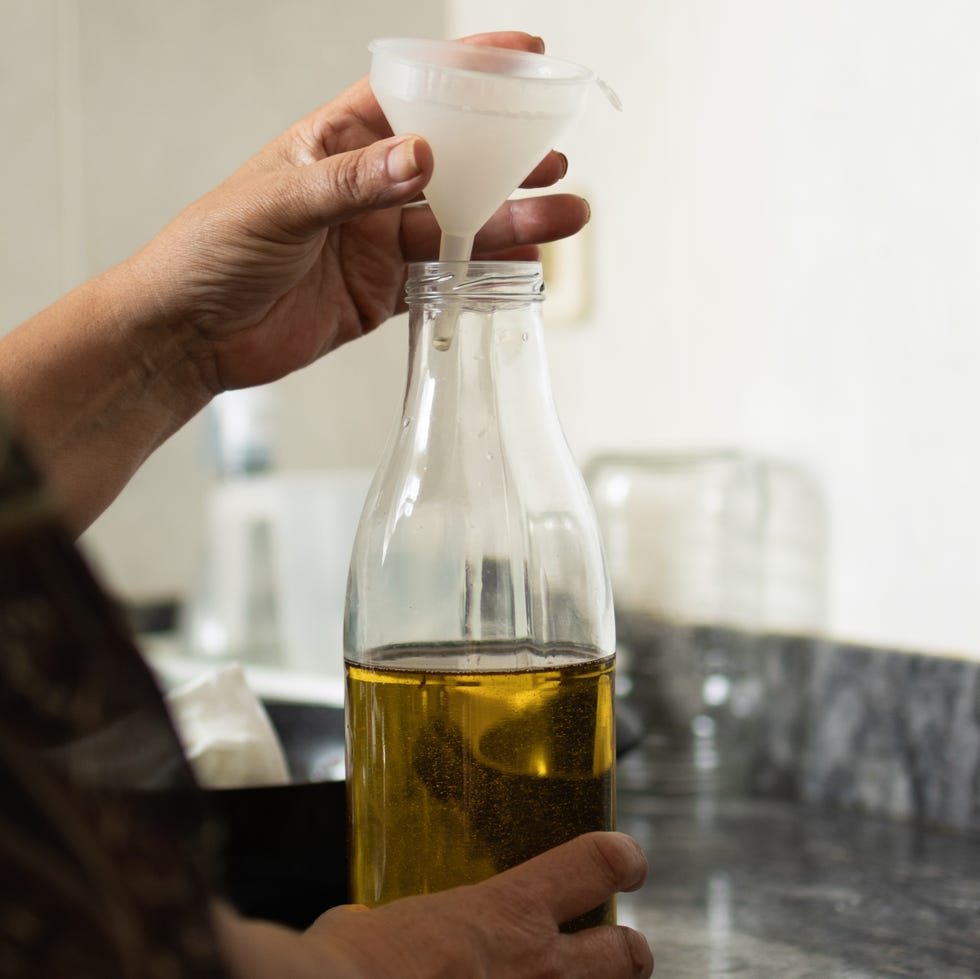
David Petrus Ibars//Getty Images
If you can’t live without the convenience of a squeeze bottle, there are still ways to use one while maintaining the quality of your oil and minimizing potential PFAS exposure.
First, storage matters. Regardless of packaging, you should keep olive oil away from heat and light. That means your bottle should not sit directly next to the oven, on a sunny counter, or anywhere else that gets warm.
Another option is to store most of your olive oil in glass or metal, then transfer a smaller amount into a food-safe plastic squeeze bottle for short-term use. That approach is common in professional kitchens, where chefs use olive oil quickly.
This is common practice in professional kitchens, where chefs go through olive oil quickly.
“If olive oil is placed in a food-safe plastic squeeze bottle for only a day or two, I would not consider that a major concern,” Brantley-Lopez explains. “I would only transfer a small amount at a time, keep it away from heat and light, and make sure the bottle is clean and completely dry before refilling.”
Dining and Cooking