
As a child, I was called a “picky” eater. However, I soon learned a new word, “discerning,” and that changed everything.
Both words mean “hard to please,” but they differ in usage — and that gave me some ammunition.
“Picky” stresses being hard to please, which comes across as rejection for arbitrary reasons or just to be contrary. “Discerning,” on the other hand, signifies having refined taste and good judgment.
Aha! I could hold my chin high and announce that I wasn’t picky, just discerning.
A few things I’m discerning about — and do snub — are soggy bread and wiggly fat. I also don’t do tofu. My objection to this trio is texture; there’s something about all three that either makes me gag or, in the case of tofu, feels as if I’ve bitten into soft chalk.
Another item I turn my nose up at is anything cooked, boiled, or baked with bell peppers. And the range is extensive!
It spans from my grandmother’s lobster thermidor to clam fritters and chicken cacciatore. To my “discerning” taste buds, the aggressive taste of bell pepper takes over, resulting in a distinctive bitterness I don’t find appealing.
When making anything from soups and casseroles to fajitas and jambalaya that call for the dreaded bells, I either omit them or substitute poblanos or jalapeños. It works for me.
Even salads fall victim to my aversion to bells. Take coleslaw, for instance; I use jalapeños there instead. Sliced as thinly as possible, the spicy green rings look great and give the slaw a welcome boost.
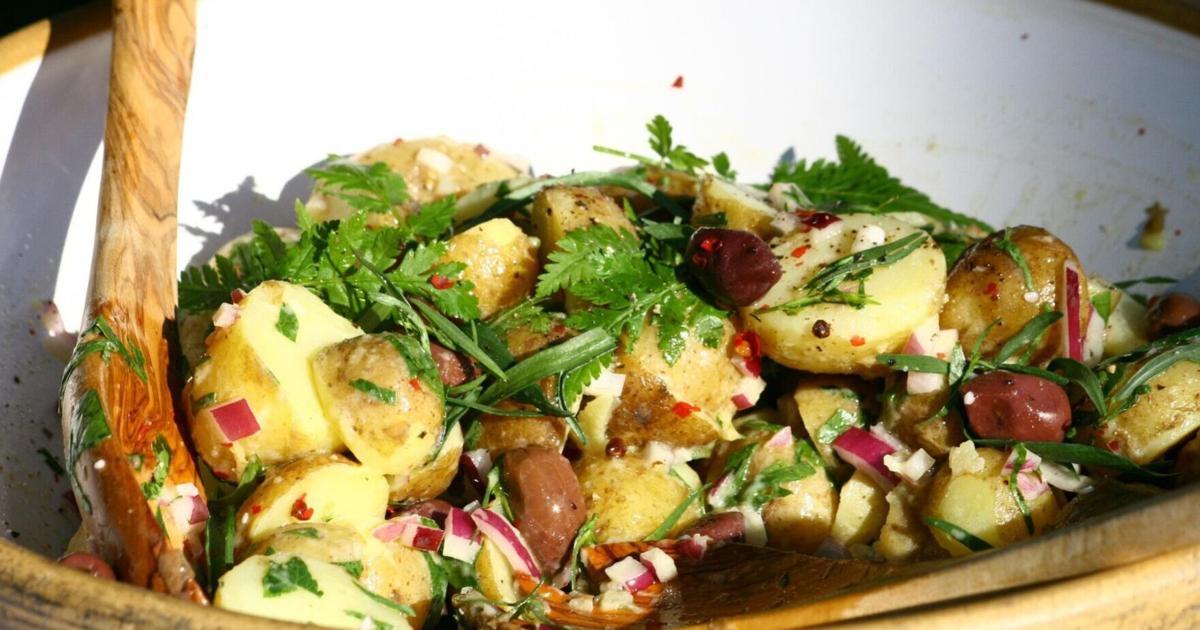
Since summer is here and we love to barbecue, either potato or macaroni salad is likely to be on the menu. Conveniently, I have some salad tweaks to pass along this week.
I’ve started using my old favorite flavoring, Knorr’s Caldo de Pollo, instead of salt whenever I boil potatoes, pasta, or rice. More than just salty, the caldo adds depth to anything you pre boil.
Another tweak that is a must-do for both potato and macaroni salads: once they are boiled and drained, toss them while still hot with any other seasonings the recipe calls for. This includes pepper (no salt needed), dried herbs, spices, lemon juice, or vinegar. Then, set them aside to cool to room temperature. The pasta or potatoes will soak up the flavorings, enhancing the finished dish.
If making a salad, let it cool, refrigerate it overnight, and add the dressing in the morning. This step is a must if your dressing is mayonnaise-based.
For both salads, I add sliced green onions, chopped celery, and minced fresh parsley. If I’m making potato salad for my son-in-law, Paul, I add some crunchy, home-fried bacon bits — which was his brilliant idea.
To dress up the macaroni salad, I add small, diced cheese (any kind) and, if I have it on hand, some leftover chopped ham. I’ve gotten nods of approval on both.
Much as I dislike relying on the internet for information, I do like to use its research features. Since I’m always touting Knorr’s chicken bouillon, it got me wondering about another popular option out there: Better Than Bouillon. So, I did a little Knorr’s vs. Better Than showdown and got some interesting results.
Knorr’s was cited for its use of granulated chicken, dehydrated parsley, turmeric, and paprika for color and flavor, as well as salt, some MSG, cornstarch, and sugar. It was given high marks for its shelf life, as Knorr’s will keep almost indefinitely. Better Than Bouillon contains similar flavor components; however, its consistency is a paste — runny, sticky, and requiring refrigeration.
Price also comes into play.
A 7.9-ounce jar of Knorr’s yields about 75 cups of broth, costing about four to five cents each. An 8-ounce jar of Better Than Bouillon makes 38 cups, averaging 16 cents per cup.
On a final note, both receive the same general health rating, with neither earning a “best” tag. So, for the record, I’m sticking to Knorr’s. It offers great taste, good pricing, and holds its own against the competition.
Dining and Cooking