

The assets belonging to Elephant Hill in Hawke’s Bay have been placed on the market with no guide price as the economics of New Zealand winemaking begin to unravel, according to one industry figure. db reports.
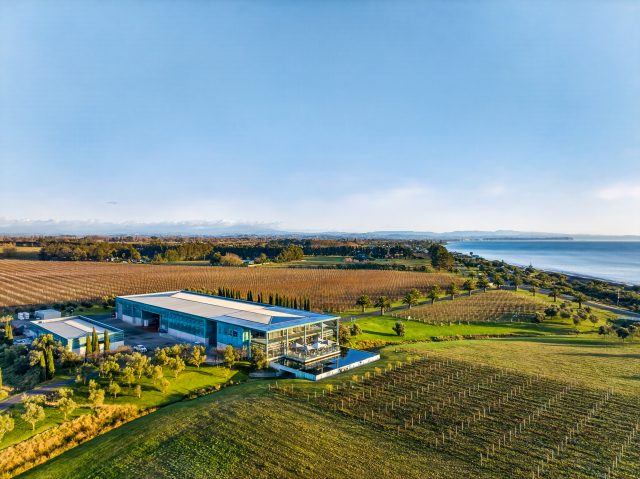
A buyer is being sought for Elephant Hill in Hawke’s Bay, including the estate’s winery, cellar door, restaurant, vineyards, business assets, intellectual property, and wine inventory.
The estate is available either as a going concern or may be sold off as individual assets, according to investment company Colliers, which is managing the sale. The property listing states that the sale provides “exceptional flexibility for purchasers seeking exposure to one or more segments of the wine, tourism, hospitality, or property sectors.”
No price guidance is being given for the assets, with interested parties encouraged to submit their best offers, suggesting that the owners may be looking to complete the sale quickly.
Unravelling economics
Speaking to the drinks business last month, Euan Mackay, MD for UK distributer Fells, said that the wine oversupply in New Zealand would make itself felt “from this vintage”.
In many ways, Mackay said, “the global market is moving faster than the wine world can cope with. It’s why there are lots of producers in Australia and New Zealand saying: ‘I’ve got a whole lot of wine that I don’t know what to do with,’ from plantings they made five to 10 years ago. The economics are beginning to unravel.”
However, Hawke’s Bay in New Zealand’s North Island has experienced tiny, high-quality vintages in recent years. Many winemakers in the region saw their harvests shrink in 2023 following the devastation wrought by Cyclone Gabrielle. Phil Brodie, winemaker for Te Mata, told db that due to the cyclone, its total harvest for all grape varieties in 2023 was “about 50% of a usual year”.
Hastings District Council mayor Sandra Hazlehurst revealed to db that “more than NZ$1.2 billion dollars worth of damage was done to our region” as a result of the storm, and that Hawke’s Bay had “spent the last two years in full recovery.”
Flood damage
Much of the damage was caused by flooding, which deposited huge amounts of silt and debris on the region. “Masses of water came down… it was an all-out assault from the rivers,” said Hazlehurst. “All our trees and vineyards were neck-high in silt. Paddocks, fields and vineyards were absolutely decimated.”
Clearing the silt alone cost Hastings around NZ$228 million.
That being said, in 2025 wine volumes began to rebound, with Hawke’s Bay Winegrowers chairwoman Sally Duncan confirming that “over 32 million bottles” were expected to be made from that vintage. This year, Hawke’s Bay experienced its earliest ever harvest start date, kicking off around 10 February, and according to Jancisrobinson.com “the consensus is that volumes will be less than average, particularly so in the shadow of the abundant 2025 harvest.”
What might attract a buyer to Elephant Hill?
Located on the Te Awanga coastline in Hawke’s Bay, Elephant Hill overlooks the Pacific Ocean towards Cape Kidnappers. Established in 2003 by Roger and Reydan Weiss, “few properties in New Zealand combine world-class wine, luxury hospitality, architectural distinction, and coastal beauty as seamlessly as Elephant Hill,” claims Colliers.
The estate’s three diverse vineyards include 24 hectares planted at Te Awanga, 17.61ha at Gimblett Gravels, and 17.27ha at Bridge Pa, with Sauvignon Blanc, Chardonnay, Pinot Gris and Viognier on offer for white winemaking in addition to Merlot, Cabernet Sauvignon, Cabernet Franc, Syrah and Malbec for reds. All three vineyards are certified by Sustainable Winegrowers of New Zealand.
Elephant Hill’s wine offering is undoubtedly a premium one, with the producer’s top wine, the red blend Hieronymous, retailing for up to NZ$200, depending on the vintage, while its Salomé Chardonnay is priced from around NZ$95.
A future beyond wine?
Hadley Brown, director of rural at Colliers Hawke’s Bay, said the Elephant Hill sale offers opportunities that extend well beyond wine.
“What makes Elephant Hill particularly compelling is its ability to support a variety of future visions. For one purchaser, it may represent the continuation and expansion of an established premium winery. For another, it could become a luxury tourism destination that builds on the region’s growing international profile,” Brown said.
“Others may see the potential to further develop the hospitality offering, expand accommodation experiences, grow the events business, establish a high-end retreat, or create an agritourism enterprise that leverages the property’s unique coastal location and existing brand recognition.”
Mike Laven, rural & agribusiness special projects advisor at Colliers, added that the Elephant Hill brand could also be attractive to both domestic and international wine companies looking to add to their existing portfolio.
“The Elephant Hill brand and associated wine business do not need to remain tied to the Te Awanga property,” he said. “The intellectual property, wine inventory, and brand assets can continue to operate under separate ownership and from an alternative production facility, creating flexibility for purchasers seeking to acquire either the premium wine brand, the underlying property assets, or both.”
Related news
Anishka Jelicich starts as New Zealand Winegrowers CEO
Sam Neill honoured as New Zealand wine Fellow shortly before death
New Zealand grain growers to build upon supply chain
Dining and Cooking