

TAIPEI (Taiwan News) — Villa 32 in Beitou hosted a five-day guest chef event, “Pilgrimage to Paris: Between Two Stars,” featuring Nishi Hideki, founder and executive chef of Paris Michelin-starred restaurants Pilgrim and Neige d’Ete.
The event, priced at NT$12,800 (US$400) per person, runs from Wednesday to Sunday.
In an era when modern culinary trends favor speed and streamlined production, finding a chef with an almost obsessive dedication to classic French fundamentals is increasingly rare.
Nishi brought more than 30 years of French culinary mastery from Paris to Beitou, crafting a dining experience that blends classical French gastronomy, Japanese craftsmanship, and local Taiwanese ingredients.
Born into a family running traditional Japanese restaurants in Matsusaka, Mie prefecture, Nishi arrived in France three decades ago on a tourist visa, eager to test if French cuisine lived up to its reputation.
Visiting Michelin-starred establishments across Paris, his experience at the legendary Le Taillevent captivated him, sparking a determination to remain in France and master the craft.
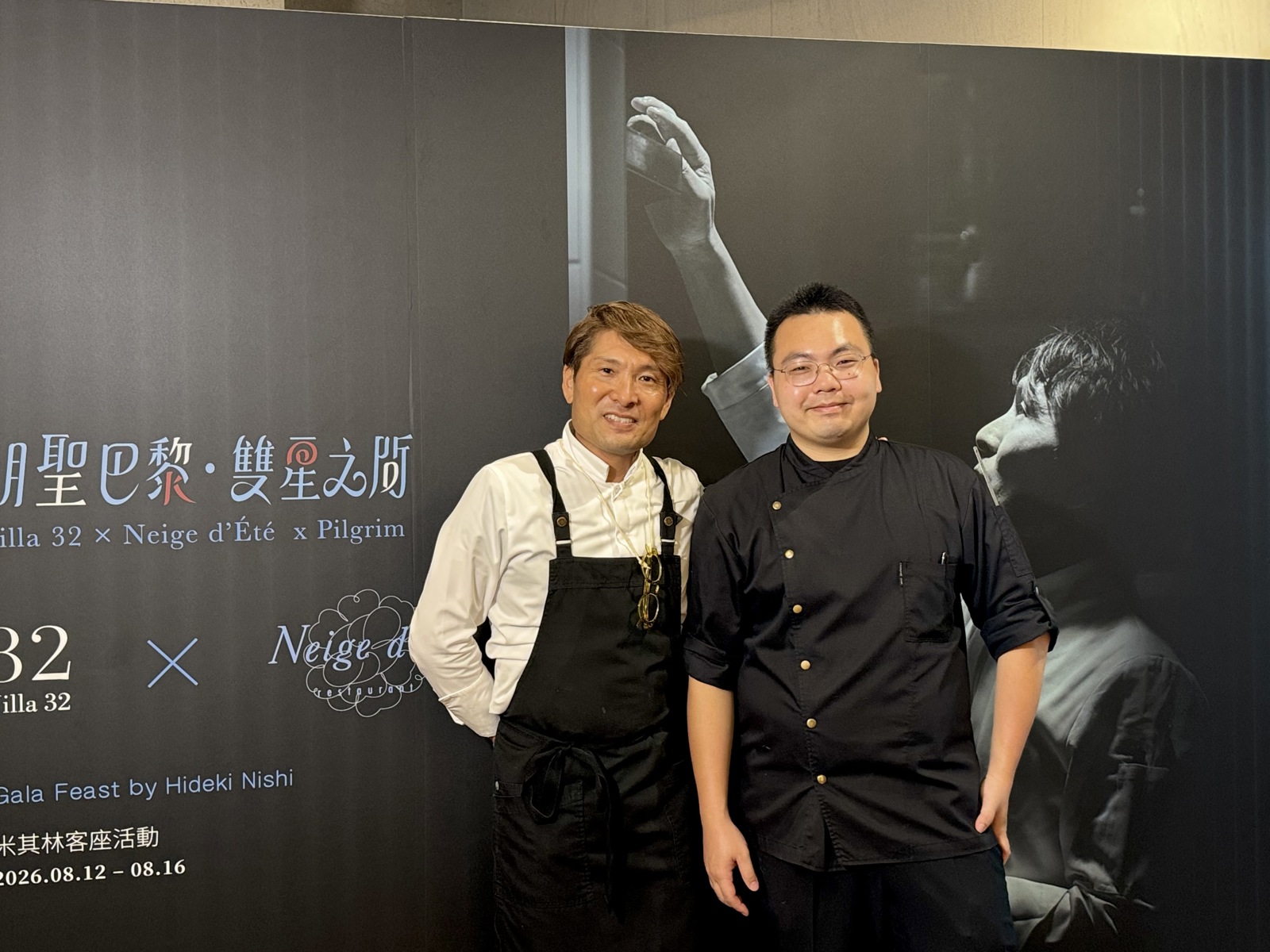 Founder and Executive Chef of Paris Michelin-starred restaurants Pilgrim and Neige d’Ete Hideki Nishi and Sous Chef Chen Ming-chih (陳明頎). (Taiwan News, Lyla Liu photo)
After persistent effort, Nishi joined Le Taillevent and spent over 15 years refining his technique at top Parisian institutions, including Four Seasons Hotel George V Paris, training under renowned French chefs Philippe Legendre and Eric Briffard.
He opened Neige d’Ete in 2014, earning a Michelin star the following year, and launched Pilgrim in 2018, which gained its own star a year later, solidifying his role in Paris’ French-Japanese culinary scene.
Nishi believes the foundation of classical French cuisine remains indispensable, relying on traditional stocks and sauces while incorporating Japanese precision with ingredients and charcoal grilling.
He said that Japanese charcoal techniques offer precise infrared heat control, cooking ingredients evenly from within while locking in juices.
Consequently, his Paris kitchens still rely heavily on charcoal. However, adapting to Taiwan’s warm climate and local produce, Nishi demonstrated remarkable flexibility, adjusting dishes to suit the immediate environment.
 Blue lobster and mille-feuille. (Taiwan News, Lyla Liu photo)
The menu’s commitment to labor-intensive techniques was highlighted in a blue lobster and mille-feuille dish. Nishi used every part of the lobster, from meat to shell and head.
The lobster sauce was reduced entirely from concentrated lobster stock rather than diluted with water, while the lobster oil required days to extract using sesame oil, steeping, and filtering dried shells.
The accompanying boudin, traditionally made with sea bass in France, was rebalanced using Taiwanese milkfish and scallops to suit Asian fish textures. It was paired with a mille-feuille brushed with lobster oil, vanilla lobster sauce, and caviar.
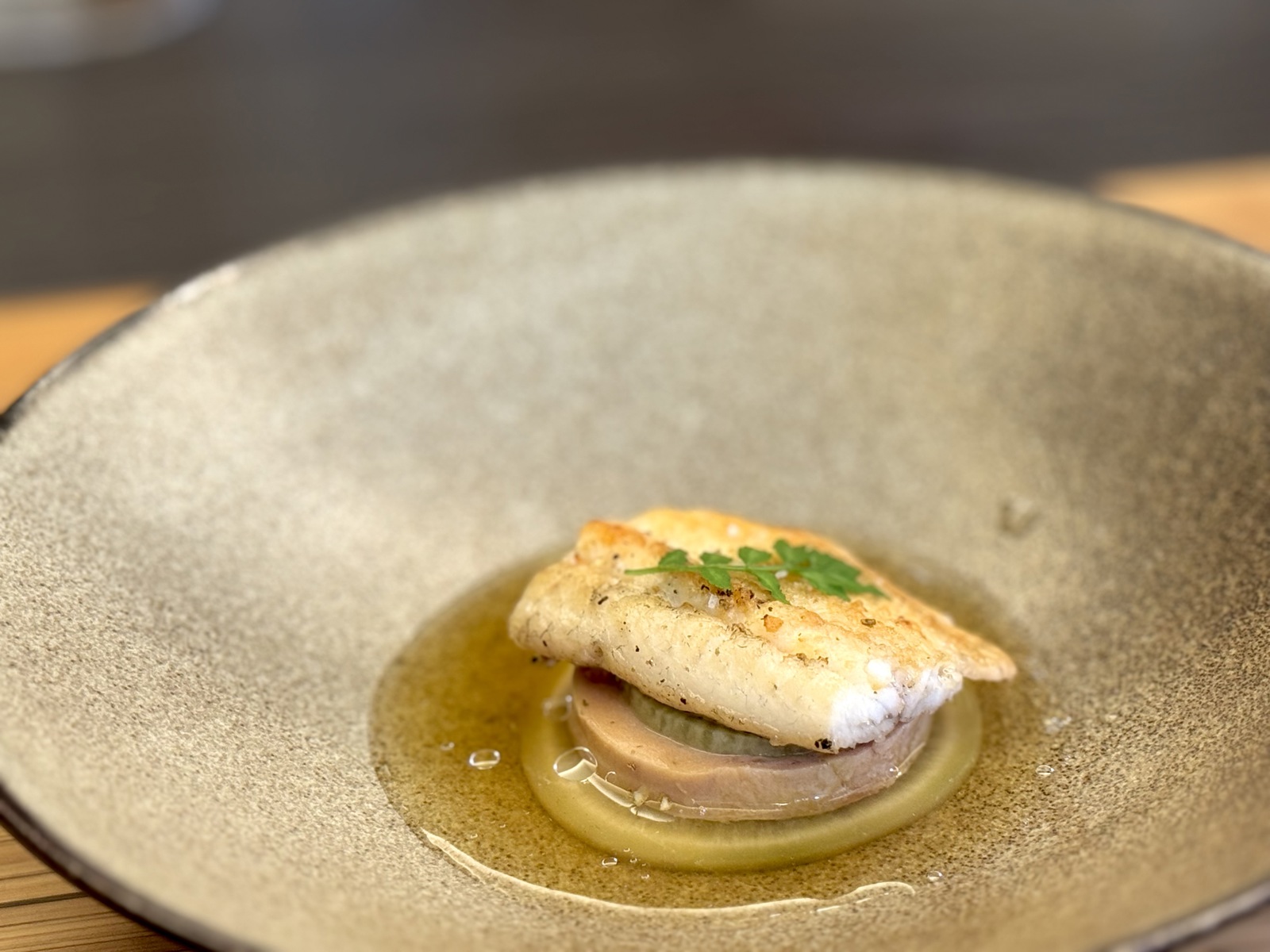 Grilled eel with miso-cured foie gras. (Taiwan News, Lyla Liu photo)
Another dish, grilled eel with Saikyo miso-cured foie gras, drew inspiration from traditional Normandy recipes while integrating French foie gras and Japanese flavors.
Nishi used local Taiwanese eel grilled unseasoned alongside foie gras cured in Saikyo miso for three days and steamed to remove excess fat.
To suit Taiwan’s humid climate, he replaced heavy red wine sauces with a clarified consomme made from roasted eel bones and mushrooms, brightened with white balsamic vinegar.
Addressing the eel’s tough skin, Nishi removed it entirely, substituting local green radish for a wasabi-like kick. This evoked traditional Japanese eel pairings while introducing a refreshing local element.
 Flounder fish ages for a week. (Taiwan News, Lyla Liu photo)
Skill was equally evident in a flounder fish aged for one week. The fish was wrapped in a mousse made from Matsu mussels, cooked precisely to a core temperature of 41 C for optimal tenderness.
The skin was blanched, dried, steamed, and fried into a crisp chip, finished with classic French beurre blanc and caviar.
Dessert, named after Neige d’Ete, featured white chocolate, cream, and Taiwanese Makao pepper shaped into rose petals over local figs, reduced fig vinegar, and homemade fig leaf oil, offering a light, refined conclusion to the meal.
Dining and Cooking