

When the sun comes up in the small town of Harrisburg, Mo., there’s really only one place to grab breakfast and meet up with friends—Kathy Kite’s house. Every morning Kathy makes home-cooked breakfast at no charge for friends, neighbors, and anyone else who stops by. But now, her hospitality is threatened by the local health department, which is warning that she could face steep fines and criminal penalties if she doesn’t stop making food without their permission and without installing a commercial kitchen.
That’s wrong. Kathy isn’t running a restaurant or a commercial food establishment—she’s just a grandma who has a constitutional right to make breakfast for guests in her home. That’s why today the Goldwater Institute sent a letter to leaders of the City of Columbia/Boone County health department asking them to explain the legal reasoning for their threats against Kathy.
“I love feeding people. So, when the local gas station stopped serving breakfast, I told everyone they could just come to my house,” Kathy said. “Every morning, workers, retirees, and busy moms swing by to grab a bite to eat and talk. I don’t see anything wrong with that. It’s not a business. I’m just a grandma who cooks burritos for my friends.”

Kathy was raised on a farm in rural Missouri. Her mother always kept a pitcher of cold tea ready and told the farm workers in the community that they were welcome to stop by for a cold drink or something to eat. Kathy internalized that lesson.
Now Kathy lives in Harrisburg, a rural town with a population of less than 300 people. There are only two businesses that provide any sort of food—the H-Town gas station and a small coffee shop. Kathy cooked for the gas station. Up until the Covid pandemic, H-Town sold breakfast in the mornings and was a community hub. Old-timers and farmers gathered there to eat, discuss crop prices, the weather, and local news. But after Covid, H-Town stopped serving breakfast and the community lost its morning gathering spot.
Following her mother’s example, Kathy offered to cook breakfast and opened her home so her neighbors would have a place to eat and talk. Every morning she wakes up at 3:30 to make breakfast sandwiches, breakfast burritos, biscuits, waffles, and coffee for her neighbors. She has never charged for the food.
Apparently, not everyone is pleased with Kathy’s neighborliness. In July, the Columbia/Boone County Department of Public Health and Human Services sent Kathy a warning letter stating that if she intends to continue providing food that is not covered by Missouri’s “cottage food” law—a law that allows people to sell baked goods and canned jams without a license—she would need to install a commercial kitchen, get a food permit, and subject herself to the government’s restaurant regulations.
Installing a commercial kitchen would not only cost tens of thousands of dollars, it would also subject Kathy’s home to on-demand inspections by public health officials. Kathy has neither the means nor the desire to add a commercial kitchen to her home. In addition, a close reading of the Columbia Food Code indicates that Kathy could face up to $3,000 in criminal and civil fines and up to a year in jail each day she provides free food to guests in her home.
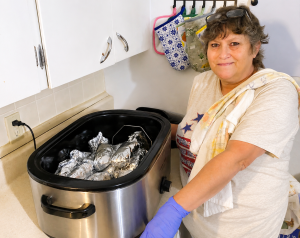
Kathy’s story is a textbook example of bureaucracy run amok. Citizens should not be required to get the government’s permission before offering passers-by some coffee and a bite to eat while they socialize.
The government exists to protect this sort of neighborly kindness, not to punish it. The Goldwater Institute intends to make sure that Kathy—and every other American—remains free to show hospitality to their neighbors without having to submit to government oversight or to face absurd, overbearing penalties.
Read the Goldwater’s letter to the City of Columbia/Boone County health department here.
Dave Roland is the Director of Allied Litigation at the Goldwater Institute.
Dining and Cooking