
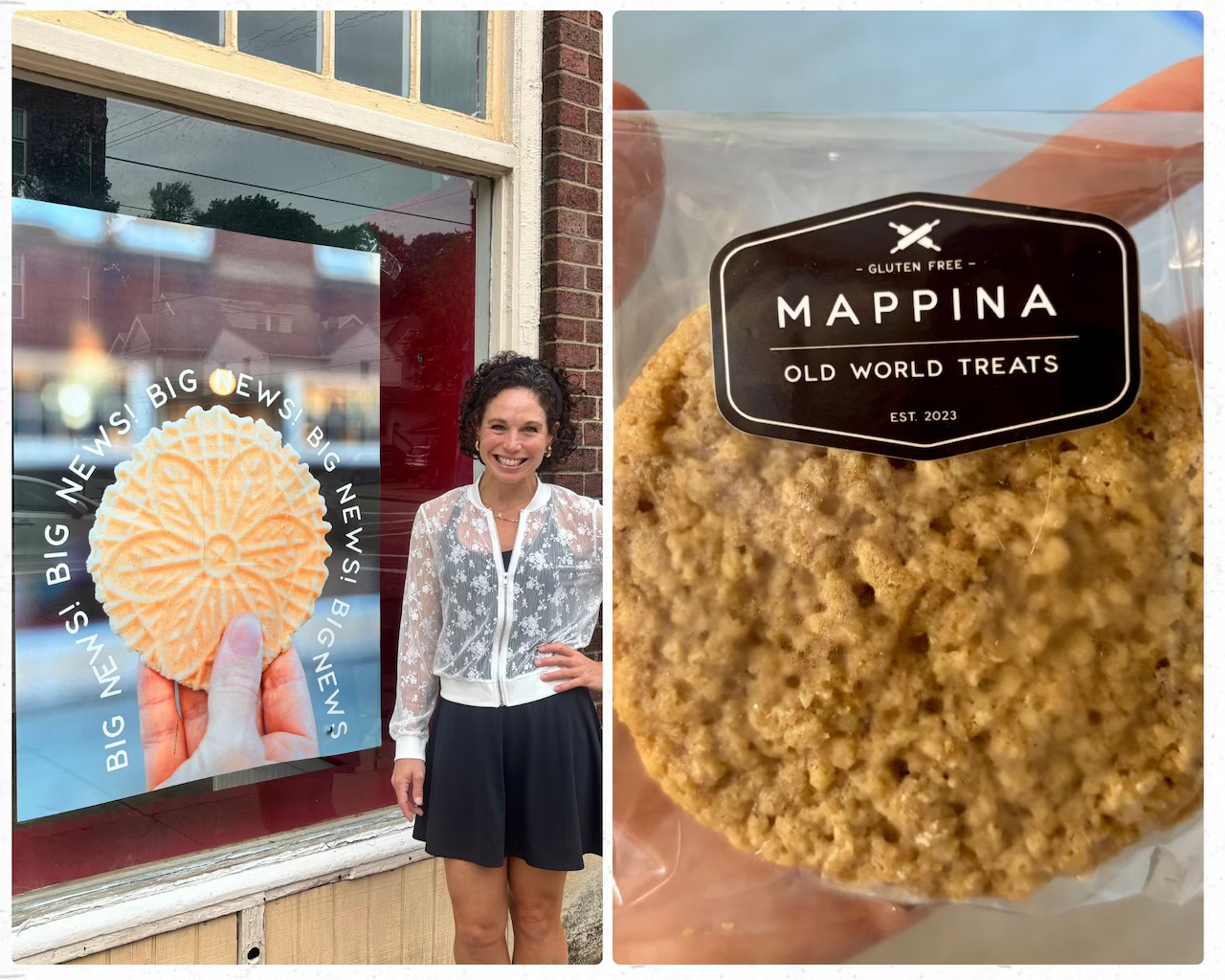
CLEVELAND, Ohio — Rachel Morse has spent the past three years building Mappina Bakery from her University Heights home, making gluten-free Italian pastries, cookies and cakes with recipes tied to her family history.
Soon, the bakery will have a brick-and-mortar home in Cleveland’s Little Italy neighborhood.
Mappina Bakery plans to open this fall at 2190 Murray Hill Road, pending the completion of construction work. The shop will be a dedicated gluten-free and peanut-free bakery, offering cannoli, pizzelles, biscotti, cookies, cakes and other Italian-American treats.
For Morse, the new storefront is both a business expansion and a chance to bring an overlooked dessert option to one of Cleveland’s most established dining neighborhoods.
Little Italy has increasingly plentiful gluten-free entree choices for classics like pizza and pasta, but diners looking for a traditional after-dinner treat have fewer options.
“Especially if they’re asking for a gluten-free entree, they’re going to want a dessert that’s not, just ‘Oh, here’s a scoop of ice cream,’” Morse said. “You want to have something that sort of goes with the rest of the experience.”
The bakery’s gluten-free cannoli is a particular draw. At the Feast of the Assumption this month, the cannoli was Mappina’s most popular offering and sold out before Sunday.
 The famous oatmeal cream pies from Mappina Bakery.Alex Darus
“You would never be able to tell the difference,” she said of her cannoli versus a version with gluten.
Morse uses a Sicilian-style filling made with ricotta, powdered sugar, vanilla and fresh orange zest. She finishes the cannoli with powdered sugar, clove and cinnamon, giving the pastry a citrus-and-spice profile.
“It was a lot of trial and error, figuring all of that out,” Morse said.
Mappina’s menu also includes almond biscotti, amaretti cookies, tarts, cheesecake, almond and butter blossoms alongside seasonal treats like apple cake and pumpkin rolls. Morse makes chocolate chip cookies, oatmeal cream pies, oatmeal-raisin cookies, black-and-white cookies, muffins, cakes and kolaches, and she is working on cinnamon rolls.
The selection reflects a mix of Italian, Italian-American and other family pastries that Morse grew up eating. Some of her offerings stem directly from old-world recipes, while others represent the American additions that developed in her family over generations.
“My chocolate chip cookie recipe — that’s my grandmother’s,” Morse said. “Her parents were Italian immigrants. But, you can’t get more American than a chocolate chip cookie. It’s the best. Everybody loves it.”
Morse’s desire to preserve those recipes is what first led her to gluten-free baking.
She was diagnosed with celiac disease in 2013, when her oldest daughter was nearly 1. Morse was working as a Spanish teacher at John Carroll University at the time and had no professional culinary training, though she had always baked with her grandmother.
“When I was diagnosed, I’m like, who cares about food? I want to make sure I can make all of my grandma’s pastries and keep the traditions alive,” Morse said.
She started with pizzelles, adapting recipes through trial and error until she could recreate the flavor and texture she remembered. Customers are often surprised to learn the finished pastries are gluten-free.
“And everyone’s like, ‘Wait a second. This is gluten free. Like, how is this gluten free?’” Morse said.
Morse began selling Mappina pastries in 2023, and demand grew through pop-ups, events and wholesale customers. The business expanded more quickly than Morse could have expected.
Mappina has wholesale relationships with restaurants and stores like Patron Saint, Sage & Honey, Gingham Market and Café Honeycomb. Morse said she is also working with her new neighbors like Michelangelo’s, Agostino’s and Blue Sky Brews to add gluten-free desserts to their offerings.
The new Murray Hill Road space will give Morse a larger kitchen, with a huge butcher-block prep area, double electric ovens and induction burners. The interior will use black, white and khaki colors that match Mappina’s logo.
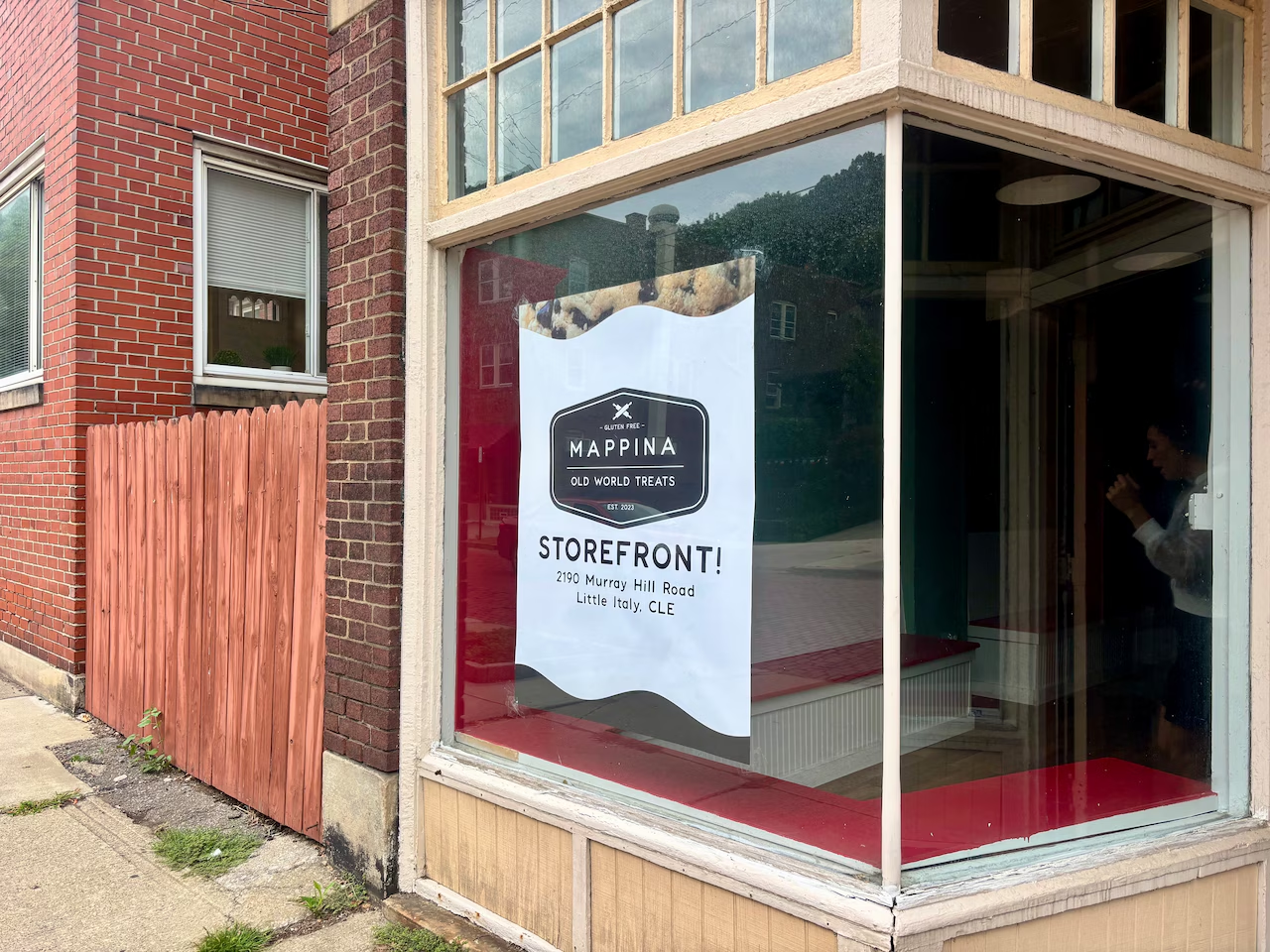 Mappina Bakery is expected to open this fall at 2190 Murray Hill Road in Cleveland’s Little Italy neighborhood.Alex Darus
The dedicated facility is especially important to Morse because cross-contamination can pose a risk for people with celiac disease. She said a bakery may offer a gluten-free option, but that product can become unsafe if it is prepared with equipment, utensils or ingredients that have come into contact with wheat flour.
“This is kind of like a safe space for people,” Morse said.
Mappina will also be peanut-free. Morse’s oldest daughter has a severe peanut allergy, though she can eat almonds and hazelnuts, which gives the bakery room to continue using ingredients common in Italian pastries.
Morse said about half of Mappina’s customers do not eat gluten-free. She sees the shop as a place where families and groups can buy one spread of desserts rather than separating food based on dietary restrictions.
“People who need it can eat it safely, but then you don’t have to buy two desserts,” Morse said. “Everybody can just enjoy it and not even realize they’re eating gluten free.”
Morse added that opening in Little Italy feels meaningful because it connects her family’s food traditions to a neighborhood with a deep history of Italian restaurants, bakeries and businesses.
“Like, sometimes I’m like, ‘Oh, my God, I can’t believe I did this,’ because it’s such a traditional area,” Morse said.
The name Mappina is also a reference to that family history. It is a Southern Italian slang word for a kitchen dish towel, often worn over a cook’s shoulder. Morse said her great-grandmother made and embroidered the towels from whatever fabric was available, and she still uses those family pieces.
“Regardless of what towel you’re using or what you’re cooking, like, you’re in your kitchen with your mappine on your shoulder,” Morse said.
For Morse, the pastries are about more than a dietary alternative. They give people with celiac disease access to foods that can carry powerful connections to family, holidays and grandparents’ kitchens.
She regularly hears from customers who have not eaten foods such as cannoli for years after being diagnosed with celiac disease.
“The treats are a huge thing. It’s nostalgia. It’s of the heart,” Morse said. “Some people eat to live, but some people live to eat, and I’m a live-to-eater.”
Dining and Cooking