
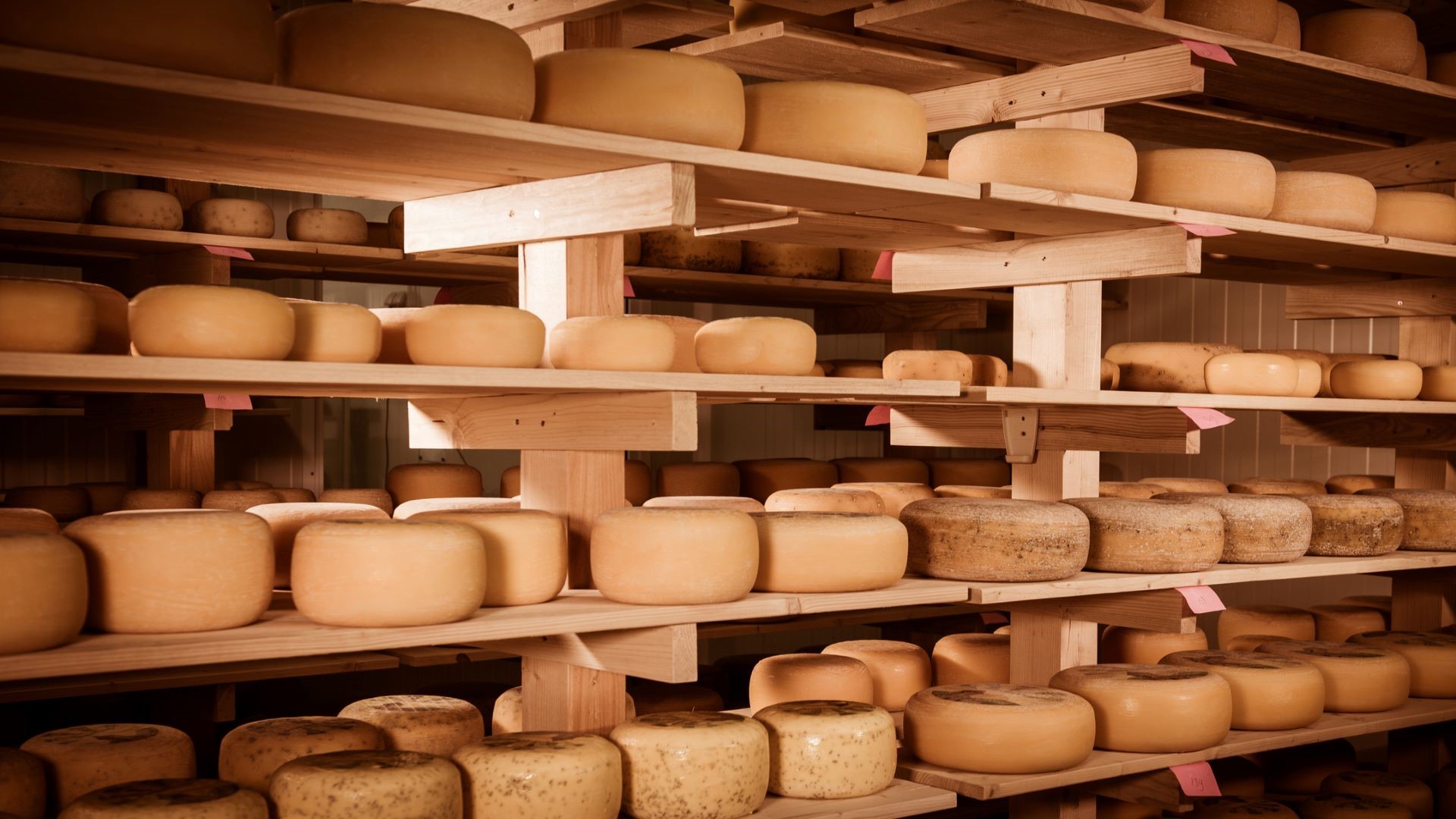
France has temporarily loosened the rules for several of its best-known protected cheeses after drought left mountain dairy herds short of local grass.
As the BBC reported, the decision affects staples of French food culture such as Abondance, Beaufort, and Comté, and it shows how climate-driven weather extremes are starting to pressure even the most tradition-bound parts of agriculture.
Here’s what to know
French authorities have granted temporary exemptions that let some cheesemakers use hay, grass, and other feed from outside their normally restricted production areas, the outlet said. For these protected-origin products, those geographic rules are usually a fundamental part of how they are made and sold.
For example, Abondance producers in the Alps can temporarily lower the share of pastured grass in cows’ diets from 50% to 15%, while Comté makers in the Jura can replace their usual local green maize with maize sourced elsewhere, per the BBC.
Both cheeses come from eastern France’s mountain regions, where local grazing conditions are normally treated as part of what gives them their flavor and quality.
The outlet said similar waivers are expected for other cheeses too, including Cantal, Bleu d’Auvergne, Fourme d’Ambert, Bleu du Vercors-Sassenage, Reblochon, and the goat cheese Rocamadour.
The National Institute for Origin and Quality, or INAO, which regulates France’s labels of origin, said the drought conditions were “historic.”
More background
The BBC said these designations are meant to protect a product’s identity and terroir, or the idea that food reflects the land, climate, and traditions of a specific place. In return for following strict standards on geography and production, producers are often able to charge premium prices.
That arrangement becomes much harder to sustain when extreme heat and drought make it impossible to feed animals or grow ingredients within the traditional zones.
The outlet said INAO has also temporarily adjusted rules for other protected products affected by the heat, including certain Calvados and Normandy cider, Crémant d’Alsace, lamb from Poitou-Charentes, and Reine-Claude plums.
Worsening extreme weather disasters do more than disrupt specialty foods. Droughts, heat waves, and other climate-related shocks can threaten farm income, raise food prices, strain water supplies, and weaken local economies that rely on agriculture.
Those effects can ripple outward into public health, community stability, and household finances as harvests shrink and rural livelihoods are put at risk.
What’s being done?
To keep herds fed and production moving when local forage falls short, French regulators are using existing legal provisions that allow temporary derogations during exceptional weather.
The BBC reported France used similar measures after the dry summer of 2022, suggesting the problem is becoming recurring rather than isolated. The current changes may also blunt deeper supply losses and some of the economic damage producers could face if their only alternatives were breaking the rules or stopping production.
If weather patterns keep shifting, regulators will face tougher decisions about how much flexibility can be allowed without undermining authenticity. That also raises the question of whether protected food systems can remain exactly the same over time.
The issue could eventually show up in price, availability, and possibly even taste.
Get TCD’s free newsletters for easy tips, smart advice, and a chance to earn $5,000 toward home upgrades. To see more stories like this one, change your Google preferences here.

Dining and Cooking