
Today, September 18, is International Grenache Day, an annual celebration of a grape variety that has spent a long time playing supporting roles in the wine world. In South Africa, though, grenache is becoming increasingly interesting in its own right.
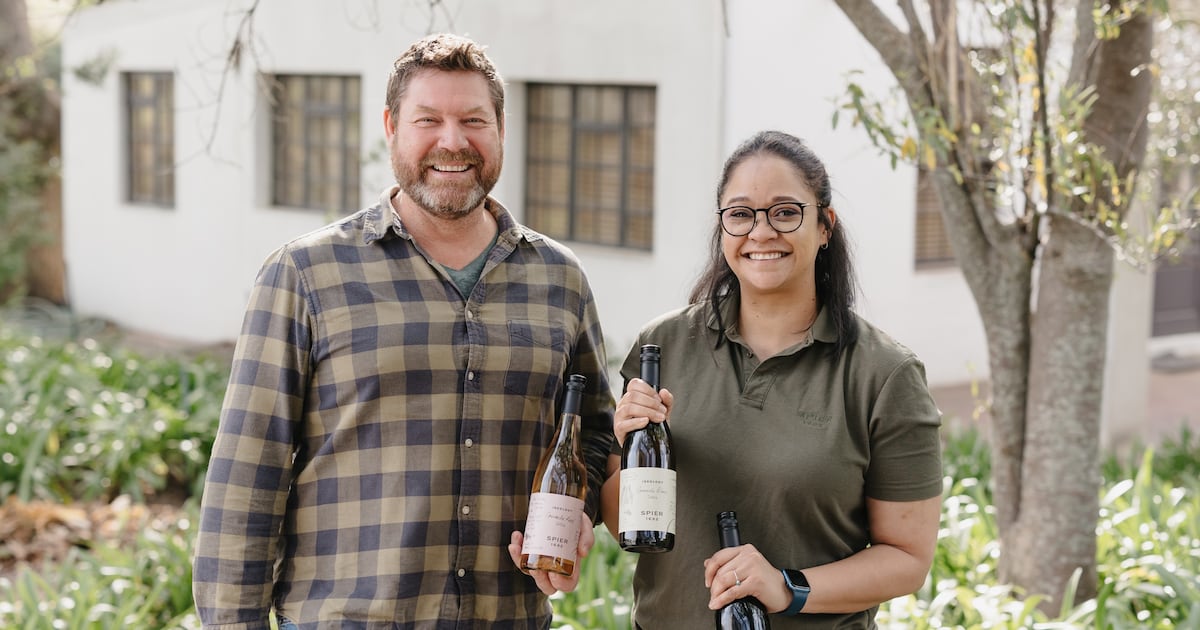
Spier Wine Farm has just released its new Ideology collection, a limited-release range built around experimentation. Coincidentally, or perhaps not, this year’s focus is grenache, with winemaker Tania Kleintjes working with organically grown grapes from Paarl to make three separate wines: a grenache blanc, grenache rosé and grenache noir.
Grenache is still relatively small in the South African wine landscape, though plantings have been growing. According to reports from South Africa’s Wine Industry Information and Systems (Sawis), the country has seen a significant increase in the hectares planted to grenache since 2010, with most plantings concentrated in Paarl and the Swartland.
The variety is also well suited to hot, dry conditions, and Decanter notes that its drought resistance is becoming increasingly relevant as conditions in the Cape become drier.
Part of what makes grenache interesting is its range. It can produce red, white and rosé wines, and has traditionally been used both on its own and in blends.
 Spier’s 2026 Ideology collection explores grenache through three distinct wines: blanc, rosé and noir. Picture: (Supplied)
That versatility is what Spier is exploring with the Ideology collection. The three wines all come from organically grown grapes and were made with relatively limited intervention in the cellar, but the winemaking differs according to the style.
The grenache blanc is made from the white-berried mutation of grenache noir. The grapes were destemmed and crushed into stainless-steel tanks, fermented under temperature control and then left on their gross lees for four months. According to Spier, the wine has aromas of ripe stone fruit, white peach and pear, with melon and floral notes of elderflower, frangipani and jasmine.
For the grenache rosé, grapes from young trellised vines in Paarl were pressed without skin contact before fermentation in stainless steel. The wine also spent four months on its gross lees. Spier describes it as crisp and refreshing, with aromas of ruby grapefruit, pomegranate and cranberry, followed by hints of orchard blossom.
Last, the grenache noir takes a more hands-off approach in the cellar. The grapes were hand-sorted before undergoing semi-carbonic maceration during natural fermentation in a combination of stainless-steel tanks and small barrels. The winery describes the wine as vibrant and expressive, with ripe mulberry and cherry alongside violet, baking spice, fennel seed and a hint of vanilla.
 Hand-drawn sketches and winemaking notes by cellar master Johan Jordaan appear on the Ideology packaging. Picture: (Supplied)
Aside from the wines themselves, each bottle reveals a small piece of the winemaking process, with hand-drawn sketches, observations and notes by cellar master Johan Jordaan appearing on the labels.
Taken from the notebook he uses to record ideas in the vineyard, cellar and tasting room, Jordaan notes that drawing is simply another way of working through those ideas. “I’m by no means an artist,” he says, “but for me drawing is a way of focusing, thinking and making sense of ideas.”
It’s a fitting and rather wholesome approach for a collection centred on experimentation. The three wines also make an interesting case for looking at grenache beyond its more familiar role in blends, particularly as South African winemakers continue to explore what the variety can do.
The 2026 Ideology grenache blanc, rosé and noir are available in limited quantities directly from Spier Wine Farm and online.
Wanted
Dining and Cooking