

Chefs share smart grilling tips for cooking at your next tailgate.
Tailgating season is back, and that means firing up the grill, feeding a crowd, and trying to enjoy the game without spending the entire day worrying about the food. With a little preparation and a few smart grilling techniques, you can make everything from burgers and hot dogs to chicken and steak easier to manage. Here are six grilling tips from chefs that can help pull off a successful tailgate.
Prep as Much as Possible the Night Before

” src=”https://www.diningandcooking.com/wp-content/uploads/2026/09/shutterstock_218316868.jpg” alt=”” width=”640″ height=”469″ />Shutterstock
Tailgating involves more than just cooking, so getting food and supplies ready ahead of time can make the day easier. John Miller, Chef and Caterer, Owner of Miller’s Catering Company and Family Food and Beverage, recommends tackling as much preparation as possible before heading out. “When tailgating, you’re gonna have a ton of things on your plate, from pulling a grill, to setting up tents, etc,” he says. “The more prep you can do the night before allows you to conquer the day!” Chef John adds, “Prepping any sides, preparing your cooler, seasoning your meats, finishing your shopping, etc. allows for a smooth and less stressful day.”
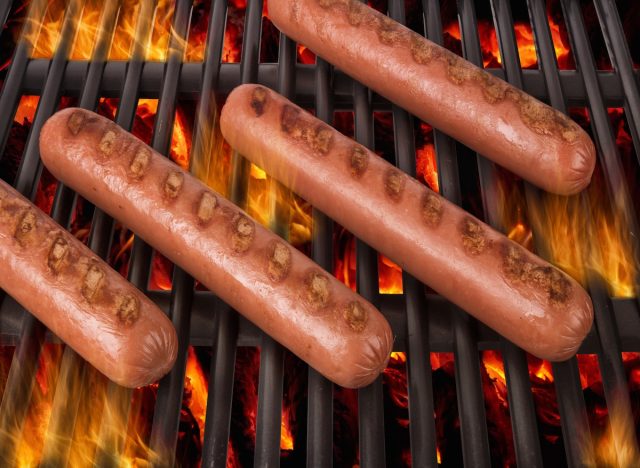
Use a Two-Zone Grill for Better-Charred Hot Dogs
” src=”https://www.diningandcooking.com/wp-content/uploads/2026/09/shutterstock_418760830.jpg” alt=”” width=”640″ height=”469″ />Shutterstock
Hot dogs are a tailgating staple, but they don’t need to be cooked over direct heat from start to finish. A two-zone setup gives you more control, allowing you to warm the dogs gradually before finishing them over higher heat for that grilled exterior. “The secret to getting a nice char on your hot dogs is to use medium heat and a 2-zone grill,” says Jordan Carfagno, McCormick executive chef. “Warm the dogs on indirect heat, then move to direct heat for 1-2 minutes, turning often for char without burning.”
Don’t Rely on High Heat for Every Food

” src=”https://www.diningandcooking.com/wp-content/uploads/2026/09/shutterstock_1747961081.jpg” alt=”” width=”640″ height=”469″ />Shutterstock
High heat can be useful for certain foods, but it’s not always the best approach when you’re cooking a variety of meats and vegetables. Adjusting the heat based on what you’re grilling can help prevent food from cooking unevenly. “High heat has its place — like searing steaks, stir-frying vegetables, or quickly charring thin cuts — but it’s not ideal for everything,” says Chef Jordan. “If you always cook on high heat, you risk burning the outside while leaving the inside raw, especially with thicker cuts of meat or denser foods like bone-in chicken, roasts, or root vegetables.”
Stop Overcrowding Your Tailgate Grill

” src=”https://www.diningandcooking.com/wp-content/uploads/2026/09/shutterstock_653346718.jpg” alt=”” width=”640″ height=”469″ />Shutterstock6254a4d1642c605c54bf1cab17d50f1e
When you’re feeding a crowd, it can be tempting to fit as much food as possible onto the grill at once. But leaving enough space between items allows heat to circulate and gives you more control over how everything cooks. Chef Jordan advises “leaving about ½ to 1 inch between foods so heat can circulate, and cook in batches or use indirect heat zones to avoid overcrowding.” He adds, “If needed, plan your menu or use a larger grill to keep things spaced out.”
Start with a Lower Grill Temperature

” src=”https://www.diningandcooking.com/wp-content/uploads/2026/09/shutterstock_1649692246.jpg” alt=”” width=”640″ height=”469″ />Shutterstock
Outdoor grills can be harder to control than the equipment in your kitchen, particularly when you’re working with charcoal or wood. Starting at a lower temperature gives you the opportunity to increase the heat gradually as needed.
“If your grill has a temperature gauge that makes it easy, but if you have an old-school grill, like my old-school smoker, you always start low and grow,” Chef John says. “If your grill is too hot and you don’t have time to allow it to cool, you’re gonna either have people waiting or burn up some food.” He adds, “The best bet is to start low and add charcoal or wood if needed. A gas grill is great here, as you can easily turn the gas up and down.”
Invest in Steam Tables

” src=”https://www.diningandcooking.com/wp-content/uploads/2026/09/steam-table.png” alt=”” width=”640″ height=”469″ />Amazon
To help keep cooked food warm without overcooking it, Chef John suggests setting up steam tables. “Steam tables are relatively inexpensive to set up and a good way to keep food warm without it being overcooked,” he says. “It also makes serving (and self-serving) easier.”
Dining and Cooking