


Bhofack2/Getty Images
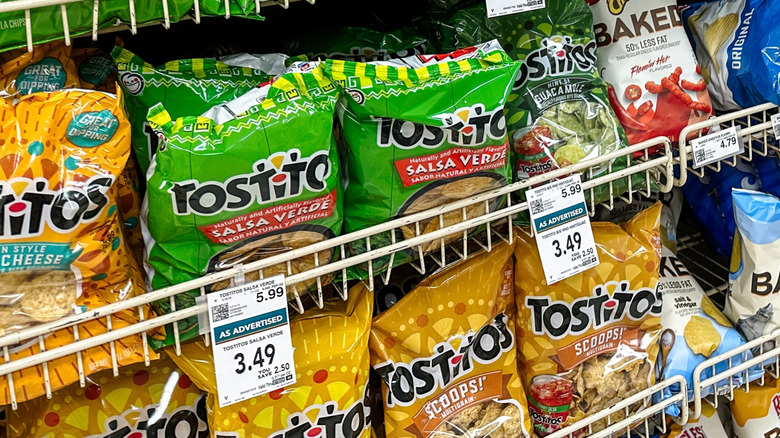
A lot of your favorite foods were invented by women, including tortilla chips. Without Rebecca Webb Carranza, popular tortilla chip brands like Tostitos, Santitas, and Xochitl would not exist. Carranza passed in 2006 at 98 years old. While she didn’t make much money off her invention, she lived to see it take over grocery store shelves.
The story starts in the 1940s when Carranza co-owned the El Zarape Tortilla Factory and deli in Los Angeles with her husband. While the factory machinery made tortillas faster than humans could, it also produced more waste. Tortillas that were bent, misshapen, or deemed not to be perfect, were discarded. Carranza didn’t like waste, so one day she fried the discarded bits, salted them, and served them at a family gathering. Unbeknownst to Carranza, this was the birth of one of the world’s favorite snacks. While you can buy tortilla chips at grocery stores, bodegas, and gas stations, you can also follow the same general recipe Carranza did to make homemade tortilla chips — and making them in the air fryer requires minimal effort.
It started at 10 cents a bag
KK Stock/Shutterstock
The fried, salted pieces of discarded tortilla Carranza served were such a hit that she began selling them. The tortillas were cut into triangles, fried, flavored with salt, and sold for 10 cents a bag under the name “Tort Chips.” While Carranza popularized triangle-shaped, fried tortilla chips, crunchy corn snacks have been around for a long time. In Mexico and Central America, totopos, or slivers of corn tortillas that have been baked until dry and shelf stable have been popular for many centuries. The name totopos comes from the Nahuatl language, which was the primary language of the Aztecs. Its root word, totopochtli, translates to “something toasted, crunchy, or noisy to eat.”
The tortilla chip market across the world is valued at over 35 billion dollars. So how did tortilla chips go from totopos to “Tort Chips” to the ones we see on grocery store shelves today? The story goes that in 1964, Casa de Fritos, a restaurant at Disneyland, served tortilla chips with additional seasonings other than salt. In comes Frito-Lay exec Arch West, who was inspired to launch Doritos in 1966. The push by Frito-Lay to market Doritos, the opening of Taco Bell in 1962, and Diana Kennedy’s 1972 cookbook, “The Cuisines of Mexico,” helped bring Mexican food to the forefront in the U.S. Now, tortilla chips are a worldwide sensation. The next time you dip chips into guacamole, think of Rebecca Webb Carranza, a businesswoman and chef in her own right, who invented them because she didn’t want to throw out imperfect tortillas.
Dining and Cooking